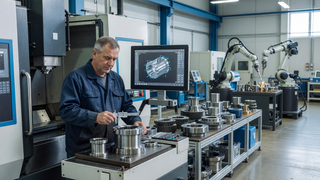
Scientists from Ufa University of Science and Technology (UUNiT) have created an innovative ceramic mixture for manufacturing hollow blades of gas turbine engines. This mixture significantly increases the strength of core-forming rods, reduces their deformation during heat treatment, and decreases the likelihood of failure during casting. The specialists have patented the development.
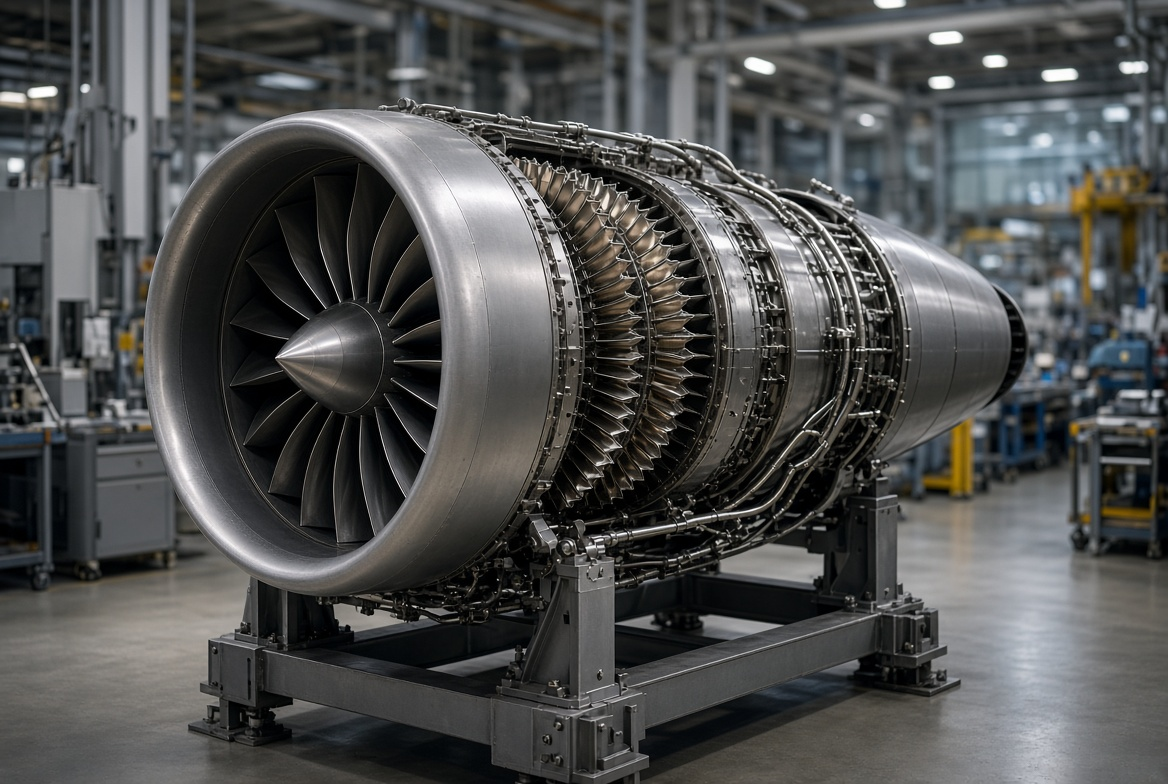
This refers to a ceramic core used in investment casting. It forms the internal cavity of the blade, so the geometry of the finished part directly depends on its strength and dimensional stability. During firing and pouring with a heat-resistant alloy, the core experiences significant thermal loads and can deform or break.
The new mixture is primarily based on electrocorundum. It also contains 12.5% fused silica, 0.2–0.5% titanium dioxide in anatase modification, and 1–2% silicon carbide. A paraffin plasticizer with polyethylene and 7–8% beeswax is used for forming blanks.
It is this combination of components that should provide the necessary properties of the core after firing. Fused silica helps reduce the sintering temperature and facilitates the subsequent removal of ceramics from the finished casting. Titanium dioxide activates sintering and recrystallization of the corundum base, while silicon carbide increases the temperature of initial deformation.
Separately, the developers optimized particle size. The granulometric structure is formed by fractions of 100–120 and 30–40 µm, while smaller particles of 3–10 µm fill the remaining pores. This structure should reduce uneven shrinkage and the risk of warping of the complex core.
Tests showed a noticeable difference from the previously used composition. For the optimal variant, the flexural strength reached 24–26 MPa, whereas for the compared prototype, this indicator was about 5–8 MPa. Linear shrinkage was kept at 0.12–0.14%, and the depth of interaction of the core material with ZhS6U alloy was 0.04–0.06 mm.
Read more on the topic:
Never miss our newsAdd this site to your preferred sources to see us more oftenAdd on Google