On Friday, August 28, a partial lunar eclipse will occur, which will be the last astronomical event of this year. The maximum phase will occur at 07:13 Moscow time, when the Earth's shadow will cover about 93–96% of the lunar disk. However, not everyone will be able to observe this phenomenon.
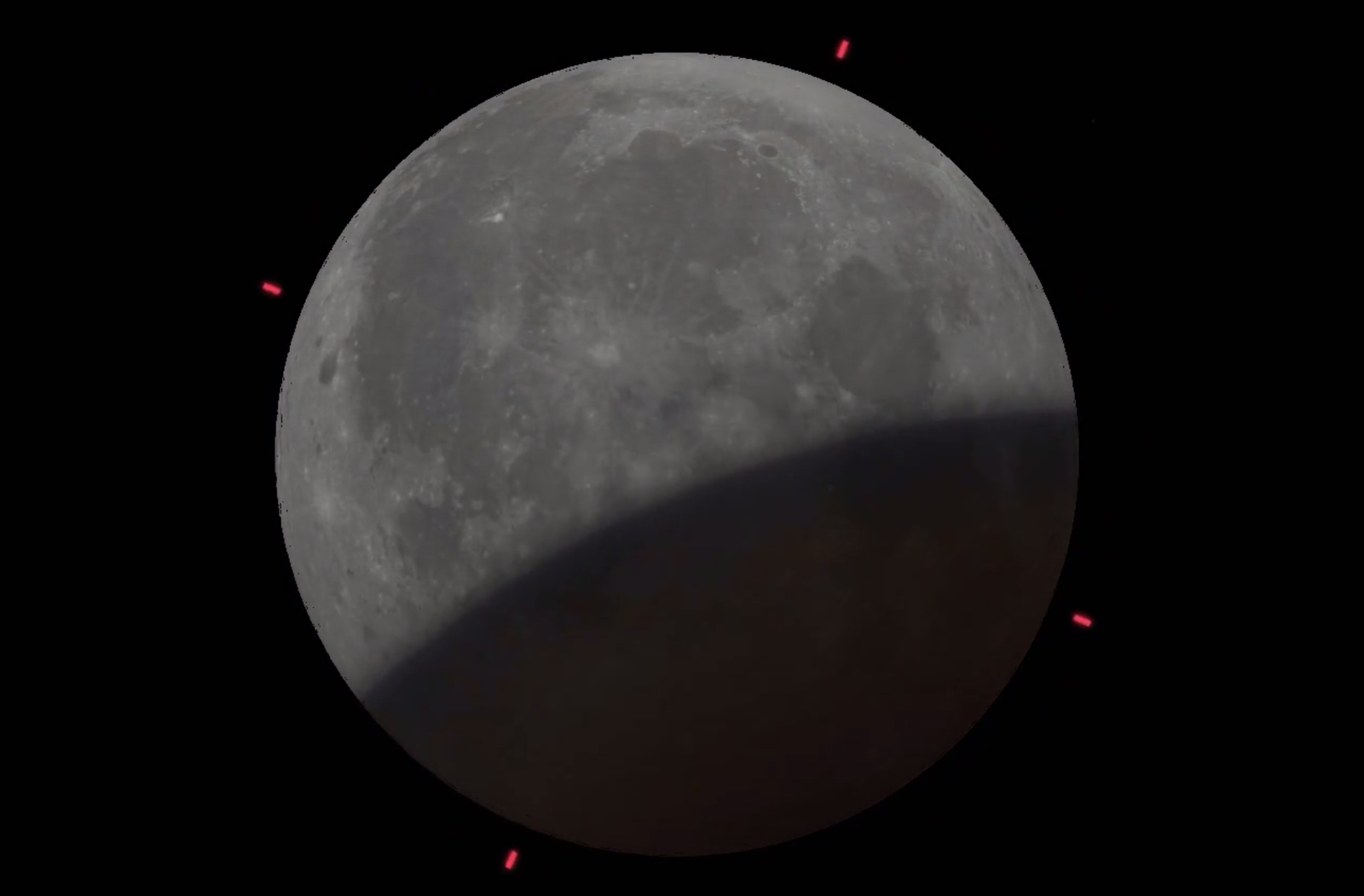
As explained by the Solar Astronomy Laboratory of IKI RAS, the problem is that the eclipse will occur in the morning: the Earth's shadow will pass over the lunar disk from 05:33 to 08:53 Moscow time. In almost all of Russia, the Sun will already be in the sky at this moment. And although sometimes the Moon and the Sun can be seen simultaneously, this is impossible during an eclipse, as they are in opposite sectors of the sky.
Muscovites will not even be able to see the beginning of the phenomenon — the Moon will disappear below the horizon at 05:27, even before the maximum phase. Residents of St. Petersburg will be in a slightly better position — the Moon will set at 05:47, which will allow observing only the initial penumbral phase, when the disk slightly darkens.
The exception will be the Kaliningrad region, where the conditions for observation will be the most favorable in the country — there, the initial partial phases of the eclipse will be visible. The full cycle of the phenomenon will be best seen in North and South America.
As astronomers reminded, this is the last eclipse of 2026 — there will be no more solar or lunar eclipses. The next total lunar eclipse, which can be observed from all over Russia, will occur only on December 31, 2028.
Read more on the topic:
Never miss our newsAdd this site to your preferred sources to see us more oftenAdd on Google