Engineers from Kazan National Research Technical University named after A. N. Tupolev (KNRTU-KAI) have developed a vertical take-off and landing unmanned aerial vehicle with programmatically controlled thrust distribution. The device combines hovering and horizontal flight modes and is intended for aerial monitoring, cartography, search and rescue operations, and logistics.
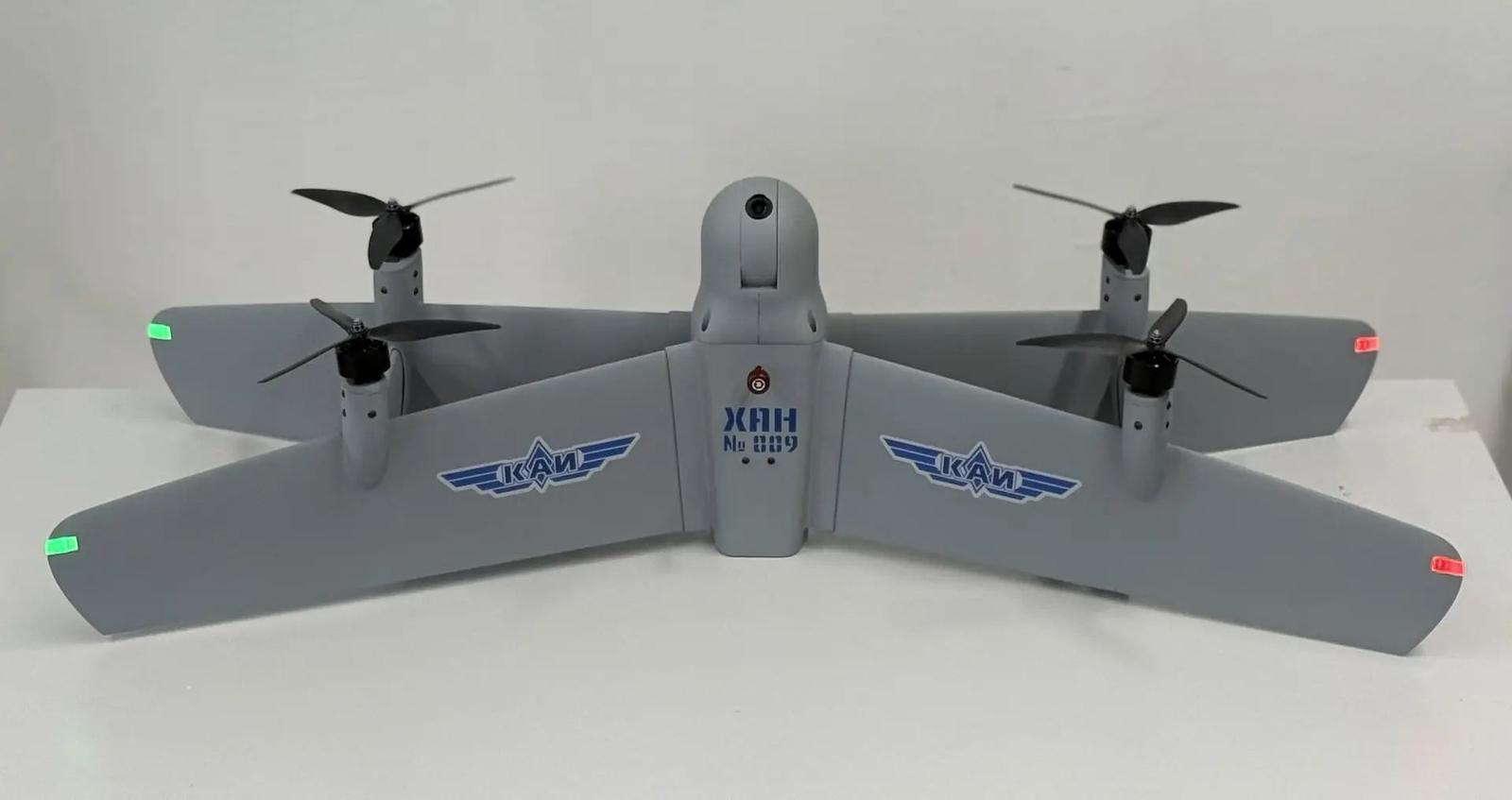
The main feature is thrust control without mechanical rotating motors. Instead, the onboard computer redistributes thrust between the engines by changing their rotation frequency. This allows the apparatus to transition from hovering to horizontal flight — and back.
The design is based on a body with a wing and four permanently fixed electric motors. The software and hardware complex stabilizes the drone using data from sensors and satellites, tilts the body for forward movement, and smoothly shuts down some engines in cruise mode, saving energy.
As KAI engineer Nikita Semin explained, the development is simpler and lighter than foreign counterparts, more reliable because it has no moving parts, and more economical — in horizontal flight, lift is generated by the wing. The new UAV is the result of the work of the initial scientific team SNK-4, created at the Advanced Engineering School of KNRTU-KAI.
Read more on the topic:
Never miss our newsAdd this site to your preferred sources to see us more oftenAdd on Google

















