Translated with AI from the Russian original.
The final stage of the Oreshnik ballistic missile's flight takes mere seconds. MRBM warheads, upon entering the dense layers of the atmosphere, are theoretically capable of covering approximately 180 km in 60 seconds, according to "Voennoye Delo" (Military Affairs) publication.
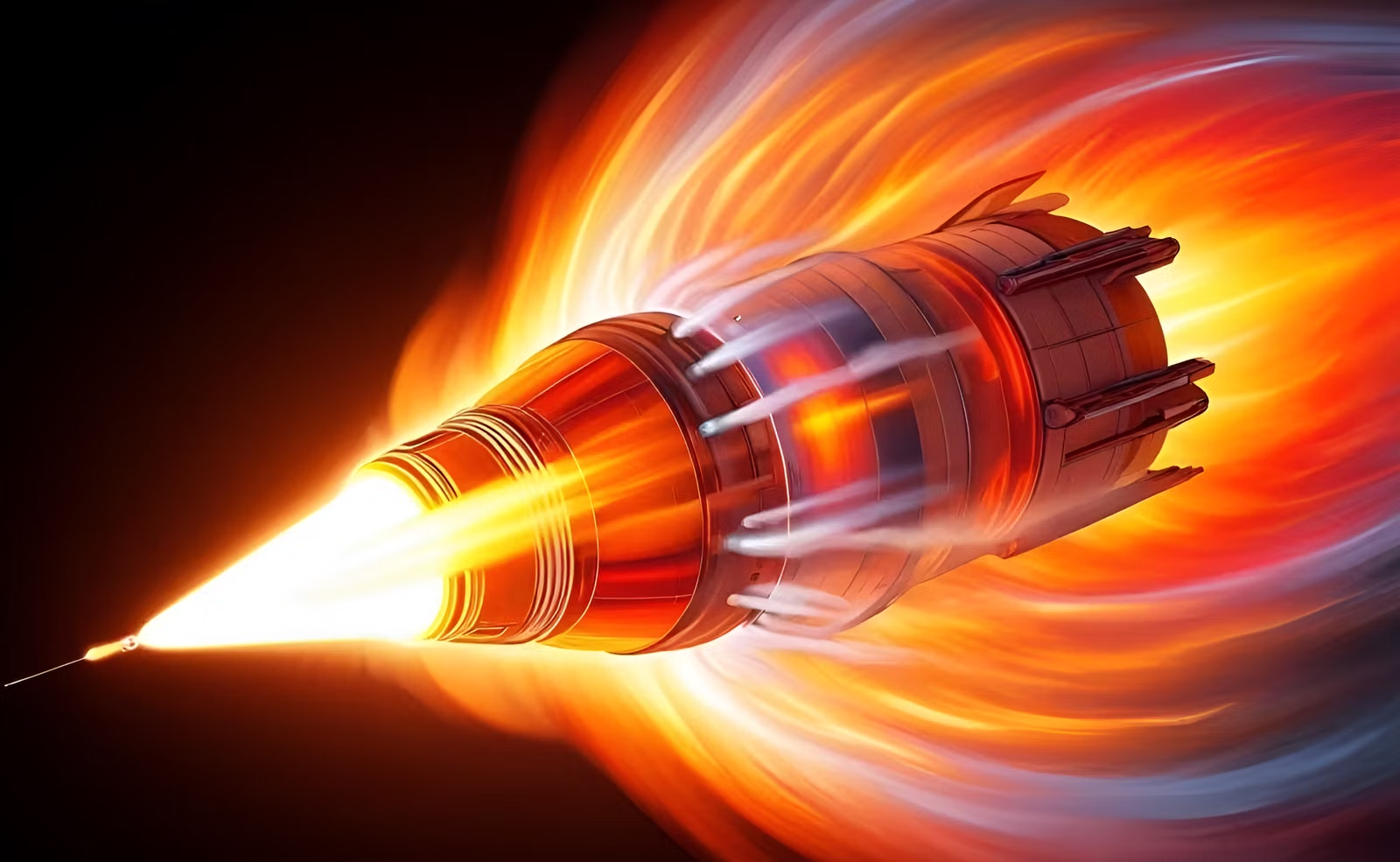
After the missile stages complete their operation, its warhead continues to move along a ballistic trajectory.
For missile defense, the time deficit is critical. The system needs to detect the object, determine its trajectory, calculate the interception point, and manage to launch an anti-missile for interception.
At speeds of several kilometers per second, even a few lost seconds mean a miss.
A speed of 3 km/s corresponds to approximately 10.8 thousand km/h. At such a speed, a warhead covers 1 km in about one-third of a second.
In the final stage, atmospheric re-entry occurs: due to the enormous speed, the air in front of the warhead is sharply compressed and heated, forming a superheated plasma sheath around it.
Analysts from Sohu found that the Oreshnik's invulnerability to electronic warfare is allegedly related to the use of Soviet vacuum tubes. There is no official confirmation of this.
Read more on the topic:
Never miss our newsAdd this site to your preferred sources to see us more oftenAdd on Google

















