Translated with AI from the Russian original.
Rules for the operation of electronic signs and information boards on Russian roads may change. Flickering and animation are to be prohibited on screens, and the devices themselves cannot be obscured by advertisements, trees, or lighting poles. The new GOST will also establish requirements for the visibility distance of screens and their brightness. The draft document was prepared by RosdorNII, which is part of the Ministry of Transport.
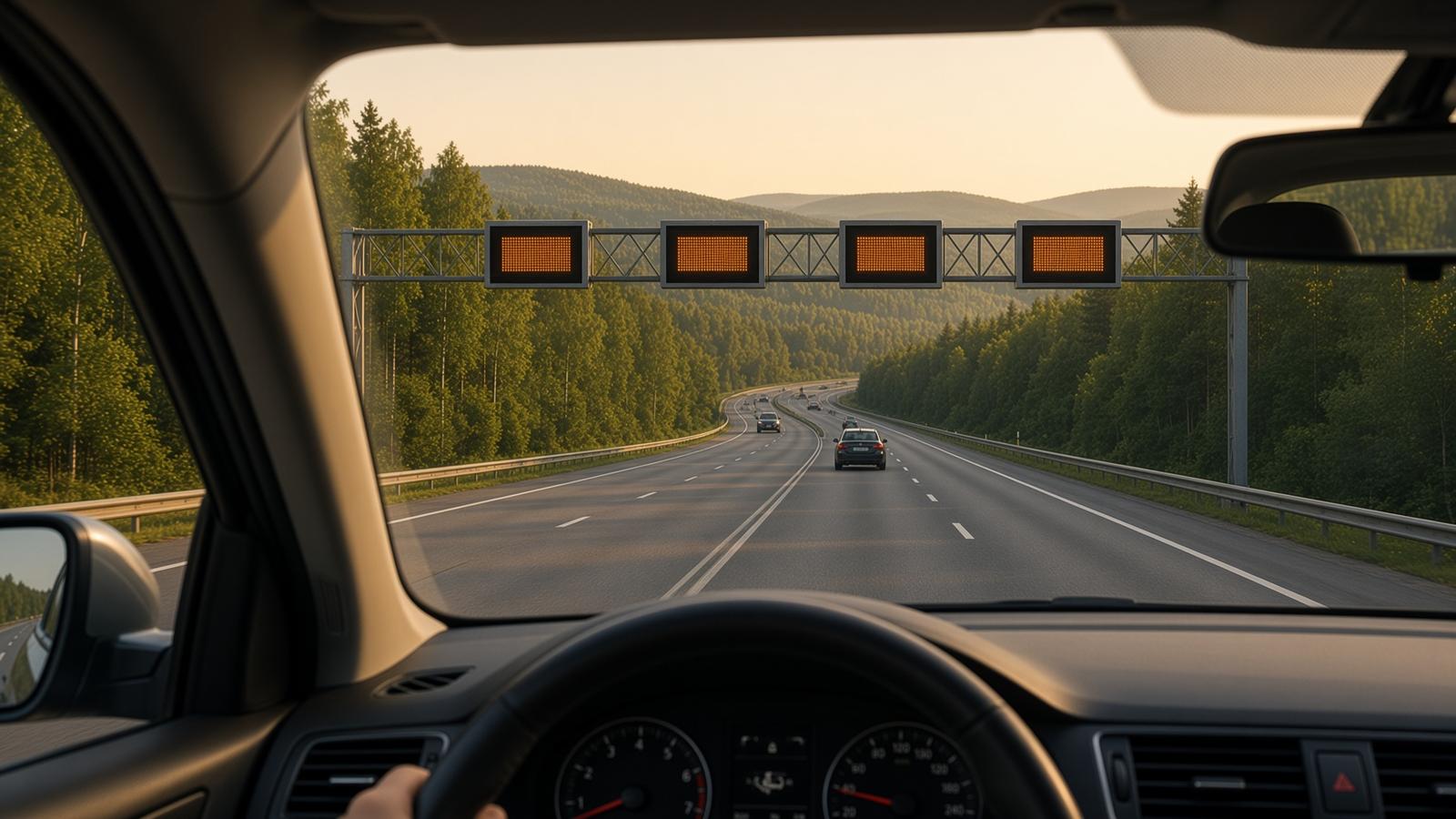
Electronic signs to be made more noticeable and understandable
For drivers, the main change is related to information readability. A dynamic information board must be visible for at least 150 meters outside settlements and 100 meters in the city. For variable message signs, a single standard of 100 meters will be set.
Screen brightness will automatically change depending on lighting or time of day. RosdorNII believes this will help avoid blinding drivers at night and poor visibility of information during the day.
The project specifically prohibits flickering, which interferes with information perception. Screens cannot be obscured by outdoor advertising, trees, or lighting poles.
Dynamic boards will also be prohibited from displaying animated messages and information unrelated to road conditions. However, social advertising related to road safety will be allowed: for example, warnings about changes in traffic rules, the need to observe speed limits, and not to drive after consuming alcohol.
Special boards to appear before hazardous sections
For road sections with increased accident rates, the project provides for the installation of signs and boards combined with meteorological information sensors. This refers, in particular, to sections where drivers may be threatened by strong crosswinds or black ice.
Currently, only the first draft of the document has been prepared. Work on the standard is included in the program for 2026, but there is no exact date for its introduction yet.
However, the GOST or its individual provisions should become mandatory, as they are planned to be included in the relevant government order.
It is also unknown whether already installed signs and boards will have to be re-made after the approval of the new rules. RosdorNII explained that this will depend on which requirements are made mandatory and what transition period is established.
For new facilities and equipment that will be introduced after the mandatory application of the standard begins, new norms, as a rule, will be taken into account already at the design, procurement, and acceptance stages.
As of 2025, approximately 2.2 thousand dynamic information boards and more than 9 thousand variable message signs were installed on Russian roads.
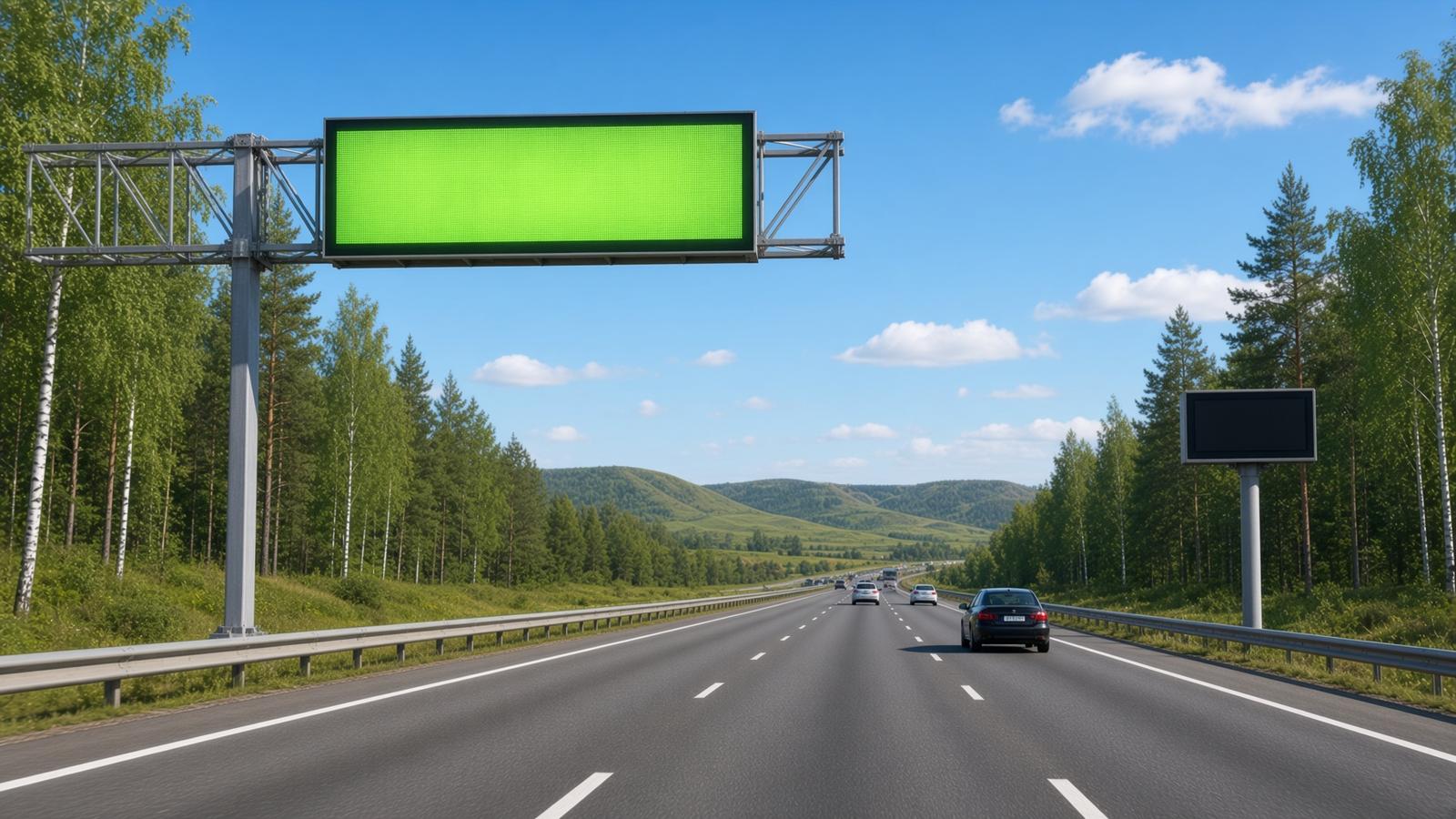
New GOST may affect already operating systems
Alexander Evsin, CEO of Transintel Information Technologies, believes that the main task of the new document is to standardize information display and data exchange.
At the same time, in his opinion, it is important to check the compatibility of the new requirements with already operating systems and installed equipment. As an example, he cited Moscow, where animation is actively used on electronic boards, which the new GOST proposes to prohibit.
Rifkat Minnikhanov, Director of the State Budgetary Institution "Road Safety" of the Republic of Tatarstan, considers the standard update justified. According to him, for the first time, requirements for variable message signs and dynamic boards are simultaneously prescribed in one document.
He considers it fundamental that the changes are not limited to a formal update of the rules, but help eliminate contradictions between existing GOSTs.
Drivers may be required to obey electronic signs
A separate issue concerns not the screens themselves, but how mandatory their instructions will be for drivers.
At the end of 2025, Deputy Prime Minister Marat Khusnullin instructed the Ministry of Transport, Rosavtodor, and the Ministry of Internal Affairs to prepare amendments to the traffic rules that should oblige motorists to comply with the requirements displayed on variable message signs and dynamic boards.
Currently, road cameras with digital indicators are not synchronized with the penalty system. Therefore, if a driver violates a requirement shown on an electronic board, they will not receive a fine.
At the same time, drivers do not always understand which restriction is in effect at a particular moment. Pyotr Shkumatov, head of the "People's Front" working group "Protection of Motorists' Rights," cited a situation where ordinary signs allow driving at 110 km/h, but an electronic board unexpectedly shows a limit of 90 km/h due to a wet road, although the road itself remains dry.
The instruction to prepare amendments to the traffic rules was given by the end of 2027. The issue of drivers' responsibility for the requirements of electronic signs is not considered in the draft of the new GOST.
Read more on the topic:
Never miss our newsAdd this site to your preferred sources to see us more oftenAdd on Google

















