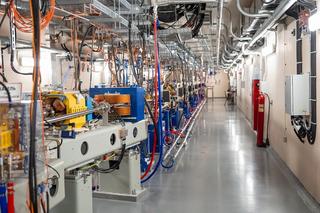
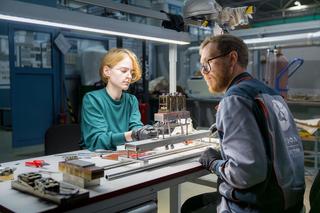
ODK discussed technologies planned for use in the creation and production of advanced aircraft engines, including the PD-35 demonstrator. These solutions include friction welding on a unit with a force of over 400 tons, electrochemical processing of blisks, isothermal forging, laser hardening, and additive repair of parts.

The technologies were presented at the ODK-Salut site during a meeting of the scientific department of the Academy of Aviation and Aeronautics Sciences. More than 40 specialists from the engine-building industry participated in the discussion.
One of the most notable developments was the PSTI-400 unit for friction welding. In this process, parts are heated by friction and then joined under high axial force. This solution allows for the creation of joints from dissimilar materials without melting them. A model rotor section for the PD-35 technology demonstrator engine has already been tested on this unit.
Also important for future engines is the manufacturing technology for blisks – integral rotor parts where the disk and blades are made as a single unit. The meeting discussed the electrochemical processing of these parts, which allows for complex geometries with high precision.
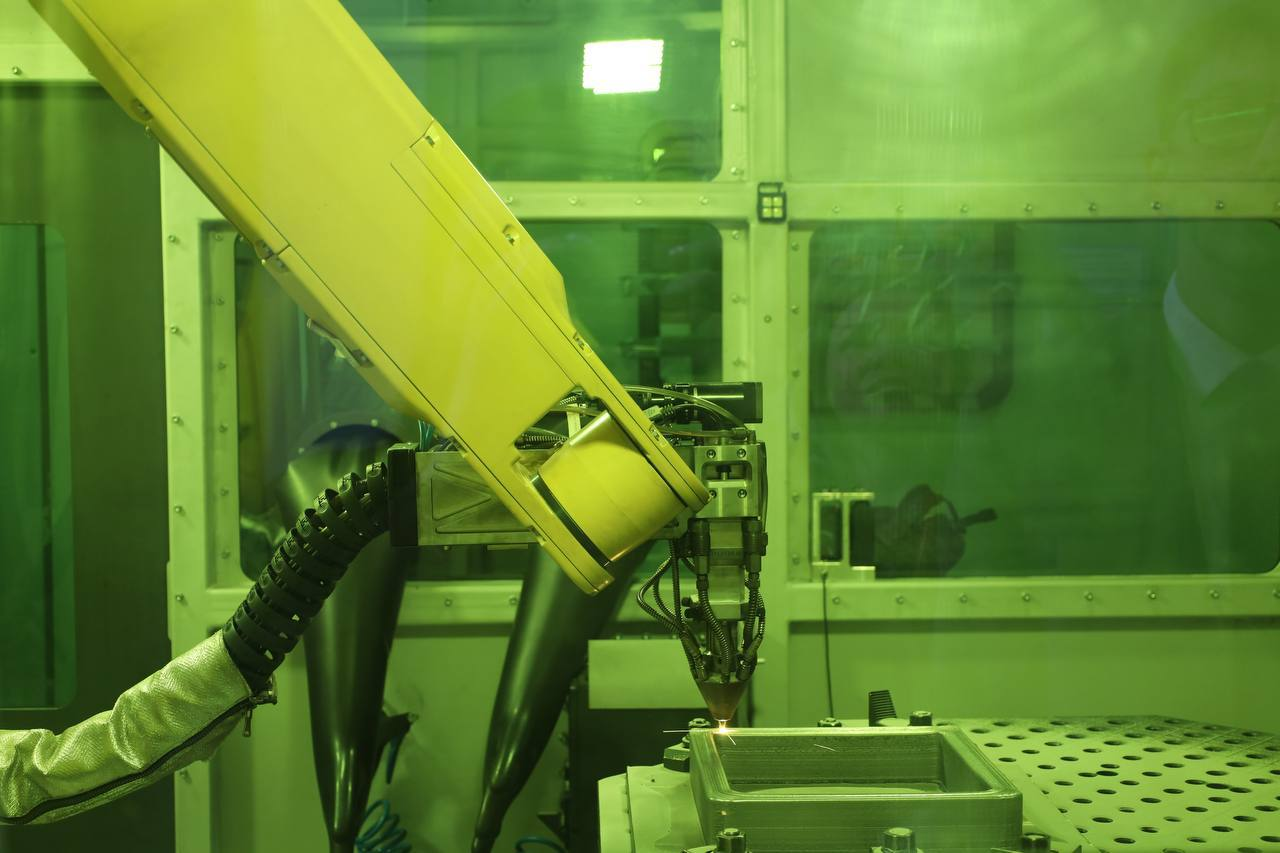
Isothermal forging, laser shock peening, and additive repair of monowheels became a separate area. The technology allows for improving production and restoring expensive parts without manufacturing entirely new components.
Some of the solutions have already undergone practical testing in previous ODK projects. In particular, the experience gained in creating the PD-14 with high-efficiency brush seals is being considered for use in ground-based gas turbine units.
Read more on the topic:
- ODK unveils technologies for PD-8 and PD-35: new materials change the rules of aircraft engine manufacturing
- Bankruptcy of "ODK-UMPO" did not happen: the manufacturer of engines for Su-57 repaid a debt of 41 million rubles
- PD-14 can become the main advantage of MC-21 if it confirms its stated characteristics
Never miss our newsAdd this site to your preferred sources to see us more oftenAdd on Google