Translated with AI from the Russian original.
The ISS, which has been operating in orbit for almost 30 years, is preparing for its final phase. Two Russian and one American spacecraft will conduct a joint mission to deorbit the station, a Roscosmos representative announced.
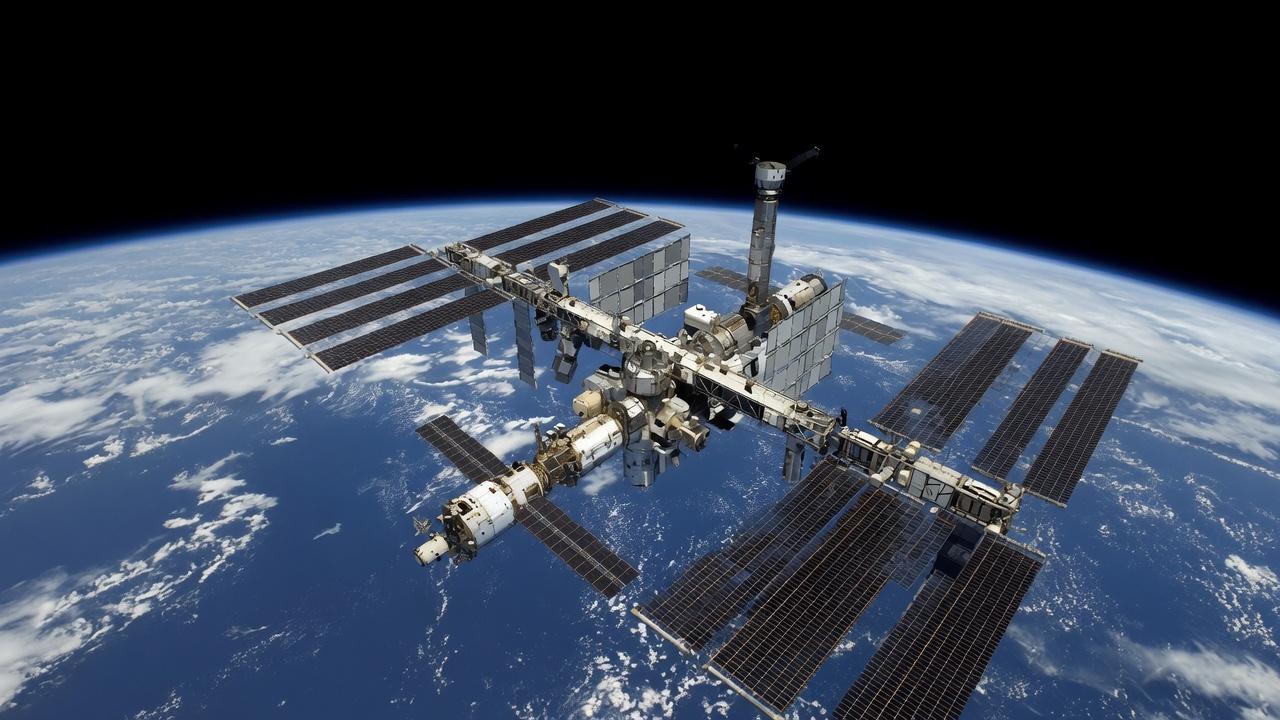
According to the program, the planned lowering of the station's orbit will begin in 2028, and the deorbiting process itself will take about two years. It will involve a specially developed American spacecraft and two Russian "Progress" cargo spacecraft.
The parties also plan to reach an agreement on the distribution of responsibilities between Roscosmos and NASA.
How the ISS is planned to be deorbited
It is expected that the "Progress" spacecraft will hold the station in the desired position and be responsible for stabilizing the ISS in space, while the subsequent deorbiting maneuver will be performed by the American United States Deorbiting Vehicle (USDV).
The USDV is already being developed in the US. SpaceX is working on it under a $843 million contract with NASA. The American spacecraft will be built based on the Dragon spacecraft, but with a redesigned, larger aft section and an increased number of Draco engines. It will be approximately four times more powerful than a regular Dragon and carry six times more fuel.
"Progress" is a series of Russian uncrewed cargo spacecraft (TGK) for supplying orbital stations. They are based on the crewed "Soyuz" spacecraft. The developer and manufacturer is RKK "Energia", and they are launched by the "Soyuz" rocket.
"Progress" is like a tugboat for the station. It helps to "steer" the spacecraft's position in space without expending the ISS's own fuel. The maneuvering engines on "Progress" have also been used for decades for another common task – to periodically raise the ISS's orbit to prevent it from lowering due to atmospheric drag.
Russia and the US decide the fate of the ISS
In April 2025, it became known that Roscosmos and NASA agreed to synchronize the ISS operational timelines: until then, the Russian side planned to complete its participation in the project around 2028, while the US expected it to last until 2030. Concurrently, Roscosmos head Dmitry Bakanov confirmed that the station would operate until at least 2028, and its further fate would be decided jointly with American partners.
By mid-2026, the parties agreed on a basic plan for the controlled deorbiting of the ISS, including technical, legal, and international procedures. The deorbiting is planned to take place in the Pacific Ocean – the same place where the debris of other spacecraft already rests. The current news about the specific mission spacecraft and the distribution of responsibilities between the agencies became the next step in this long-standing negotiation process.
The first ISS module was launched into orbit in November 1998, and a long-duration expedition arrived two years later. Initially, it was assumed that the station would operate until 2015, but its operational life was extended several times.
Read more on the topic:
Never miss our newsAdd this site to your preferred sources to see us more oftenAdd on Google

















