In July 2026, two experimental MC-21-310 aircraft successfully completed 17 test flights, with a total duration exceeding 56 hours. During the program, the operation of onboard equipment, control systems, landing gear, power plants, and the aircraft's behavior in complex modes were checked.
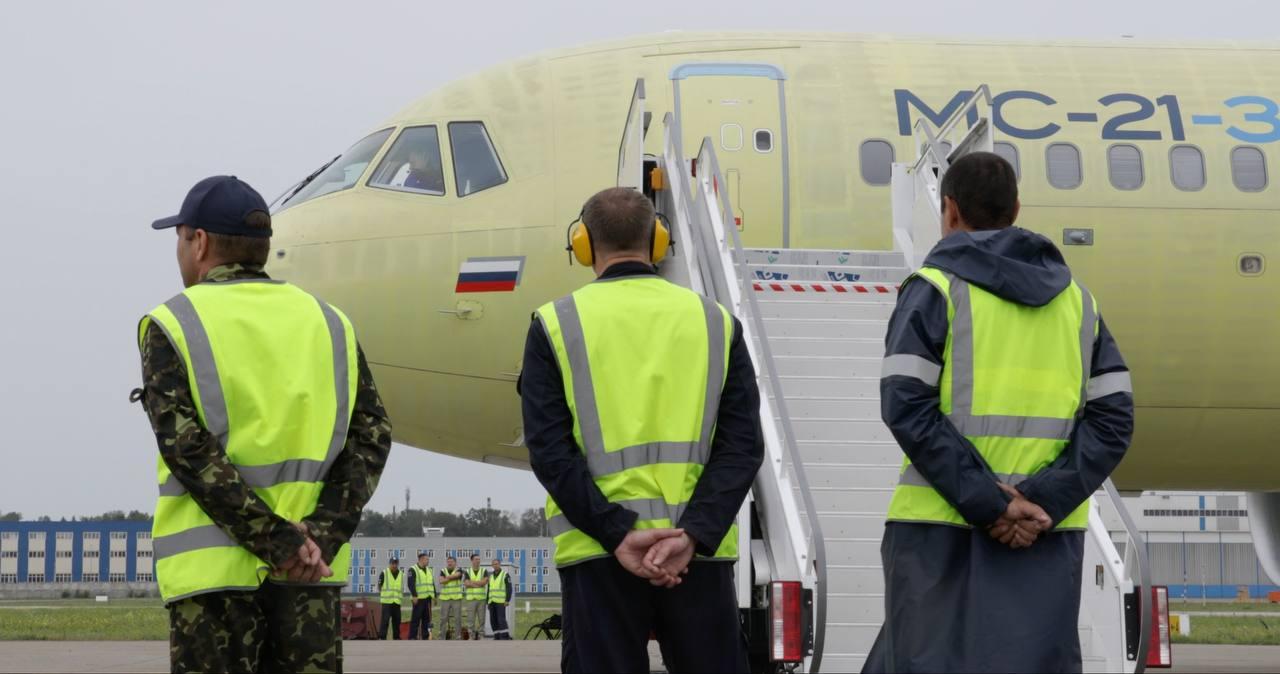
The tests were conducted by aircraft with tail numbers 73055 (MC.0012) and 73057 (MC.0013). The main focus was on checking systems under normal conditions and simulating various failures during flight.
Aircraft MC.0012 was used to evaluate the onboard equipment complex. Specialists checked the operation of the navigation computer system, weather-navigation radar station, communication systems, TCAS collision avoidance system, and TAWS ground proximity warning system.
In addition, the aircraft tested fire detection and suppression systems in the auxiliary power unit and baggage compartments.
Aircraft MC.0013 performed tests of the automatic control system and the aircraft control complex. During ground runs, specialists checked the operation of the nose landing gear steering and braking effectiveness in case of various hydraulic system failures.
In flight, the operation of engines, auxiliary power unit, and fuel system under negative G-forces was also evaluated, and emergency landing gear deployment was checked.
A separate stage of the program was dedicated to checking the stability and controllability of the MC-21-310 at high angles of attack and sideslip. Test pilots also evaluated the operation of automatic limiters that prevent exceeding permissible values of speed, G-force, and Mach number.
Read more on the topic:
Never miss our newsAdd this site to your preferred sources to see us more oftenAdd on Google

















