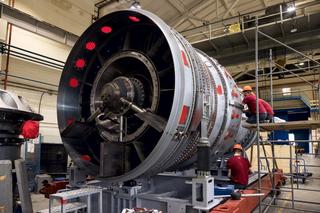
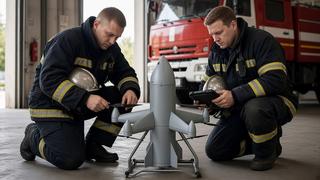
While some are still debating whether artificial intelligence can be trusted with the wheel, dozens of driverless trucks traverse the M-11 "Neva" highway every day, and in Innopolis, driverless taxis have become as common as regular ones. "Pervyy Tekhnicheskiy" investigated where in Russia a special regime for autonomous vehicles is already in effect, who is legally responsible for them, and what the industry's prospects are.
Rules Governing Autonomous Transport in Russia
Autonomous logistics projects operate within experimental legal regimes, or, as specialists call them, "regulatory sandboxes." This is a special mechanism that temporarily and in a specific territory removes legislative barriers for new technology so that it can be tested in real conditions, not just in theory. This is how highly automated vehicles — abbreviated as HATS — have been tested on public roads in Russia since 2022.
The situation is expected to change in the foreseeable future: on January 21, 2026, the Ministry of Transport published a draft separate federal law "On Highly Automated Vehicles," and in June 2026, it presented its updated version.
If the document is adopted in its current form, the law will come into force on September 1, 2027, and will finally establish the status of autonomous vehicles as full-fledged participants in road traffic — with their own operating rules, and not just experimental permits.
Where You Can Already Find a Driverless Car
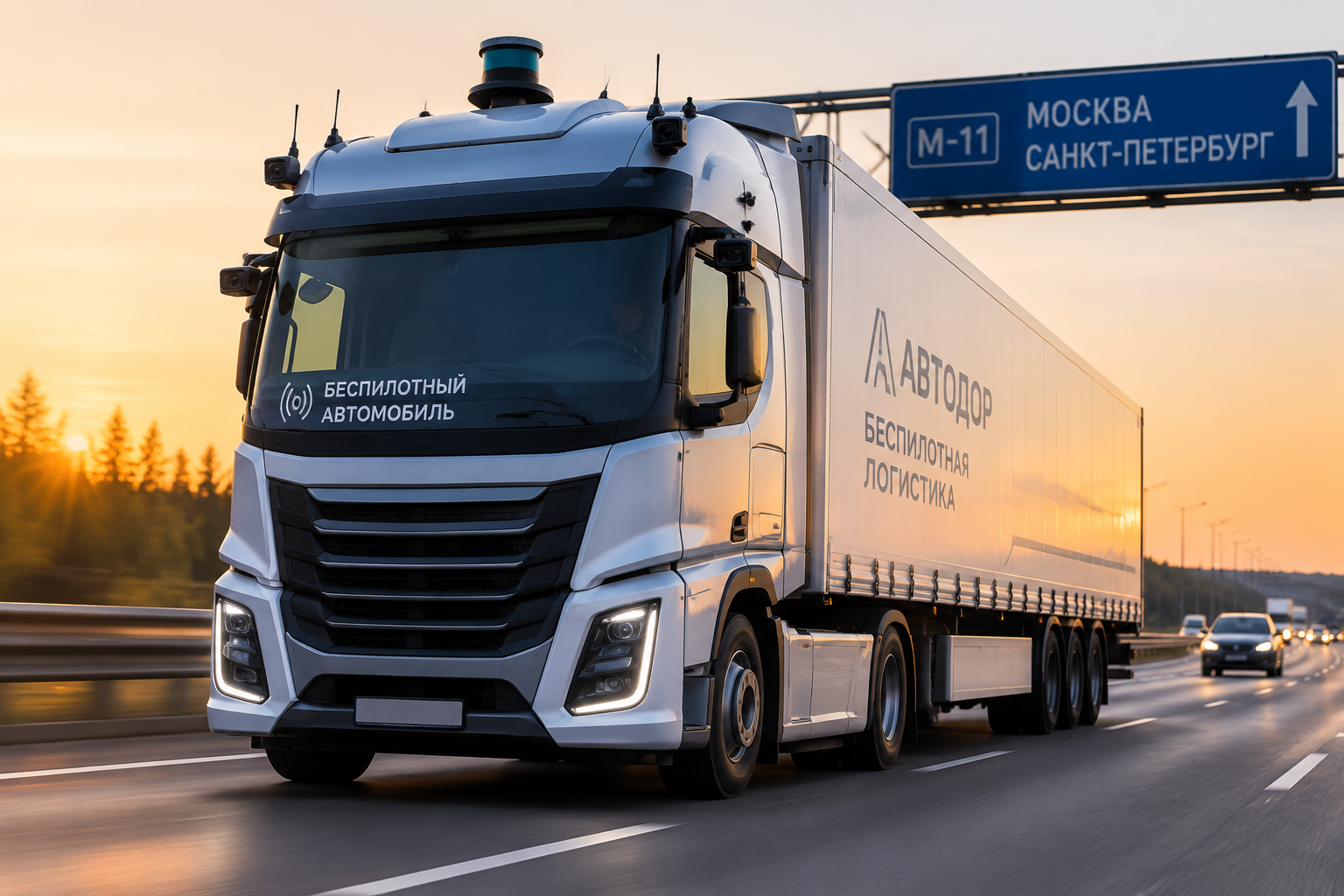
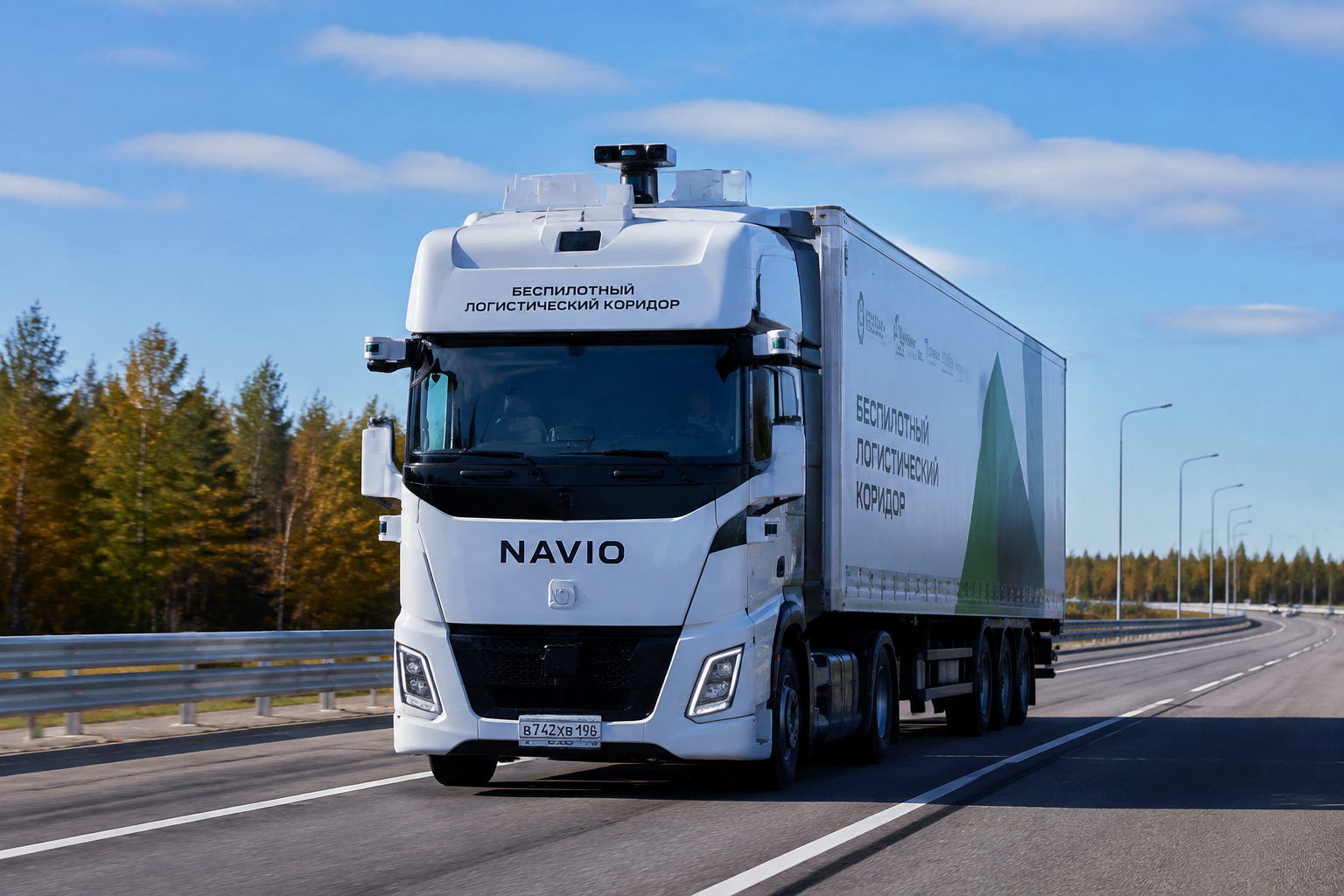
Most autonomous vehicles in Russia today are used for cargo transportation. In the summer of 2023, the "Autonomous Logistics Corridors" project was launched — testing autonomous trucks on the M-11 "Neva" highway between Moscow and St. Petersburg.
Since then, the testing zone has been expanded: now autonomous trucks have access to the M-11 highway, the Central Ring Road, the M-4 "Don" highway, and the M-12 "Vostok" highway. And in April 2026, the government expanded the experimental legal regime for autonomous trucks from 13 to 46 regions of the country.
There is also autonomous passenger transport. The first city where robotaxis became a truly common occurrence was Innopolis in Tatarstan: tests began there back in 2018, and since then, autonomous vehicles have traveled more than a million kilometers and made over 77,000 trips. Later, the federal territory "Sirius" near Sochi and the Yasenevo district of Moscow were added to Innopolis. Now the developing company plans to bring autonomous taxis back to Moscow itself on a larger scale: by the end of 2026, the fleet should grow to approximately 150 vehicles, and by the end of 2027 — to 300.
A separate direction is autonomous technology in heavy industry, away from conventional roads. In June 2026, the government introduced a three-year experimental legal regime for highly automated self-propelled machines in open-pit mining — pilot sites were chosen at the Ozernoye deposit in Buryatia and the Peschanka deposit in Chukotka. There, autonomous mining dump trucks will operate in real industrial cycle conditions.
Autonomous logistics has also expanded internationally: in the spring of 2026, autonomous KAMAZ trucks for the first time crossed the border between Russia and Kazakhstan in autonomous mode — with a check of communication quality along the route and the operation of a digital twin of the highway in real international transportation conditions.
"Smart Road": What's Behind an Autonomous Vehicle Besides the Car Itself
For a driverless truck to safely travel on a highway, sensors on the vehicle alone are not enough — a prepared road infrastructure is also needed. For the M-11 highway, such infrastructure was created by "SoftTelematika": it is a high-precision digital twin of the entire 610-kilometer highway — a detailed digital map of the road and roadside objects that interacts in real time with autonomous transport. The twin is connected to a control center that monitors road conditions and traffic around the clock and is integrated with an intelligent traffic management system.
Another layer of digital infrastructure is the "ERA-GLONASS" system, originally created for emergency calls in case of car accidents. Today, it is becoming the core of monitoring and ground-based autonomous transport: trucks on the M-11, Central Ring Road, and M-4 highways are connected to the system, and in the future — other types of autonomous equipment. Through it, the movement of each vehicle can be tracked in real time, and geofences can be established where the movement of autonomous vehicles is either permitted or restricted.
Who is Responsible if an Autonomous Vehicle is Involved in an Accident
The issue of responsibility is one of the most sensitive, and a significant part of the new draft law by the Ministry of Transport is dedicated to it. Damage to the health and property of the victim in an accident involving an autonomous vehicle is compensated by the owner of the vehicle — just as the owner of a conventional car is responsible today under OSAGO (compulsory motor third-party liability insurance).
But then nuances come into play. If the accident occurred due to a violation of traffic rules by the automated driving system itself, a design defect, or a software error, responsibility falls on the manufacturer and developer. If the autonomous vehicle was used outside of normal operating conditions, the software was not updated in time, or someone illegally interfered with its operation, the owner or operator of the vehicle will be responsible.
Responsibility is separately provided for the service center — if the accident occurred due to poor-quality technical maintenance — and the owner of the road infrastructure, if incorrect road data was transmitted to the autonomous vehicle.
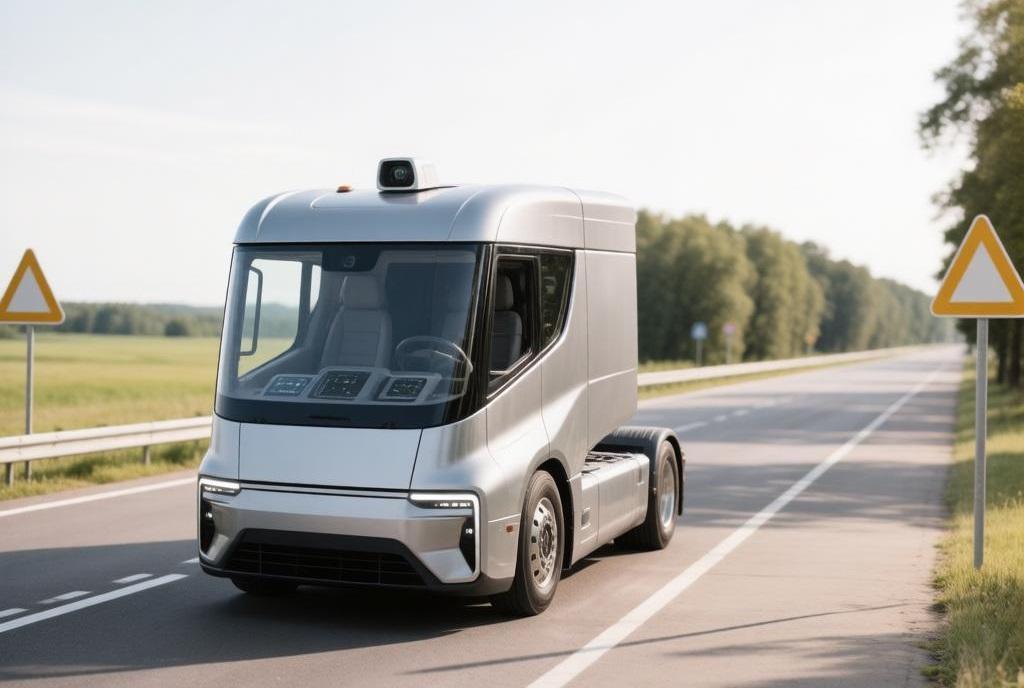
At the same time, the owner who compensated the victim for damages will be able to file a recourse claim against the actual culprit — for example, against the vehicle manufacturer, if their fault is ultimately established. Restrictions and prohibitions on the use of autonomous transport on federal highways will be established by the government, on regional and intermunicipal roads — by regional authorities, and on private and toll roads — by their owners, down to individual streets and sections.
From Test Site to Real Logistics
According to AO GLONASS, the total mileage of autonomous trucks in Russia has exceeded 19 million kilometers, and on average, 33 autonomous trucks operate daily on the M-11, 19 on the M-4, and 8 on the M-12.
As early as the beginning of 2026, more than 95 autonomous trucks were operating on the country's roads, having collectively traveled over 14.5 million kilometers without a single accident. Separately, autonomous KAMAZ trucks on the M-11 and Central Ring Road highways had covered about 6 million kilometers and transported approximately 732 thousand cubic meters of cargo by May 2026 — also without a single accident or violation during the entire testing period.
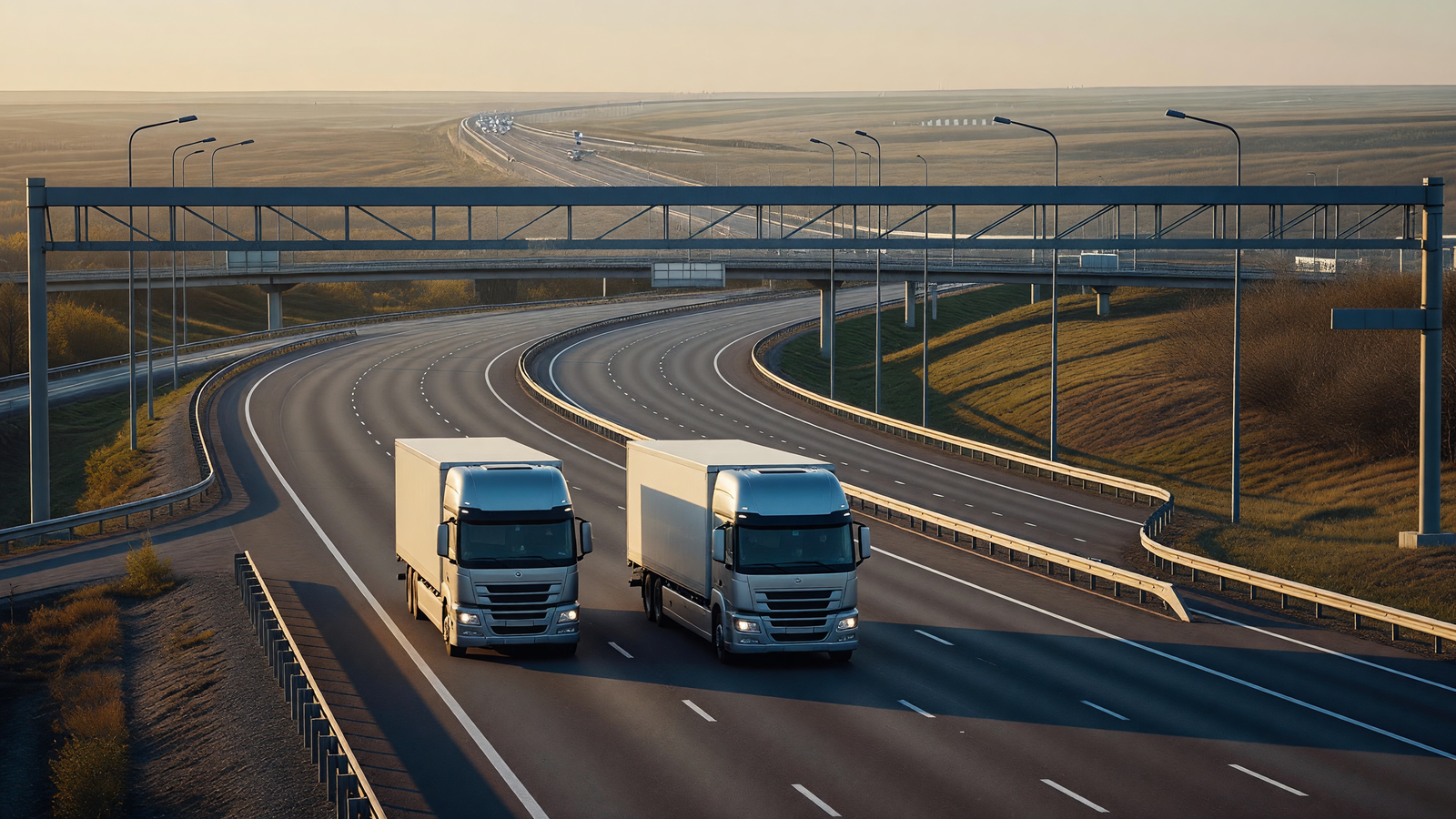
Future forecasts are even bolder. According to industry participants' estimates, by 2035, the fleet of autonomous trucks in Russia could grow to 57,000 units, and highly automated transport could occupy up to 18.8% of the country's total freight transportation market.
At the same time, the company "Yakov i Partnery" estimated that localizing the production of technologies for autonomous vehicles in Russia would require investments of 250 to 390 billion rubles.
Read more on the topic:
Never miss our newsAdd this site to your preferred sources to see us more oftenAdd on Google


![Growth Point: After 5G Launch, Mobile Internet in Russia Accelerated by 20%","subtitle":"TelecomDaily recorded an upload speed increase of 19.7%, and download speed of almost 14%","announce":""}[]}],](https://media.ixbt.site/fit-in/320x/ixbt-data/1727896/ai-image-nvgq0a0v5cjnyxwoc8xpelva.webp)