A regular AA battery can now be charged wirelessly. Scientists from ITMO's New Physical Engineering together with students have created the world's first AA-sized battery that receives power from standard Qi wireless charging stations – the same ones used to charge smartphones, watches, and headphones.
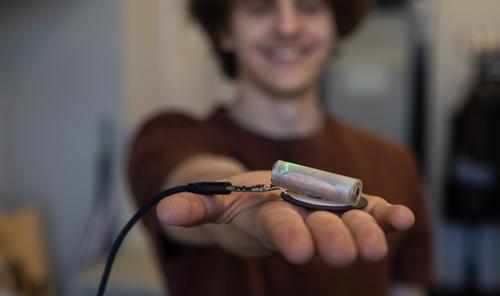
Outwardly, the device looks like a regular 1.5-volt battery, but inside there is a curved receiving coil, voltage converters, and a rechargeable battery. The development will allow adding wireless charging to devices without a USB port – computer mice, remote controls, radio receivers, toys, and flashlights.
The developers also solved the problem of many rechargeable batteries suddenly shutting down. Such batteries often show a full charge until the very last moment, and then suddenly stop working. ITMO created a converter that gradually reduces the voltage as the battery discharges, so the device notices in advance that the charge is running out and can warn the user.
Usually, special microchips are used for this, but the team developed its own solution without them and has already patented it. The prototype is assembled in a transparent case made of photopolymer resin, printed on a 3D printer. Inside, there is a 65 mAh battery that fully charges in about an hour. Tests have shown that even after continuous charging, the case temperature does not exceed 40°C.
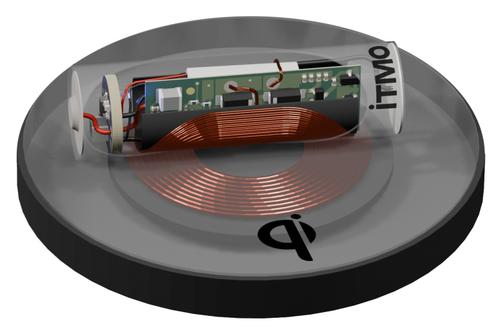
The project began as a student task for the "Wireless Technologies" bachelor's program. Initially, scientists considered the "Krona" battery option, but then switched to the more common AA format. When reviewing scientific papers and patents, specialists found that there were many ideas in this area, but there had been no ready-made working prototype before, either in Russia or abroad.
Currently, the developers are working on reducing the size of the electronics to free up more space for a higher-capacity battery. Scientists want to achieve a ratio similar to modern rechargeable AA batteries with a built-in USB port: about 20–30% of the volume will be occupied by electronics, and the rest by the battery.
The results of the work are published in the journal IEEE Transactions on Power Electronics.
Read more on the topic:
Never miss our newsAdd this site to your preferred sources to see us more oftenAdd on Google