Translated with AI from the Russian original.
At Krasnoyarsk International Airport, after a major overhaul, a hangar complex with an area of nearly 7,000 sq. m was commissioned. The first aircraft to undergo scheduled maintenance there was an ATR 42-500 operated by the airline KrasAvia. Investment in the project amounted to 790 million rubles, the air hub's press service reported.

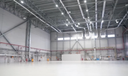
The hangar is equipped with automated sliding gates 19 m high and with a total length of 180 m. The heat-insulated structure and flexible opening logic make it possible to bring in aircraft of any type, including wide-body jets. The floor is made of monolithic reinforced concrete with a high-strength epoxy coating, providing a level and safe surface for heavy equipment operations. LED lighting delivers about 600 lux, the level required for precise maintenance procedures. A combined dual-circuit heating system maintains a stable temperature in the working area regardless of Siberian weather, while a robotic foam fire suppression system and modern ventilation complete the safety framework.
Airport CEO Kirill Ermakov noted that the hangar's upgraded engineering systems are already attracting applications from airlines. The complex's capacity allows servicing up to five aircraft simultaneously, and the presence of power distribution columns makes it possible to supply both the aircraft and the equipment at the same time. In effect, Krasnoyarsk has gained a technical base capable of accepting MS-21, Superjet, Boeing 737/767, Airbus 320, and Il-114-300 class aircraft for maintenance without seasonal restrictions.
Previously, the hangar was used only during the warm season. Now complex maintenance procedures and major repairs can be carried out on site, eliminating costly ferry flights of aircraft to other regions. For an aviation hub with passenger traffic exceeding 4.2 million people per year and hub status in the center of the country, this means greater operational appeal and reduced airline fleet downtime.
Read more on the topic:
Never miss our newsAdd this site to your preferred sources to see us more oftenAdd on Google

















