Military Watch Magazine reports that Russia is developing a new active electronically scanned array (AESA) radar for the Su-35 fighter. According to the magazine, the development is intended to replace the Irbis-E radar with a passive array, which has been installed on the aircraft since 2014.
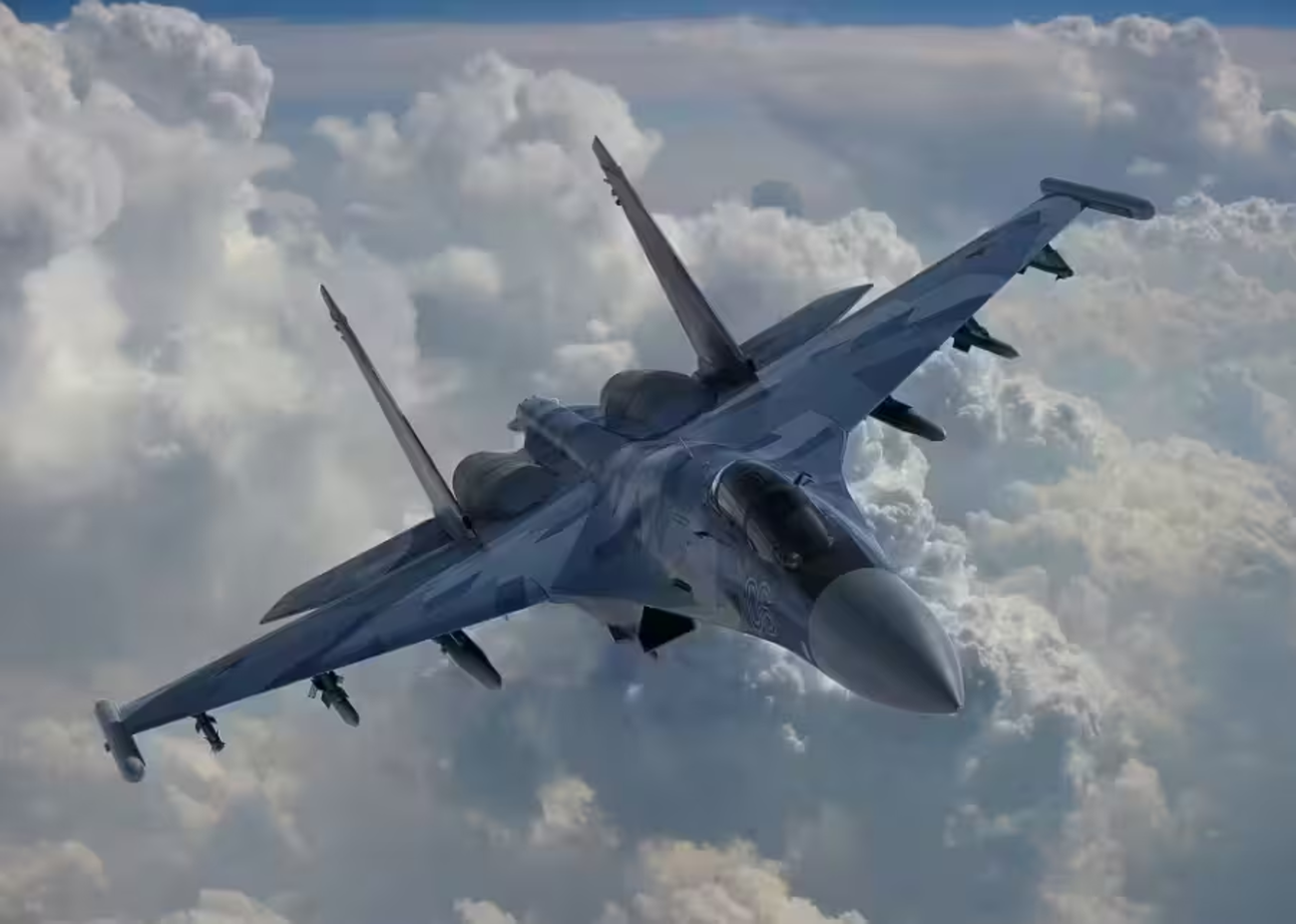
The MWM editorial team emphasized that the transition to AESA closes one of the most noticeable gaps in Russian avionics: the United States put the first squadrons with such radars into service back in 2000, Japan in 2002, and the first Russian fifth-generation Su-57 aircraft received AESA only by 2020.
Active electronically scanned arrays (AESA) have a number of important advantages, such as high scanning accuracy, the ability to emit signals at different frequencies in several directions simultaneously, and less visibility to electronic intelligence systems. In modern air combat and electronic warfare, these characteristics are crucial.

The absence of AESA on the Su-35 has long been its main disadvantage compared to heavy counterparts, such as the American F-15SA/QA/EX and the Chinese J-11BG, J-15B, and J-16, which are already equipped with powerful active arrays.
The export context, according to the authors of the material, gives the story special significance. In 2025, the Su-35 showed notable success abroad: deliveries of 18 aircraft to Algeria have been confirmed, the transfer of 48 fighters to Iran is planned, and another six to Ethiopia. The total export portfolio could reach 96 aircraft. In these circumstances, the appearance of a modern radar becomes an important argument for potential customers, especially against the background of growing competition from Chinese and Western platforms.
Read more on the topic:
- The Ministry of Defense showed the Su-35 cockpit on combat duty in a video - Kh-31PM under the wing and "Khibiny" electronic warfare containers
- General Explains Meeting of "Russian Knights" on Su-35 with F-35 over Barents Sea
- They made noise again: Russian Tu-95 bombers, Su-35 fighters and A-50 reconnaissance aircraft spotted off the coast of Alaska
Never miss our newsAdd this site to your preferred sources to see us more oftenAdd on Google

















