Translated with AI from the Russian original.
A scheme for an unusual radial birotational turbogenerator unit has been registered in Russia. The device is designed to convert the thermal energy of the working fluid into electrical energy with increased power and efficiency. The author of the development is engineer Sergey Isaev.
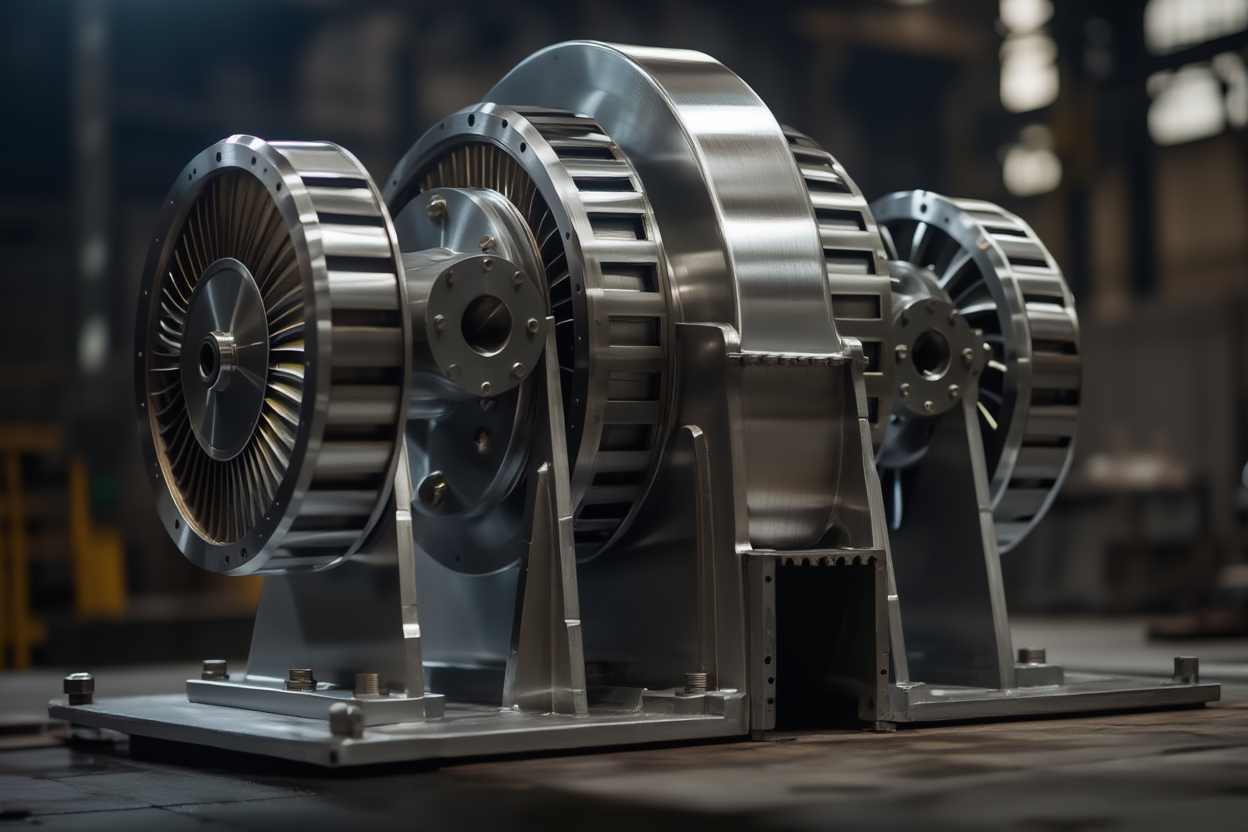
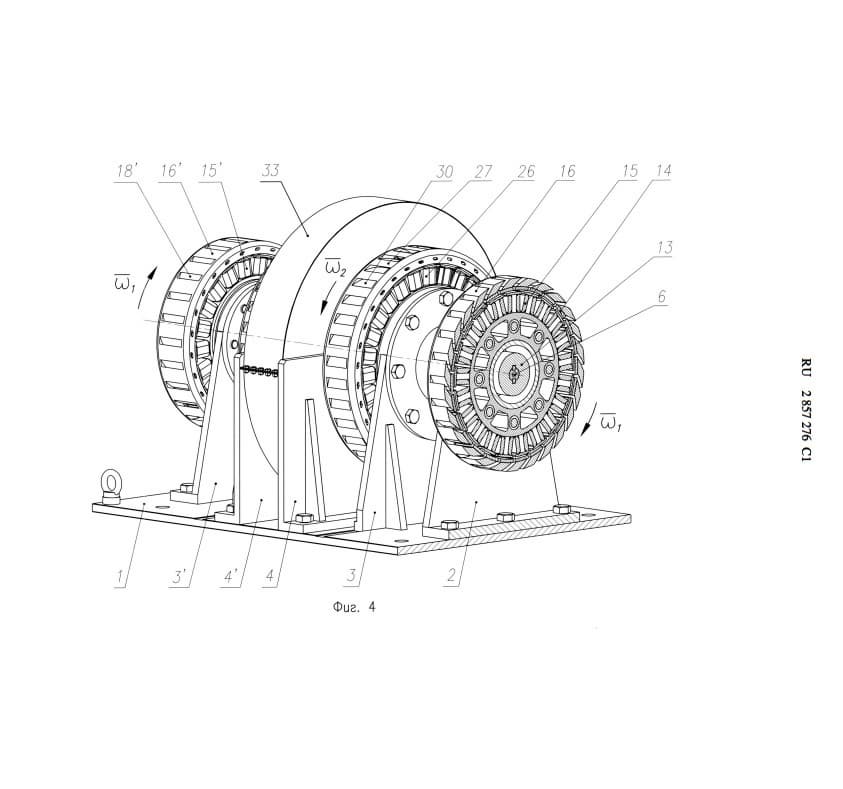
The key feature of the scheme is two coaxial rotors that rotate in opposite directions on separate shafts. Unlike classic solutions, they operate independently, and their electrical power is added up.
The first rotor is made double-flow. It includes mirrored centrifugal wheels with radial channels and Laval supersonic nozzles on the periphery. The working fluid accelerates and flows out at high speed, forming a torque.
The second rotor receives this flow almost without losses and realizes its energy through an active-reactive turbine. Such a cascade allows sequential extraction of energy without zigzag losses of flow, characteristic of a number of old schemes.
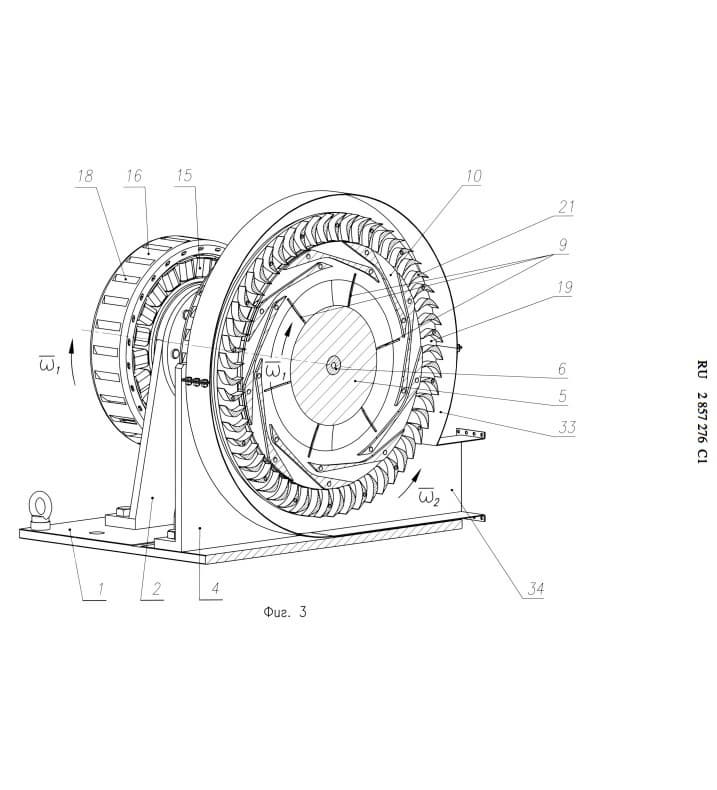
The design uses the effect of centrifugal compression of the working fluid inside the first rotor. A significant part of the pressure increase is achieved due to centrifugal forces, which reduces energy losses.
Next, the energy is converted in Laval nozzles: the flow accelerates to supersonic speeds and transfers the maximum momentum to the second rotor. As a result, both the power and efficiency of the entire unit increase.
Both rotors are equipped with their own electric generators according to the motor-wheel scheme. The magnets are located on the rotating elements, and the stators are fixed on the supports.
Built-in double-flow air turbines are used for cooling. They form an air flow directly during operation, reducing the thermal load without external cooling systems.
Note that the idea of a birotational engine is not new at all. For example, engineers from Kazan National Research Technical University named after A. N. Tupolev developed their installation on such principles with a vertical axis of rotation of the rotor for helicopters.
Read more materials on the topic:
- Lugansk engineers assembled an engine "in one drum": turbine and compressor combined
- "Power Machines" accelerate the production of turbines by two times
- Engines from Il-76MD became turbines with a resource of 5 million hours and spin power plants
Never miss our newsAdd this site to your preferred sources to see us more oftenAdd on Google

















