At the Moscow Aviation Institute (MAI), a group of future engineers is developing an intelligent drone swarm control system capable of operating without human intervention. Drones will be able to distribute roles themselves, exchange data and adapt to external conditions — even if communication is lost or equipment fails.
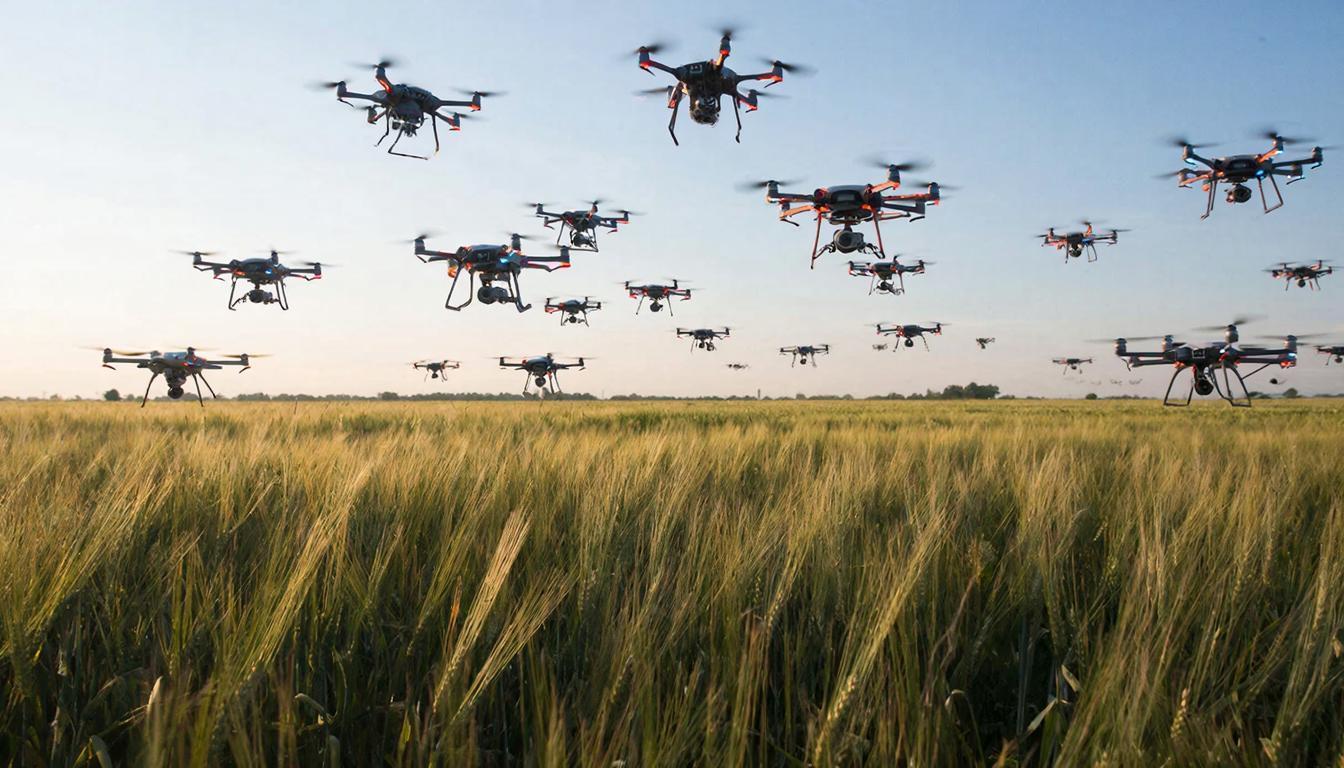
Imagine a swarm of drones that works as a team. Each has its own role and supports the others, for example, in navigation or monitoring, increasing overall efficiency and survivability. The team includes reconnaissance drones equipped with thermal imagers, optical cameras and lidars for data collection, repeater drones that provide stable communication over the internal network, and drones — intelligent centers that analyze incoming data in real time, coordinate swarm actions and make decisions.
The embedded algorithms will allow the swarm to instantly respond to changes: if communication is lost or one of the drones fails, the rest will regroup, redistribute tasks and continue the mission. The system is able to independently assess the situation, prioritize and form an optimal action plan.
The development is focused on tasks where traditional navigation and communication tools are powerless: search operations in remote areas, monitoring large areas, and disaster relief.
Now the team is creating a simulator to practice drone interaction. After virtual tests, it is planned to move on to real flights.
Read more materials on the topic:
- New Storm reconnaissance drone based on the flying wing design created in Russia
- Underwater robots-drones from Sevastopol enter the market: sales of TNLA will start in 2026
- Moscow student assembled a stabilized drone from scratch
Never miss our newsAdd this site to your preferred sources to see us more oftenAdd on Google

















