Translated with AI from the Russian original.
The crew of the International Space Station (ISS) has begun the second stage of the Russian experiment "Virtual," aimed at studying the adaptation of the human vestibular and visual systems to microgravity conditions. The research helps scientists understand the mechanisms of spatial orientation disorders that arise in cosmonauts during flight and develop methods for their correction.
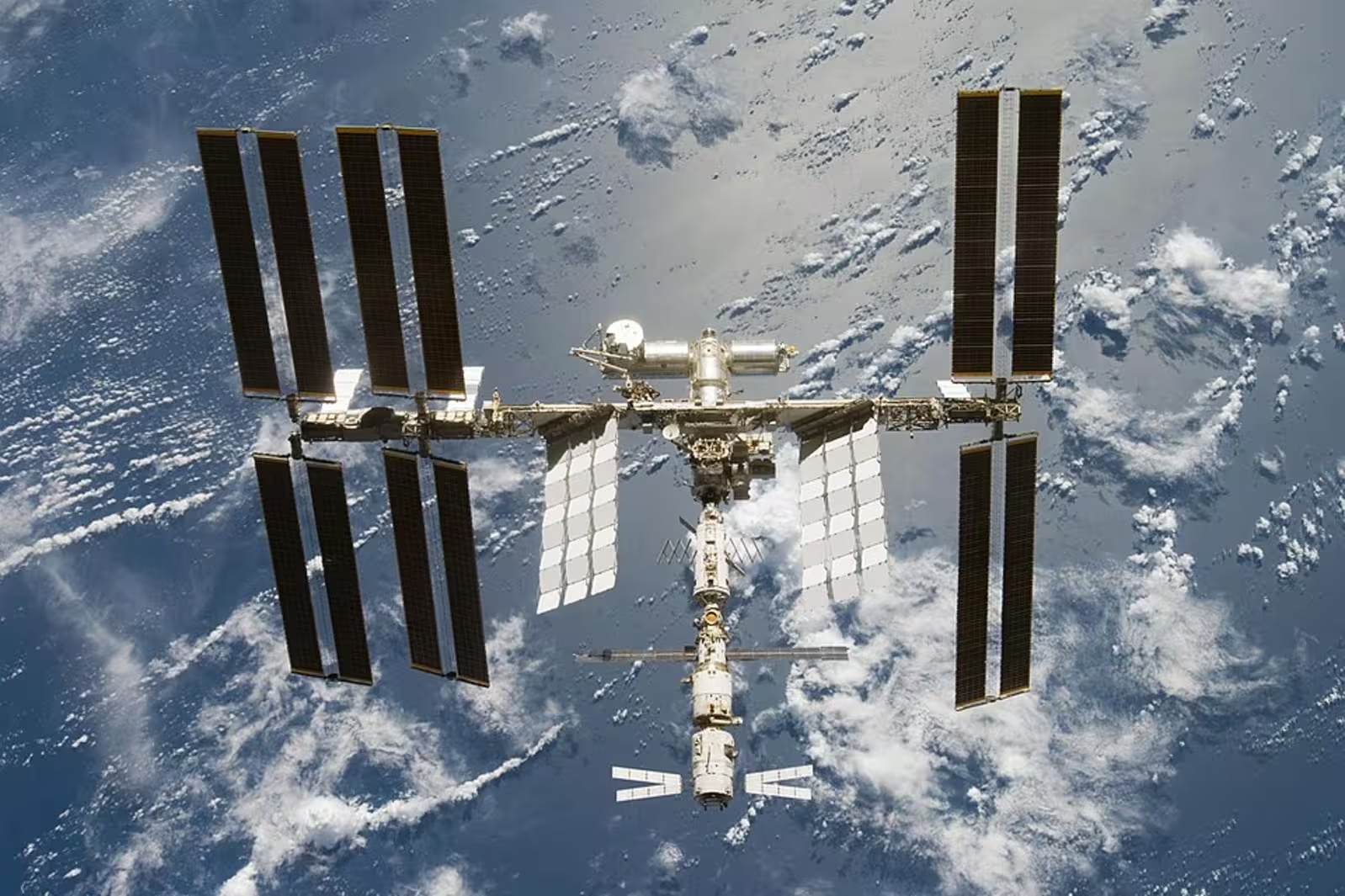
The goal of this work is to understand how reliably and accurately a cosmonaut can track the position of moving objects while in weightlessness at various stages of spaceflight.
As part of the experiment, cosmonauts wearing special VR goggles track the movement of a visual marker on the screen with their eyes. The motion trajectory varies: smooth or saccadic, in different planes, with additional visual interference to increase cognitive load. High-precision sensors attached to the operator's face record the parameters of eyeball movements - amplitude, speed, and accuracy of saccades. The data obtained are transmitted to Earth for analysis at the Institute of Biomedical Problems of the Russian Academy of Sciences.
The results of "Virtual" are significant not only for space medicine: the data obtained can be used in the development of rehabilitation programs for patients with vestibular disorders, as well as in the creation of virtual and augmented reality interfaces that require precise tracking of the user's gaze.
Read more materials:
- Kondor-FKA satellites No. 3 and No. 4 will be launched in 2029 and 2030 from the Vostochny Cosmodrome
- Rosatom mined 1.5 tonnes of gold in 2025: the plan was fulfilled by 100%
- Russian company Smart Technic will begin repairing CFM56 engines for Boeing 737NG aircraft
Never miss our newsAdd this site to your preferred sources to see us more oftenAdd on Google

















