Russia may be developing a new unknown weapon capable of hitting Starlink satellites. This was reported by the Associated Press with reference to NATO intelligence data.
According to the agency, the alleged development is aimed at limiting the capabilities of the West in outer space. The so-called area-action weapon involves hitting Starlink satellites with clouds of shrapnel moving in orbit.
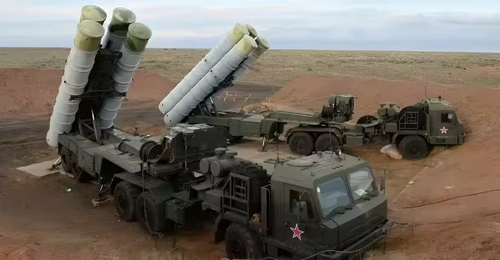
Military expert, air defense historian Yuri Knutov recalled that Russia already has weapons capable of hitting satellites. We are talking about the S-500 anti-aircraft complex.
At one time, it was demonstrated how a missile from the S-500 complex hit the old Soviet satellite "Tselina", which posed a certain danger from the point of view of uncontrollability and the possibility of unpredictable deorbiting. Therefore, there is nothing new here.
The agency's journalists suggested that hundreds of thousands of high-density granules could disable satellites. The size of such particles, which is several millimeters, makes them practically invisible to ground and space detection equipment.
We emphasize that information from officials in Russia about the development of such weapons has not been received.
Read more materials on the topic:
- We are 50 years ahead of the USA: the Russian weapon capable of shooting down satellites in near space is named
- A detailed model of the latest S-500 Prometheus air defense system has appeared: all secrets revealed
- The National Interest: Russia has the right to be proud of its S-500 Prometheus air defense system
Never miss our newsAdd this site to your preferred sources to see us more oftenAdd on Google

















