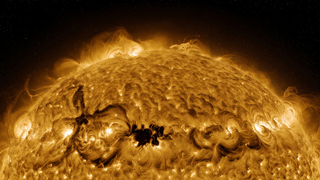
Astronomers have begun to record the first signs of the impact of a stream of disturbed solar wind from a large coronal hole on the Sun in the vicinity of the Earth. This was reported by the press service of the Laboratory of Solar Astronomy of the IKI and ISZF.
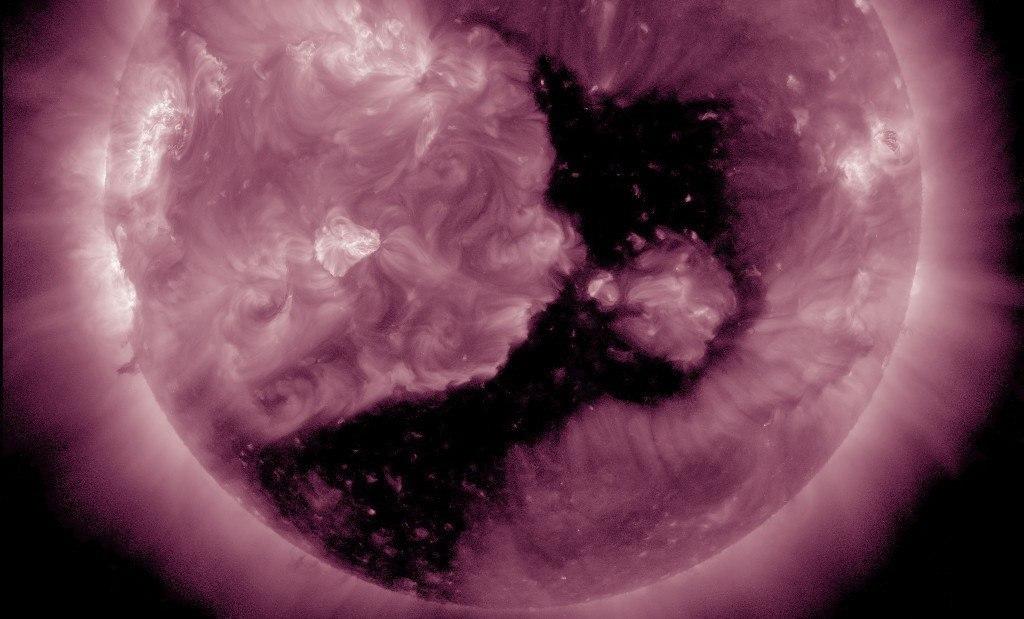
The corresponding complex-shaped structure is currently observed in the center of the solar disk, covering the southern and part of the northern hemisphere of the Sun. The first short magnetic storm of level G1 was recorded around midnight Moscow time.
The speed of the solar wind in the vicinity of the Earth is now about 700 km/s. This figure is approximately 2 times higher than normal.
Astronomers predict that the speed of the solar wind will remain at this level for the next 2-3 days, or possibly longer. This will provoke the occurrence of magnetic storms.
Flare activity will be weak. Coronal holes without flares cannot strongly "shake" the Earth's magnetic field. Therefore, the geomagnetic level is assessed as moderate.
Earlierwww1.ru reported that 2025 maybecome a record year for the number of magnetic storms in the last 10 years.
Read materials on the topic:
- Powerful magnetic storms of levels G2-G3 have begun on Earth
- Moderate magnetic storms are expected on Earth in the coming days: weather-sensitive people should prepare
- A magnetic storm will hit the Earth at midnight - astronomers have rewritten the forecast
Never miss our newsAdd this site to your preferred sources to see us more oftenAdd on Google