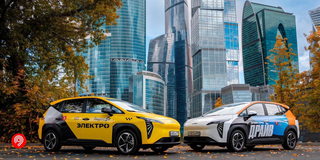
JSC "TVEL" (part of the State Corporation "Rosatom") launched Russia's first "gigafactory" of lithium-ion batteries in the Neman district of the Kaliningrad region. This was reported in the press service of the state corporation.
The launch of the Kaliningrad "gigafactory" is an industrial breakthrough for Russia and a huge contribution to the foundation of national technological sovereignty.
The design capacity of the new production is 4 GWh per year. This figure is comparable to the production of approximately 1.5 million charging modules or 50 thousand traction batteries for electric vehicles.
The plant is the only enterprise in the country with a full cycle, covering all stages - from "primary chemistry" for cells to the production of modules and finished batteries.
According to Alexey Likhachev, the "gigafactory" in Kaliningrad will provide an additional degree of development of "green" electricity in the Russian Federation. Industrial energy storage will allow balancing the power system using renewable sources.
Earlierwww1.ru reported that unique gigafactories for lithium-ion batteries arebeing built in Russia.
Read more materials on the topic:
- Lithium-ion batteries for trolleybuses: a new development of St. Petersburg "Liotech" will increase the autonomy of transport
- SGU has developed materials for lithium-ion power sources with improved characteristics
- They accumulate charge faster: serial production of fully domestic EFB batteries launched in Elabuga
Never miss our newsAdd this site to your preferred sources to see us more oftenAdd on Google