Engineers from Perm National Research Polytechnic University (PNRPU) have developed an innovative technology for producing single-layer sound-absorbing panels designed to reduce aircraft engine noise. The innovation not only enhances acoustic efficiency but also reduces the structure's weight by 33% (1.5 times) compared to traditional multi-layer counterparts.

The development is particularly relevant in light of increasingly stringent international environmental standards regulating noise levels near airports, as well as growing demands for passenger comfort and crew safety.
The noise level inside modern aircraft cabins reaches 75-85 dB - comparable to intense street traffic.
The key advantage of the new technology is the precise formation of variable-height internal panel structures using a specialized 3D-printed mold. Unlike classical methods, where each cell is assembled manually or semi-automatically (leading to a high percentage of defects), the Perm approach allows for the formation of complex acoustic geometry in a single cycle without additional fitting.
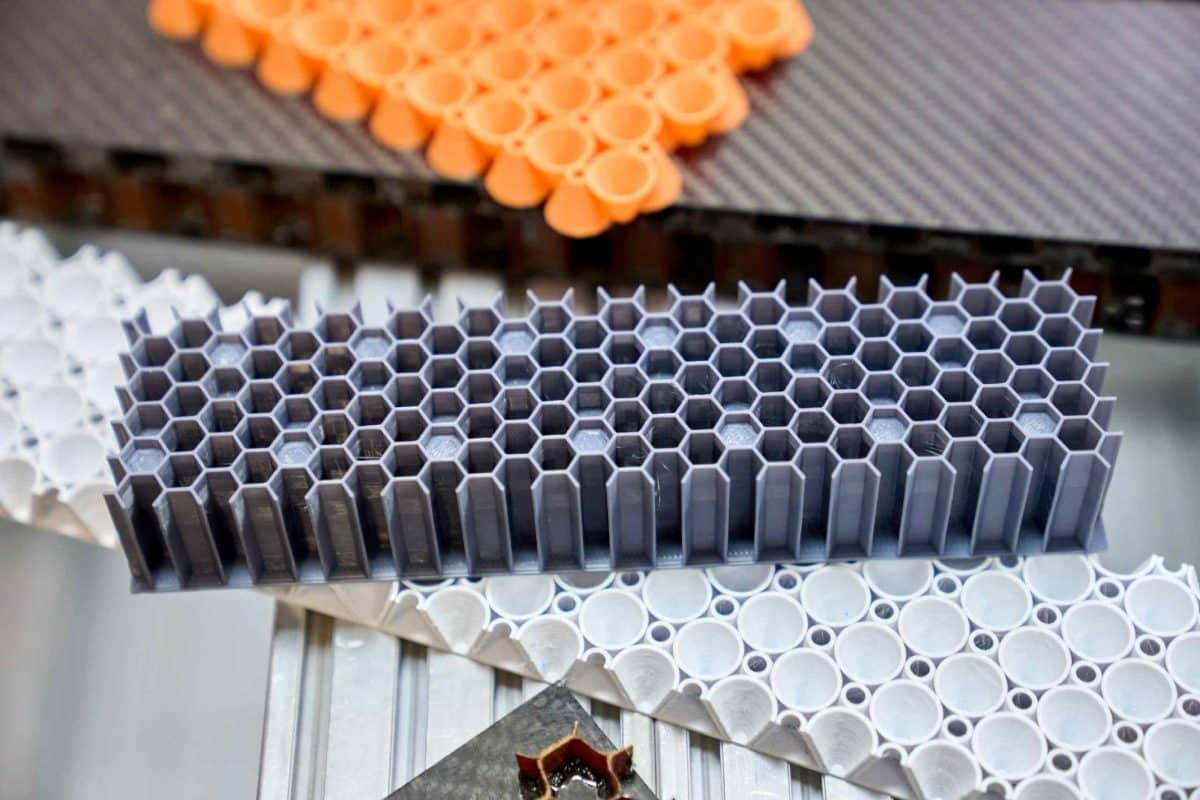
The technology has already been confirmed by a patent and laboratory tests. Tests in an acoustic tube have shown that the new panel has broadband sound absorption and outperforms existing solutions by 12% in overall acoustic efficiency.
The development is of particular interest to the domestic aircraft industry - such panels can be integrated into new Russian aircraft engines PD-8 and PD-14, installed on regional and mainline aircraft, including SJ-100 and MC-21. This will not only improve acoustic comfort but should also increase fuel efficiency by reducing engine weight.
Read more materials on the topic:
- Six times lighter than analogues: an aircraft engine noise meter was created at PNRPU
- Suspension for winter road repairs created by scientists from PNRPU
- Will not be louder than a car door slamming: the project of a new Russian supersonic aircraft has been finalized
Never miss our newsAdd this site to your preferred sources to see us more oftenAdd on Google

















