As early as 2026, an advanced engineering school or youth laboratory specializing in electron lithography - a key technology in the production of microchips - will begin operating in Russia. This was announced by the Minister of Science and Higher Education Valery Falkov during a meeting between President Vladimir Putin and participants of the V Congress of Young Scientists.
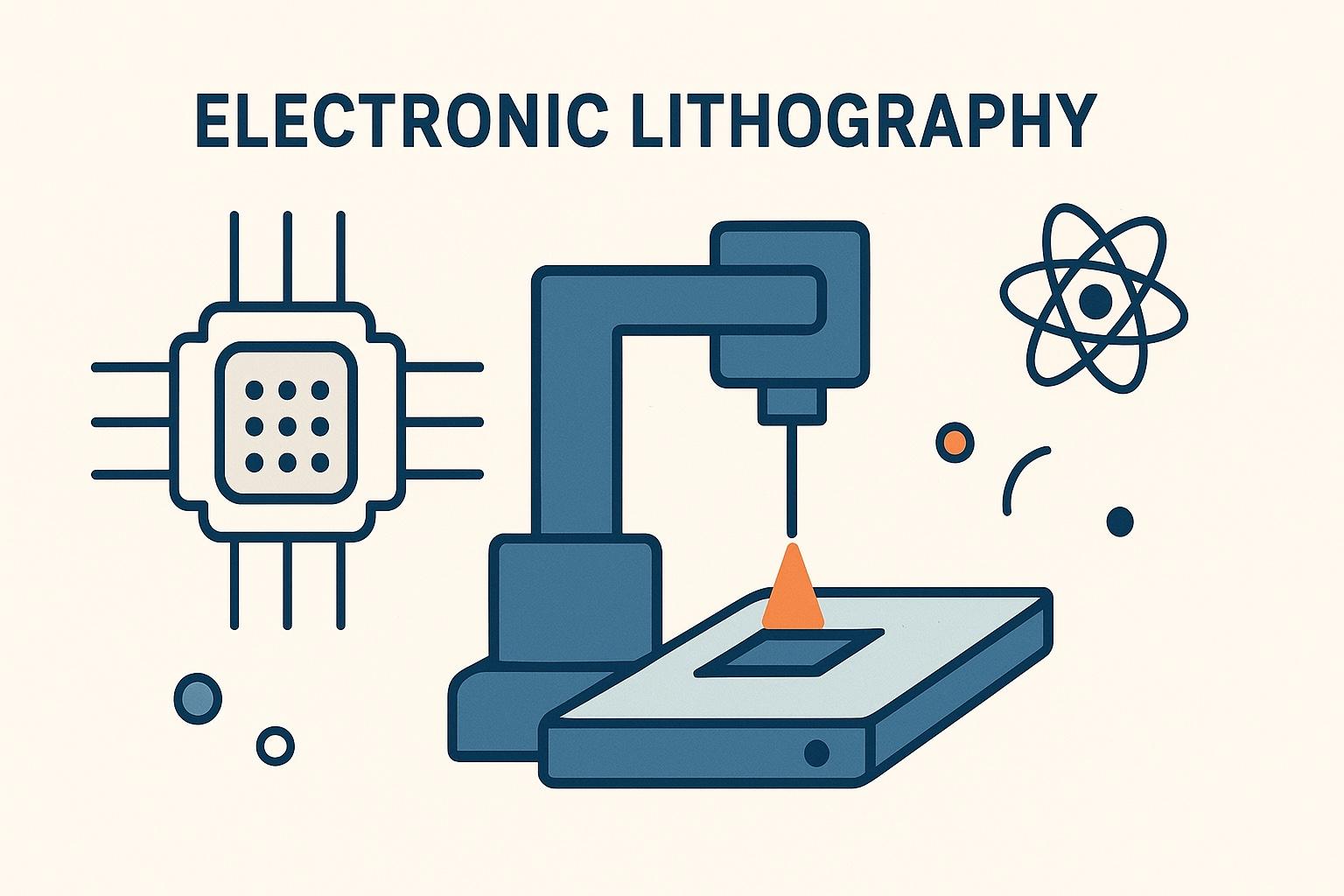
The ministry is considering two options for the development of the initiative. The first is the inclusion of a new project in the program of advanced engineering schools, the selection of which is scheduled for next year. The second is the creation of a separate youth laboratory. In 2026, it is planned to open about two hundred such laboratories in Russia, and the direction of electron lithography will definitely be among them.
The initiator of the discussion was Alexander Barulin, a leading researcher at the Laboratory of Controlled Optical Nanostructures of the Center for Photonics and Two-Dimensional Materials at MIPT. He proposed increasing the number of electron lithography systems in Russian scientific centers in order to expand researchers' access to equipment. The scientist also proposed considering the launch of a domestic scientific instrument-making project - the creation of our own electron lithographer, which will reduce dependence on foreign technologies.
Electron lithography is used in the formation of nanostructures and the production of modern microchips. It is one of the most accurate methods of material processing, allowing the creation of elements with a size of several nanometers - the basis for new generation chips. Today, such technologies are at the center of global technological competition: the United States, China, and South Korea are actively investing in the development of lithographic installations, striving to ensure technological independence.
Read more materials on the topic:
- Import substitution: Ministry of Industry and Trade launches production of domestic installations for chips for 7 billion rubles
- Breakthrough in optoelectronics: a unique lithographer was developed at MIPT
- The first Russian laser for lithography was developed in GC Lassard
Never miss our newsAdd this site to your preferred sources to see us more oftenAdd on Google

















