Russia is creating the world's first unmanned catamaran trawler for industrial fishing. The Kaliningrad State Technical University is working on the project. A 1:10 model is already ready, traction characteristics have been tested, and the main systems have been developed. A full-size prototype is planned to be assembled in two years.
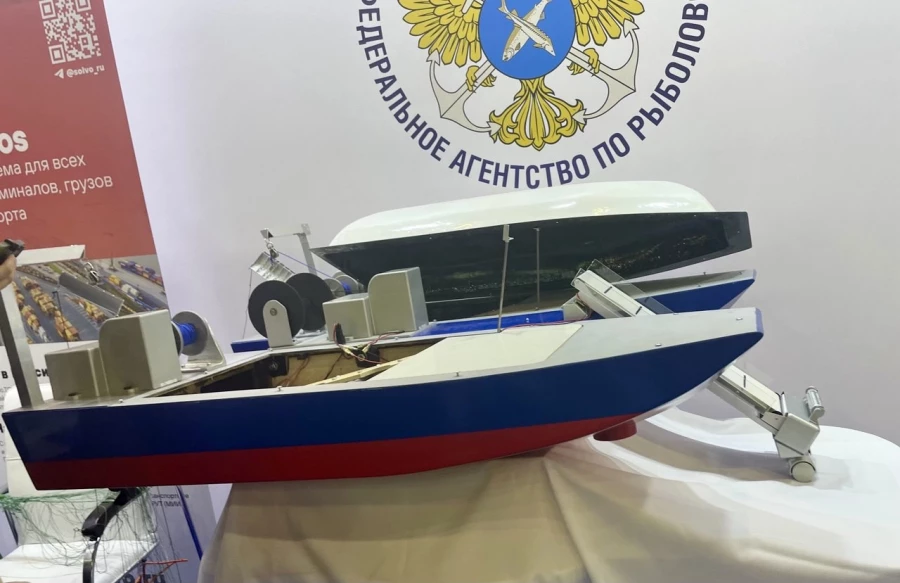
The drone trawler will operate under the control of an operator from the shore or from an auxiliary vessel. Some functions will be taken over by the "Autotrawl" system with artificial intelligence: it will help control the trawl and the fishing process. The catamaran will also be able to cut algae in shallow water.
Foreign companies, including Chinese ones, have shown interest in the project. The main advantages are reduced crew costs, round-the-clock operation and safety.
However, the path to implementation is not easy: issues of autonomy, communication, security and legal regulation need to be resolved. Russian legislation currently allows unmanned vessels in the cargo and passenger segment, but not in fishing.
Experts note that the industry is likely to first introduce auxiliary unmanned solutions - for finding fish, monitoring the trawl and supplying vessels. But fishing drones are already becoming a reality - and could change industrial fishing.
Earlierwww1.ru reported thatthe company "ZBM-Aero" presented a unique model of the civilian drone "Lyutik".
Read more materials:
- The sea minesweeper "Afanasy Ivannikov", the carrier of uninhabited underwater vehicles, worked out the elements of the K-2 course task in the Barents Sea
- Updated robotic complexes "Courier" entered the Russian army
- PD-14 in the sky: the normal operation of the engine at all stages of the MS-21-310 flight has been confirmed
Now on home

Start of deliveries scheduled for 2027

Over 51,000 new motorcycles were sold in Russia in 2025

The car will take at least a year to assemble

The application's audience has reached 20 million users

The model will be included in the list of cars for taxis, price - from 2.25 million rubles

All parking lots of the "Administrator of the Moscow Parking Space" are connected to the service

The cars will be supplied to the Moscow Transport Service Directorate

Deliveries to India may begin in 2028

The technology provides automated search for all types of defects in power units

The plane flew 500 km, accelerating to 425 km/h

The plant stated that the information about the termination of purchases for models 6 and 8 is not true

Scientists are using the "Ekran-M" installation