Employees of NPO "Splav" named after A.N. Ganichev (part of Rostec Group) and the First St. Petersburg State Medical University named after Pavlov (PSPbgMU) have developed the LifeStream HEPAR complex to maintain the viability of donor livers. This was reported by the state corporation's press service.
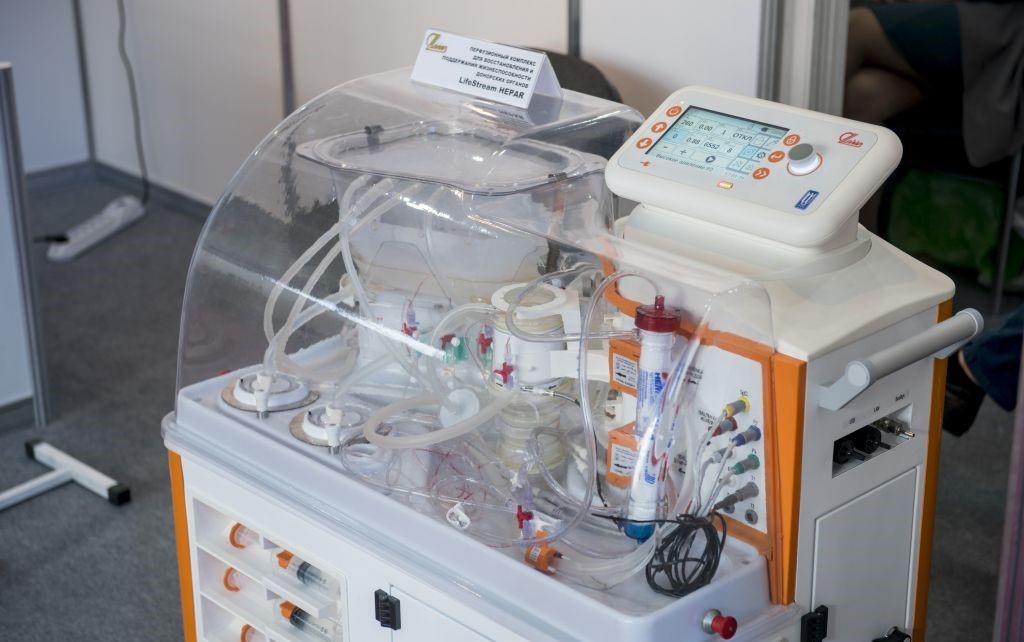
The equipment allows assessing and improving the functional state of the liver, as well as providing artificial blood circulation in the organ until it is transplanted.
Similar complexes are produced in only 3 countries, said Vadim Teplov, Professor of the Department of Emergency Medical Care and Injury Surgery at PSPbgMU. He called LifeStream HEPAR world-class equipment.
The developers have already received a registration certificate for the product. The device is currently involved in clinical trials at the Moscow City Coordination Center for Organ Donation.
Features of LifeStream HEPAR
The hardware and software complex allows rehabilitating the liver after ischemic-reperfusion injury (a pathological condition that occurs when blood flow is restored in tissues). LifeStream HEPAR increases the efficiency of donor organ transplantation.
All this is achieved through the use of centrifugal pumps, maintaining a specified flow value, a system for detecting and trapping air bubbles, and the use of an automated infusion system.
Read more materials on the topic:
- Heart with delivery: Novosibirsk will develop a device for transporting a donor organ to anywhere in Russia
- They will print kidneys, liver and thyroid gland: Rosatom will master bioprinting technology by 2030
- A prototype drug for the treatment of liver and eye diseases has been created in Novosibirsk