A robotic Mars rover capable of converting wind energy into electricity was presented at the XX International Festival "Science 0+".
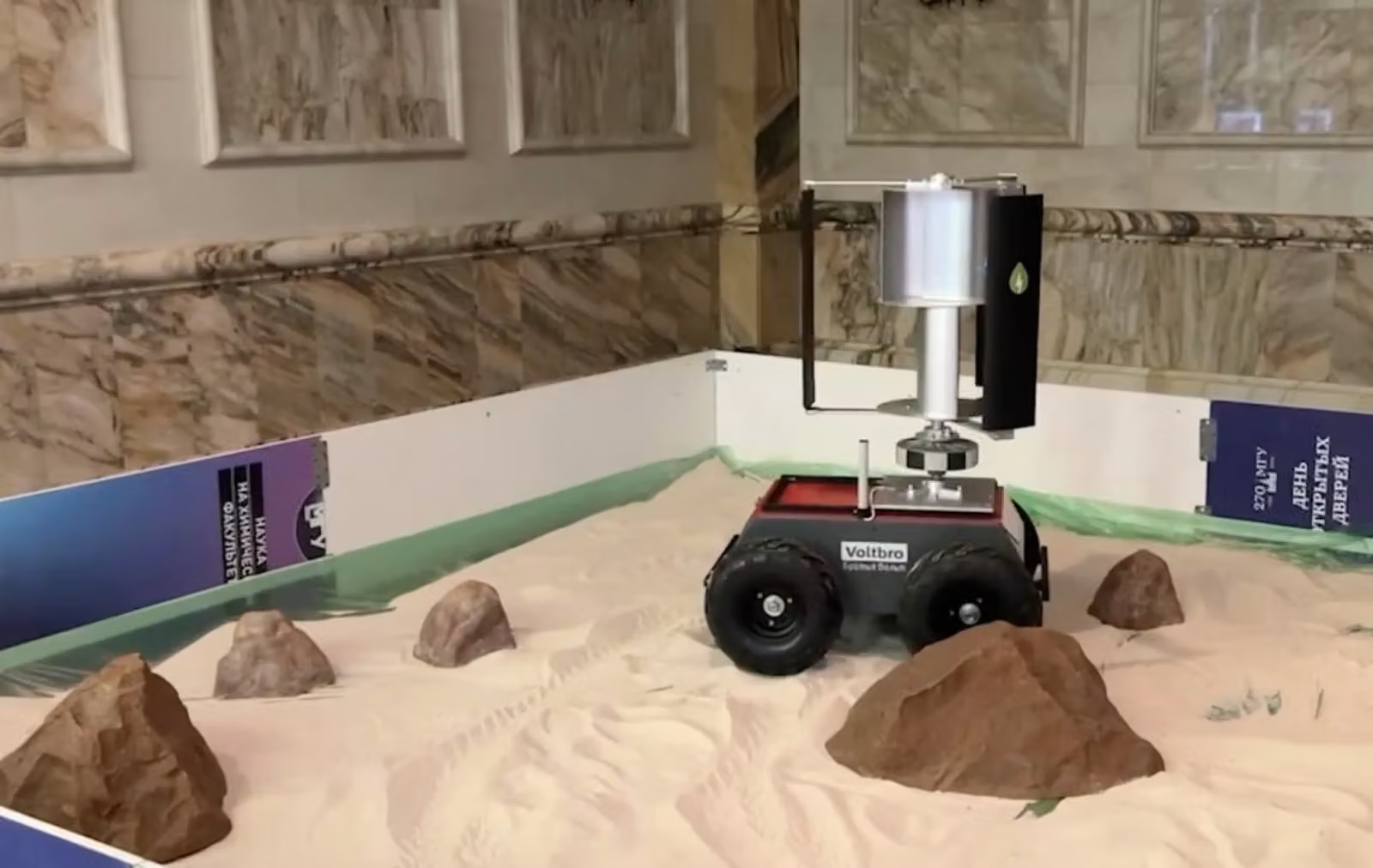
The portable Mars rover weighs about 70 kg. The robotic platform houses an installation based on Savonius turbines - a vertical axis wind generator. This robot requires a wind speed of 10 meters per second to charge.
On the surface of Mars, the research robot will perform tasks such as collecting soil samples, analyzing the atmosphere, and taking photographs. The developers of the Mars rover plan to test it in Kamchatka to check its operability under various wind load conditions.
Kamchatka was chosen for a reason. Its landscape with volcanic rocks, temperature changes, and a variety of climatic zones to some extent replicates the conditions of Mars. Tests in Kamchatka will allow engineers to assess the stability of the Mars rover's structure to extreme weather events, as well as to check the efficiency of scientific equipment in the seismic activity characteristic of this region.
The research is supported by the MSU Scientific and Educational School "Fundamental and Applied Space Research".
Earlier,www1.ru reported thata British Major General, following the Germans, accused the Russian satellite group "Luch-5X" and "Olymp-K2" of spying in space.
Read also:
- Indian scientists will fly to the center of the earth for the first time on a Russian Il-76 aircraft
- Footage of the operation of the Ignis laser installation burning out TM-62 mines during exercises has appeared
- The developer of the long-range business jet based on the Tu-324 "Aurus-Aero" project will locate production in the Ulyanovsk SEZ
Never miss our newsAdd this site to your preferred sources to see us more oftenAdd on Google