Hackers have found a loophole in the vulnerability of Russian companies through “smart” gadgets in the workplace. In the first nine months of 2025, the number of such incidents increased by 124% compared to the same period last year.
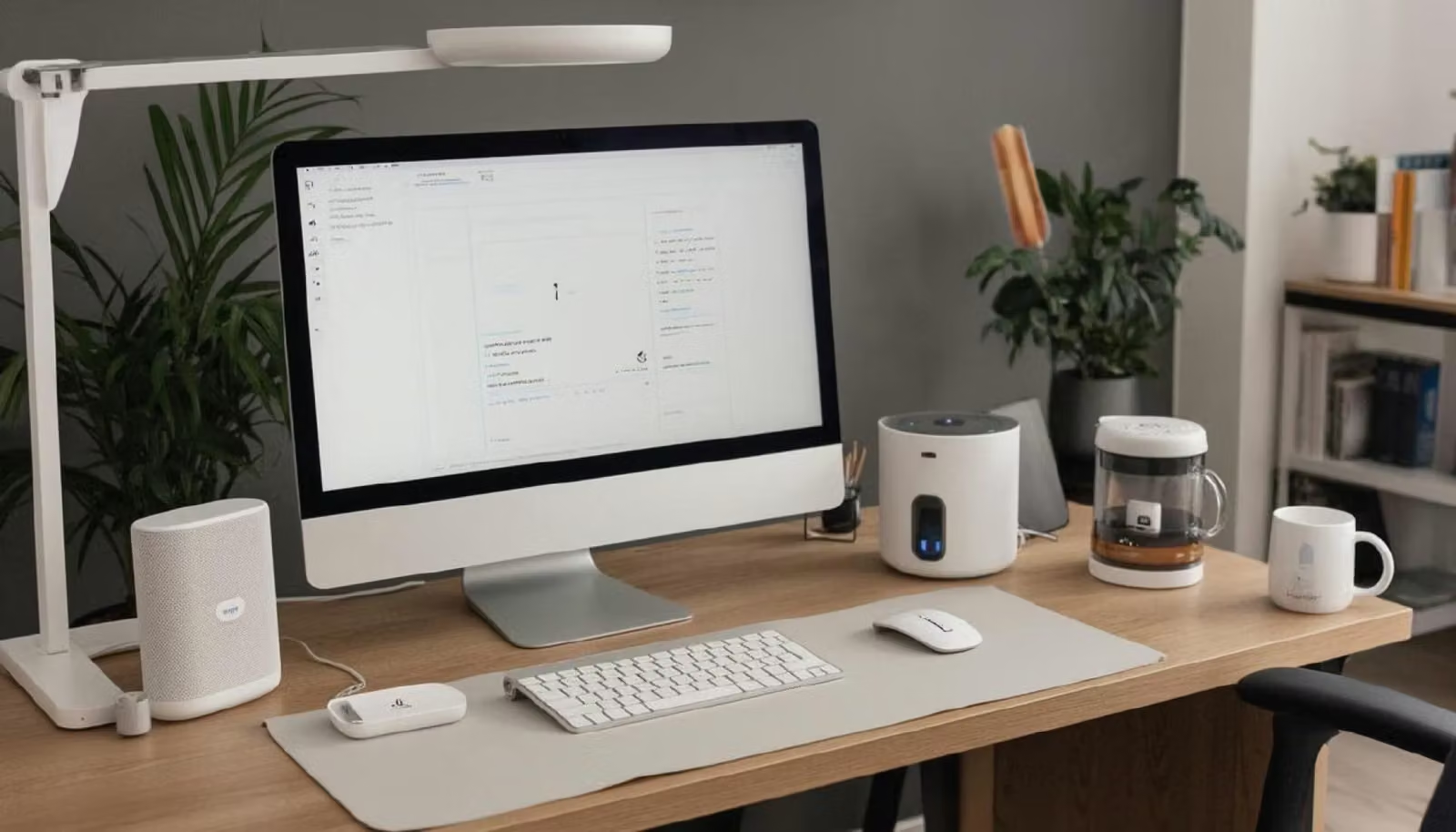
According to the results of RTM Group studies, cybercriminals began to penetrate enterprise systems not only with the help of traditional media such as flash drives, but also through portable speakers, charging stations, Wi-Fi lamps, and even heated mugs.
These seemingly harmless devices are becoming a “Trojan horse” used to introduce ransomware and organize leaks of confidential information.
Software also poses a high level of risk. On average, about 30 third-party applications are installed in a standard workplace in a Russian company, of which at least 2-3 products pose a significant threat. Also, in 70% of cases of server checks, according to the results of pentests, at least one vulnerable application was found.
The main reason for this situation is that most of the companies studied live with a false sense of security. About 80% of medium-sized organizations with revenue up to 2 billion rubles have not conducted a full check of their software for problems for more than two years.
The situation can only be corrected by a comprehensive approach of companies to ensuring cybersecurity. In particular, RTM Group experts advise, as soon as possible, to conduct an unscheduled inventory of the entire infrastructure to identify vulnerable applications and unsafe gadgets.
Read more materials on the topic:
- Total control: how smart devices spy on users
- Hackers hack smart devices in homes and make them “work” for themselves
- Fraudsters have learned to monitor Russians through toothbrushes and temperature sensors
Never miss our newsAdd this site to your preferred sources to see us more oftenAdd on Google














![Growth Point: After 5G Launch, Mobile Internet in Russia Accelerated by 20%","subtitle":"TelecomDaily recorded an upload speed increase of 19.7%, and download speed of almost 14%","announce":""}[]}],](https://media.ixbt.site/fit-in/320x/ixbt-data/1727896/ai-image-nvgq0a0v5cjnyxwoc8xpelva.webp)