Modern Russian fighters, including the fifth-generation Su-57 and Su-75, use V-shaped tail empennage, which directly affects the aerodynamic characteristics of the aircraft. This was reported by the United Aircraft Corporation (UAC).
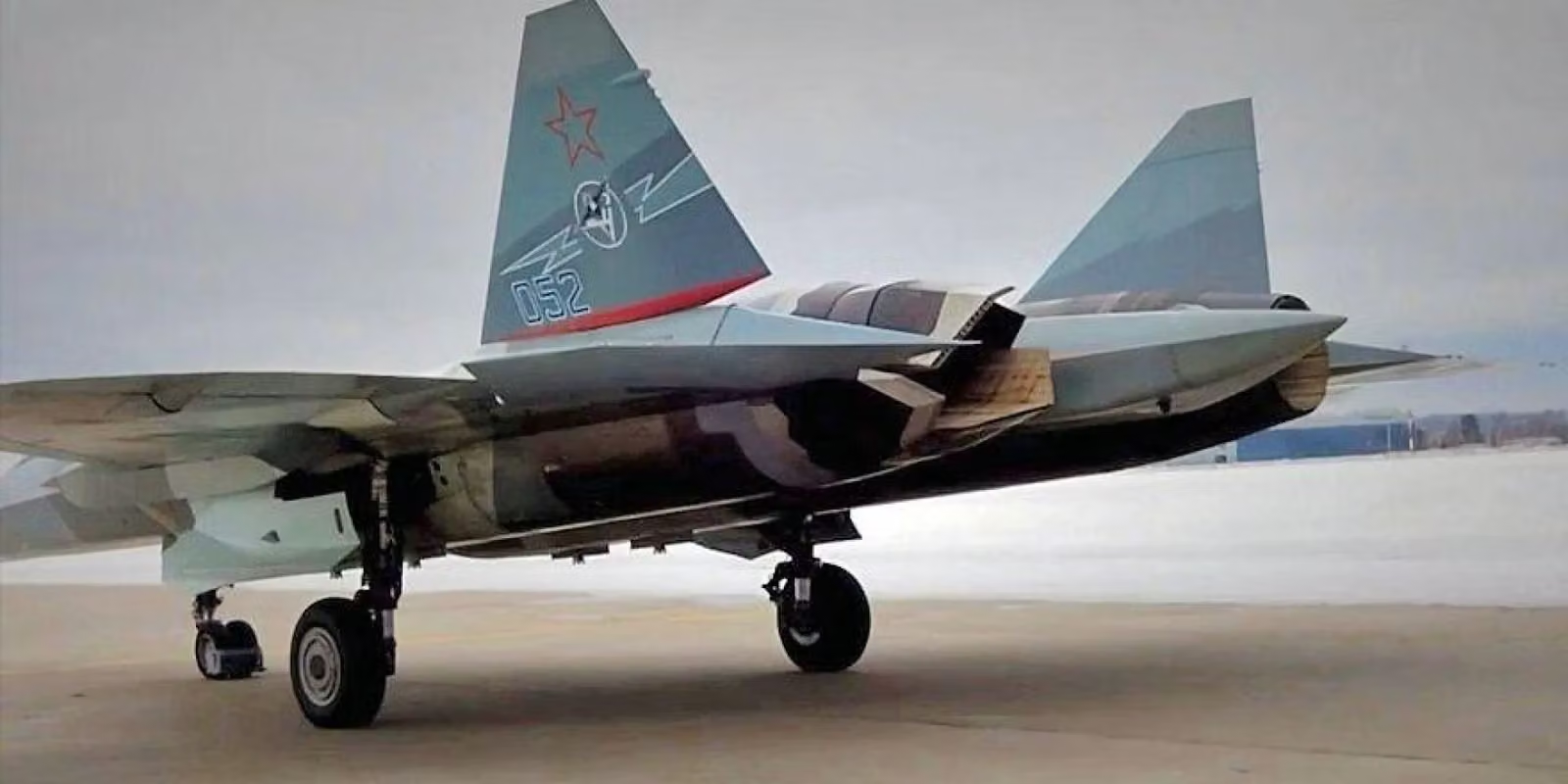
They stated that this configuration ensures controllability, stability, and balance in flight, and also helps to reduce radar signature. This scheme is gradually replacing the classic tail empennage on combat aircraft.
In the classic design, the tail includes a horizontal empennage (stabilizer and elevator) and a vertical empennage (fin and rudder). However, alternative schemes, including the V-tail, have gained a special niche.
UAC recalled that the V-shaped empennage was first established on the American low-observable F-117 attack aircraft from Lockheed. Later, its modernized versions appeared on the latest fighters — F-22, F-35, the Russian Su-57, the Chinese J-31, as well as on the experimental Turkish Kaan and Japanese X-2.
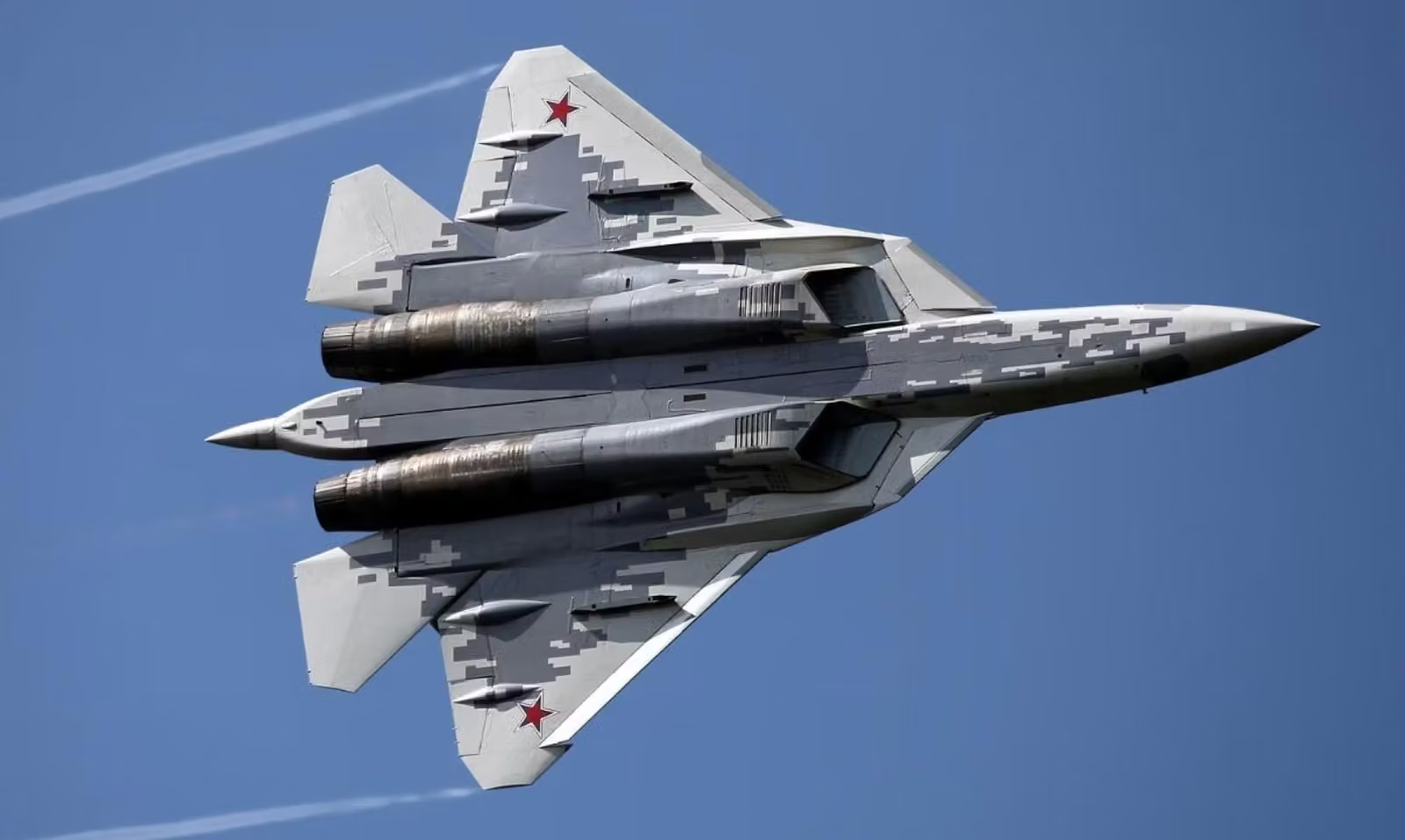
The Russian Su-75 Checkmate uses a classic V-tail without additional front surfaces.
This configuration is especially valuable for "stealth" aircraft. Inclined fins act as low-observability elements and simultaneously perform the functions of the rudder and elevator. This reduces radar signature and reduces the number of protruding parts.
Earlier, www1.ru reported that the manufacturer of the S-500 Prometey SAM system demanded almost 300 million rubles from the Saratov Aggregate Plant.
Read also materials:
Never miss our newsAdd this site to your preferred sources to see us more oftenAdd on Google

















