Translated with AI from the Russian original.
Scientists from the Tomsk Scientific Center SB RAS, using the method of self-propagating high-temperature synthesis, have obtained unique electrically conductive polymer composites based on titanium carbosilicide and nitrogen-containing phases that can withstand temperatures up to 400 °C.
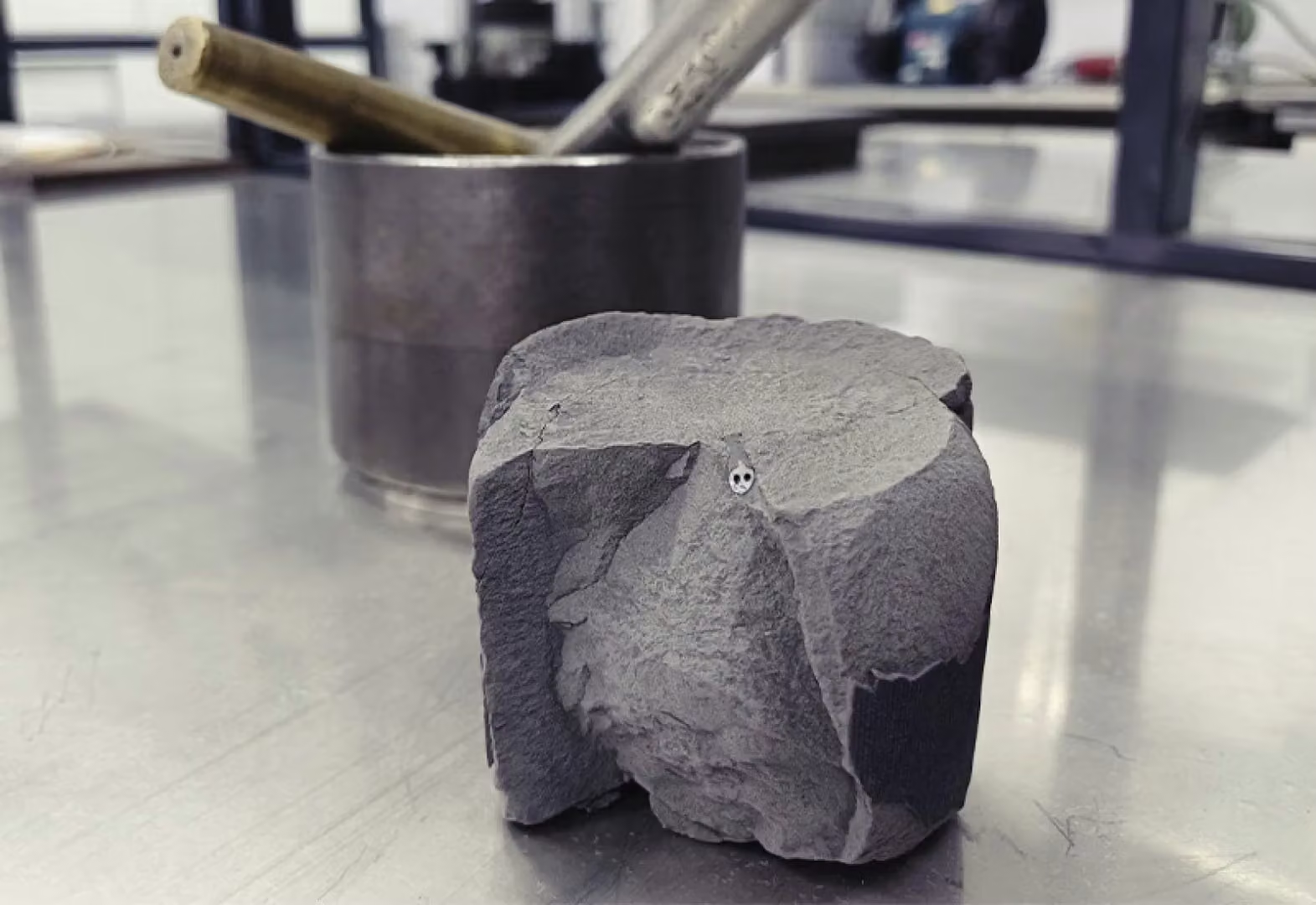
Relevant areas of science include the creation of new materials with improved electrical and thermal properties, including electrically conductive composites capable of withstanding high temperatures. The titanium carbosilicide we obtained based on the so-called MAX phases combines the best properties of ceramics and metals due to its layered structure, similar to the structure of graphite
The basis for the development of new polymer composites with improved properties was a patented method in which titanium carbosilicide was first obtained as a result of a combustion reaction at high temperatures under argon pressure in a reactor.
The new material is synthesized in two stages, where at the first stage three types of pure elemental powders are mixed - titanium, silicon and carbon.
Next, we carried out a reaction using nitrogen instead of inert argon in the reactor, which forms additional nitride phases and enters the crystal lattice of the material, thereby improving its properties. As a result of the reaction at a temperature of more than 2100 °C, titanium carbide and titanium carbosilicide were obtained, in a ratio of 15 and 85%, respectively. It is this powder that is added to the usual three-component mixture of powders, and this composition is already synthesized in the reactor
By varying the ratio of the powder obtained as a result of the first synthesis and the initial composition, the scientists of the Tomsk Scientific Center found the ideal proportions of the final composite.
It turned out to be optimal when, in the second stage of the process, it was diluted by 40-60% with the product synthesized in the first stage of the production cycle. It is this titanium carbosilicide that is distinguished by the highest electrical and thermal properties, including a specific surface resistance of 50-100 Ohms and an operating temperature of up to 400 °C
Electrically conductive polymer composites based on titanium carbosilicide have a very wide range of applications. They are in demand in the development of various heating devices and microelectronic devices that heat up to high temperatures. The composites synthesized at the TNC SB RAS can be used in supercapacitors, lithium-polymer batteries, gas and biological sensors, screens for protection against electromagnetic interference and electrostatic discharges, potentially replacing metals and conventional conductive materials in various applications.
The center's research group will continue to study the effect of various additives in the composition of the initial mixture on the properties of the synthesized material in order to find optimal compositions for various applications.
Read more materials on the topic:
- UAV based on a new polymer: Russia has developed a heat-resistant material to protect drones
- New composite for the Express-AMU4 satellite: a step towards import substitution in the space industry
- Fighting electromagnetic waves: TSU has created a radio-absorbing composite with a record bandwidth
Never miss our newsAdd this site to your preferred sources to see us more oftenAdd on Google

















