Diesel engine production for GAZ vehicles - "Sobol", "Gazelle", and "Valdai" - has been launched in Nizhny Novgorod. The project was implemented by "Nizhny Novgorod Trucks" with partial funding from the Industrial Development Fund.

Previously, such power units were purchased in China. Now, their full production has been completely organized in Russia.
The company has localized engine assembly with an automation level of 85%. Each finished unit undergoes a full cycle of testing.
The manufacturer plans to almost completely localize the production of key engine components and attachments in Russia. Thus, the camshaft is planned to be localized by the end of this year, and the cylinder head, the block itself, fuel equipment, generator, starter, turbocharger, and electronic control units - by 2027.
The new 2.5-liter diesel engine develops power from 150 to 190 hp. Previously, the Cummins ISF 2.8 engine was installed on the "Gazelle", but the new engine surpasses its predecessor in maximum torque and a number of other characteristics.
Earlier,www1.ru reported thatserious problems of Chinese car engines have been named.
Read materials on the topic:
- Legendary "sixteen-valve". AvtoVAZ produced the 5-millionth copy of the 16-valve engine
- New YaMZ-537 diesel engines for agricultural machinery, trucks and transport have begun to be produced in Russia
- Prototype of the Valdai-45 LNG tractor with a LNG engine was demonstrated at the forum in St. Petersburg
Now on home

Start of deliveries scheduled for 2027

Over 51,000 new motorcycles were sold in Russia in 2025

The car will take at least a year to assemble

The application's audience has reached 20 million users

The model will be included in the list of cars for taxis, price - from 2.25 million rubles

All parking lots of the "Administrator of the Moscow Parking Space" are connected to the service

The cars will be supplied to the Moscow Transport Service Directorate
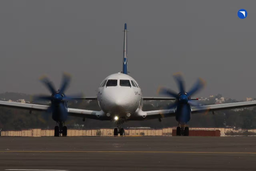
Deliveries to India may begin in 2028
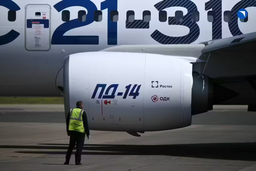
The technology provides automated search for all types of defects in power units

The plane flew 500 km, accelerating to 425 km/h

The plant stated that the information about the termination of purchases for models 6 and 8 is not true
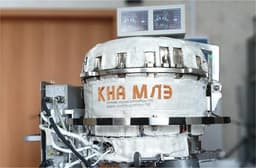
Scientists are using the "Ekran-M" installation