The Engineering Chemical-Technological Center of Tomsk State University (IHTTS TSU) has launched the production of sodium tartrate dihydrate, a substance critically important for cleaning electronic components before integration into devices. The production is expected to fully meet the needs of the domestic microelectronics industry.
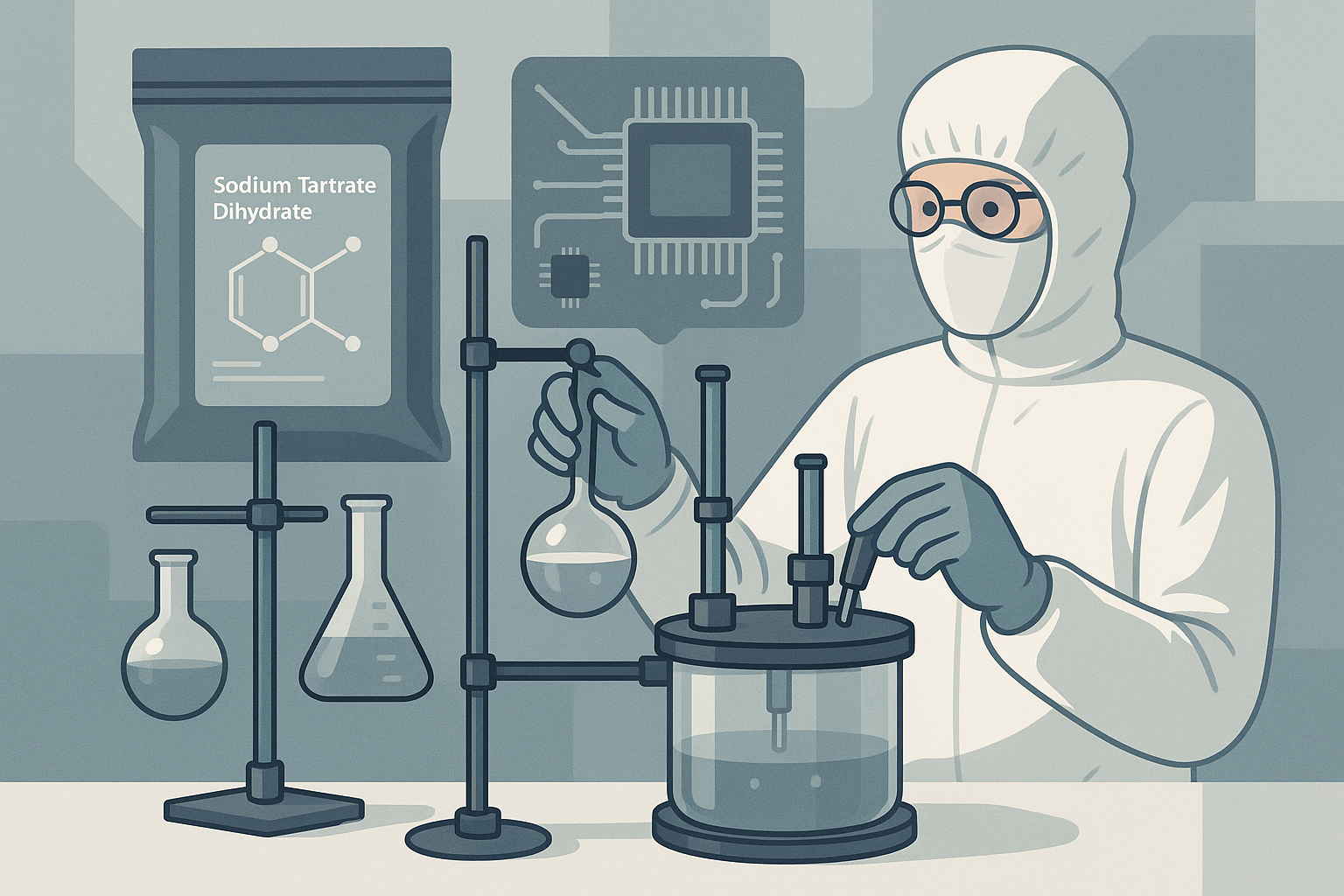
The cessation of supplies of foreign-made sodium tartrate has made the development of our own technology relevant. Sodium tartrate dihydrate, also called sodium tartrate 2-hydrate, is necessary for high-tech cleaning of components, which ensures their reliable operation in final devices.
The capacity of our pilot plant allows us to produce several hundred kilograms of chemically pure substance per year. This is enough to fully meet the needs of Russian enterprises
In the summer of 2025, the pilot batches passed acceptance tests and analytical verification, confirming compliance with strict requirements for ten key parameters, including the mass fraction of the main substance and the absence of undesirable impurities.
The consumer of the product will be the company "Svetlana-Electronpribor" (St. Petersburg), which is ready to introduce domestic sodium tartrate into its technological process. For the industry, this means a stable supply of a critical chemical component without dependence on imports.
Read also on the topic:
Production of magnets for future electronics made cheaper in Russia
The largest Russian electronics manufacturer was left without money and mired in lawsuits
Never miss our newsAdd this site to your preferred sources to see us more oftenAdd on Google