Translated with AI from the Russian original.
Employees of the Advanced Engineering School of the Moscow Aviation Institute (MAI) have created test benches for electric propulsion systems of unmanned aerial vehicles weighing up to 120 kg.
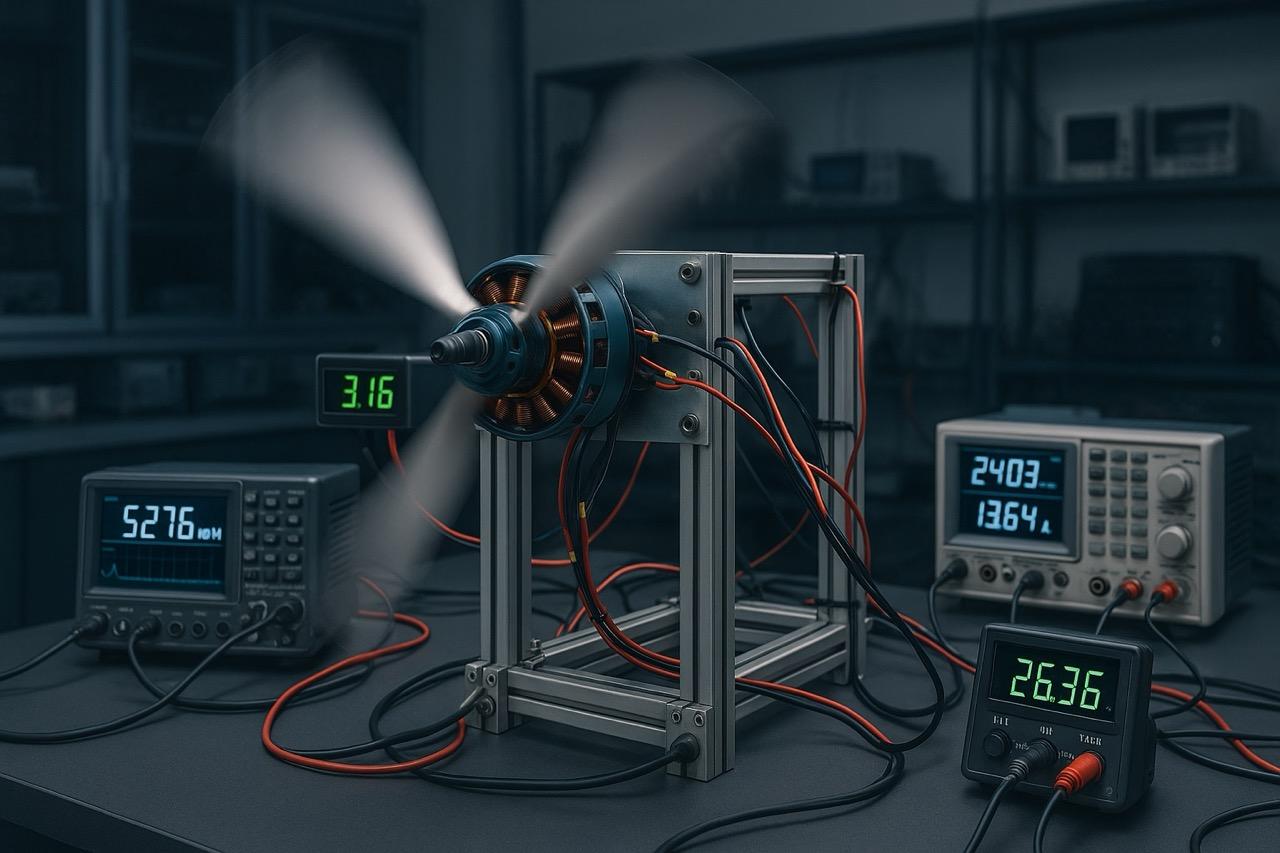
The benches function as a comprehensive measurement and control system. Data from sensors are recorded in real time through an information collection system. This allows measuring mechanical parameters - rotation speed and thrust, as well as electrical characteristics, including currents and voltages on all elements. The results obtained make it possible to conduct a detailed analysis and make adjustments to the calculation models.
The development provides comprehensive testing of both individual components, such as an electric motor or controller, and the entire power plant as assembled with the propeller, including the propeller.
The project has already been completed and is used by industrial customers. At the same time, work on modernization continues: the possibility of integrating the benches with a wind tunnel is being considered to create conditions as close as possible to real operation.
Electric propulsion systems are a key element of modern unmanned aviation systems. Their creation requires experimental verification of characteristics, and the new MAI benches allow conducting such tests with high accuracy and completeness.
Read more materials on the topic:
Test benches for accelerating the creation of UAVs developed at MAI
Folding and high-speed: the world's first multi-tasking modular drone F1 created at MAI
Never miss our newsAdd this site to your preferred sources to see us more oftenAdd on Google

















