Specialists from the Institute for Problems in Mechanical Engineering (IPME) of the Russian Academy of Sciences and St. Petersburg State University have presented a unique robotic wheelchair. It is controlled by brain signals. This was announced at the NeuroNT'2025 conference by the project manager, Alexander Fradkov.
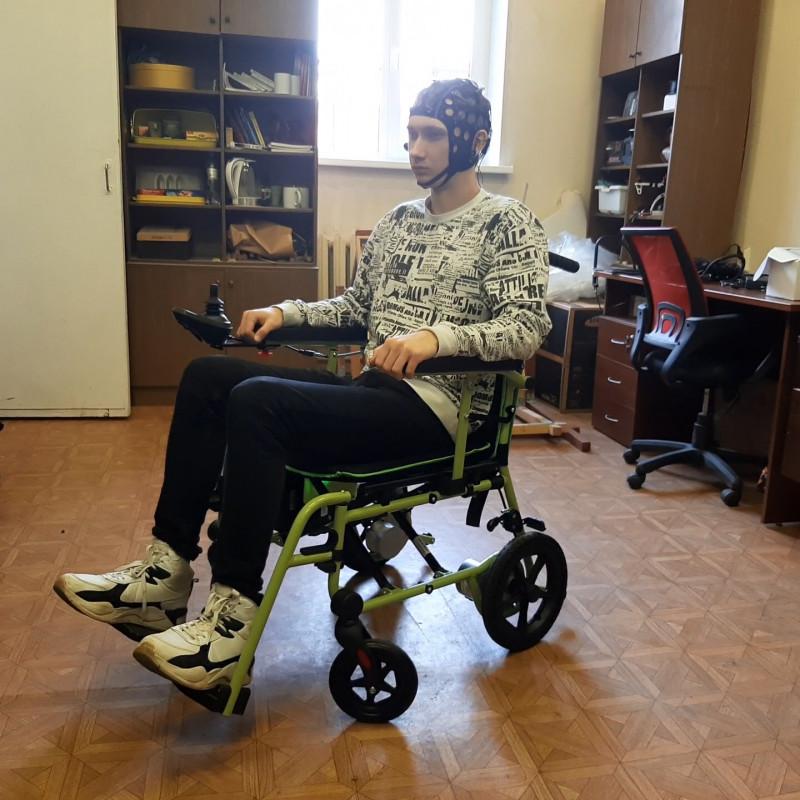
The system functions based on electroencephalography (EEG). Brain activity is read through a headset with sensors. Machine learning algorithms recognize neural signals. They understand wheelchair turns to the right and left, as well as forward movement.
The main advantage of the technology is its non-invasiveness. Data is transmitted through external sensors. In addition, the system adapts to individual characteristics of brain activity.
Scientists have used modern methods of cybernetic neurobiology. This scientific field combines neurobiology and control theory. Specialists used special mathematical models. They allow accurate interpretation of brain signals and their conversion into commands for the wheelchair's electric drives.
Subscribe to "First Technical" news on Google News to stay updated on the latest events in the world of science and technology.
Read more on the topic:
Robots in Russia have learned to be controlled by "the power of thought"
"Mind-controlled" truck tested in Russia
Geoscan Pioneer Mini learned to be controlled without a joystick
Never miss our newsAdd this site to your preferred sources to see us more oftenAdd on Google

















