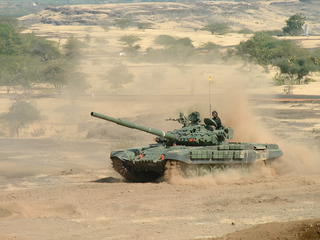
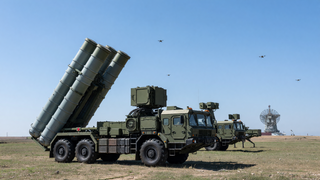
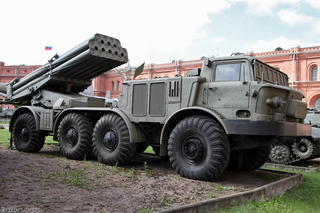
A 120-mm self-propelled artillery gun 2S31 "Vienna", equipped with additional protection against drones, has been spotted on the front line. A photograph of the vehicle with an anti-drone "barbecue" was published in the Telegram channel "Sith's Corner".
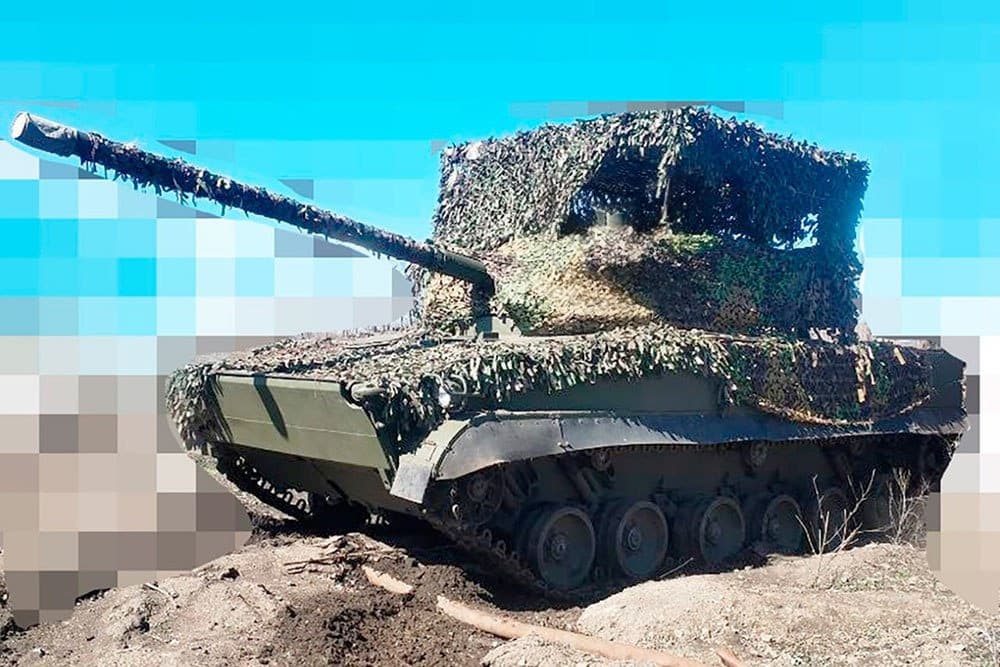
The 2S31 self-propelled gun is found on the front much less often than the more common "Gvozdika", "Akatsiya" or "Msta-S". The new protection is designed to increase the survivability of equipment in the face of active use of FPV drones.
"Vienna" is capable of firing a wide range of ammunition, including high-precision "Kitolov" projectiles with a range of up to 12 km and "Gran" mines, hitting targets at a distance of up to 9 km. In total, the ammunition load includes 70 means of destruction - from thermobaric to cluster. The rate of fire of the installation reaches 10 rounds per minute, the computerized fire control system ensures high accuracy.
The vehicle, weighing 19.1 tons, develops a speed of up to 70 km/h on land and up to 10 km/h afloat. The range is 600 km. The crew consists of four people.
Читайте ещё материалы по теме:
Now on home
The vehicle is designed for 24 convicts and 6 employees, inside there are single and general cells
The Ministry of Education and Science will coordinate the creation of unified requirements for supercomputer centers and access to them for science and industry
The complex will produce products for 5G, aviation, and electric transport
By 2028, the company plans to assemble up to 40,000 devices annually
Gagarin Cosmonaut Training Center has expanded access to selection and for the first time began using AI to analyze candidates' documents
The defendant in the criminal case deliberately concealed the sending of technical documentation to a foreign customer
A joint group of developers, commissioned by the state, is making a replacement for Keysight and AWR
Moscow Combined Arms Command School has developed a modular tracked platform for reconnaissance, mining, and fire support in all conditions
State Duma Deputy Anton Nemkin: VPNs can collect personal data and transfer it to third parties
Krasnoyarsk scientists have combined satellites, stratospheric platforms, and ground towers into a single network with algorithms three times faster than global standards
The former cold section, worth 790 million rubles, has become a warm complex - now aircraft are not transferred to other regions for maintenance