Translated with AI from the Russian original.
Astronomers from Moscow State University (MSU) have discovered a new star, V691 Serpentis, in the constellation Serpens. The object was found as part of the "New Milky Way" survey, which is conducted at the "Astroverts" astronomical farm in Nizhny Arkhyz. Observations were carried out using a wide-angle camera that scans the Milky Way every clear night. The star, which reached the 12th magnitude, appeared suddenly - it was not visible 48 hours before its discovery.
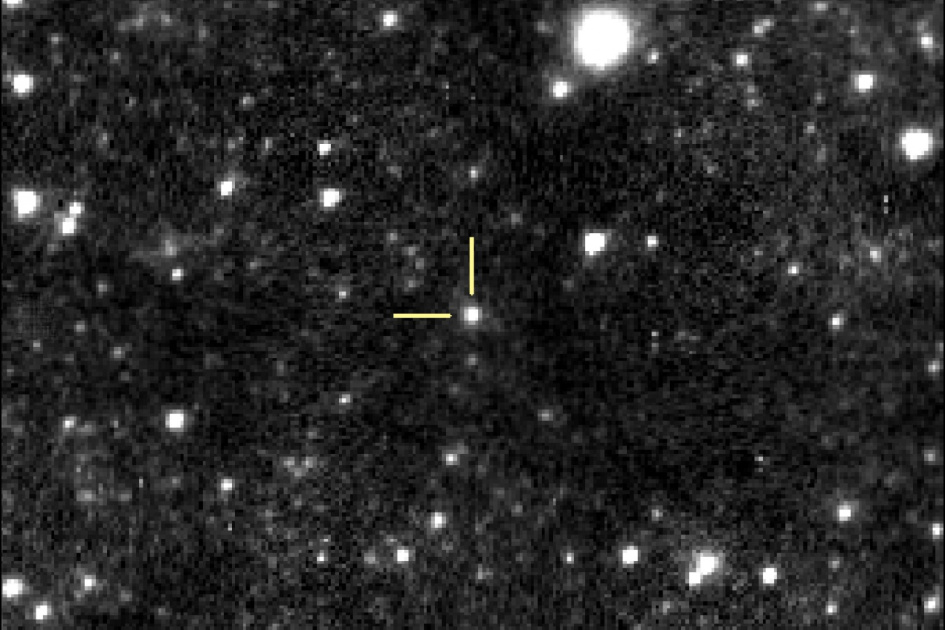
Spectroscopic data obtained on the 2.5-meter telescope of the Caucasian Mountain Observatory of the Sternberg Astronomical Institute of MSU confirmed that V691 Serpentis is a classical nova.
The discovery of a new star is the result of many years of systematic work on monitoring the sky. Our team uses modern methods of automatic search for variable objects, which allows us to detect the appearance of new objects in the sky in almost real time.
Observations showed P-Cygni profiles of hydrogen lines, indicating the expansion of the star's shell at a speed of 560 km/s, and iron lines. Images from a 60-centimeter telescope in Crimea clarified the coordinates and brightness of the object.
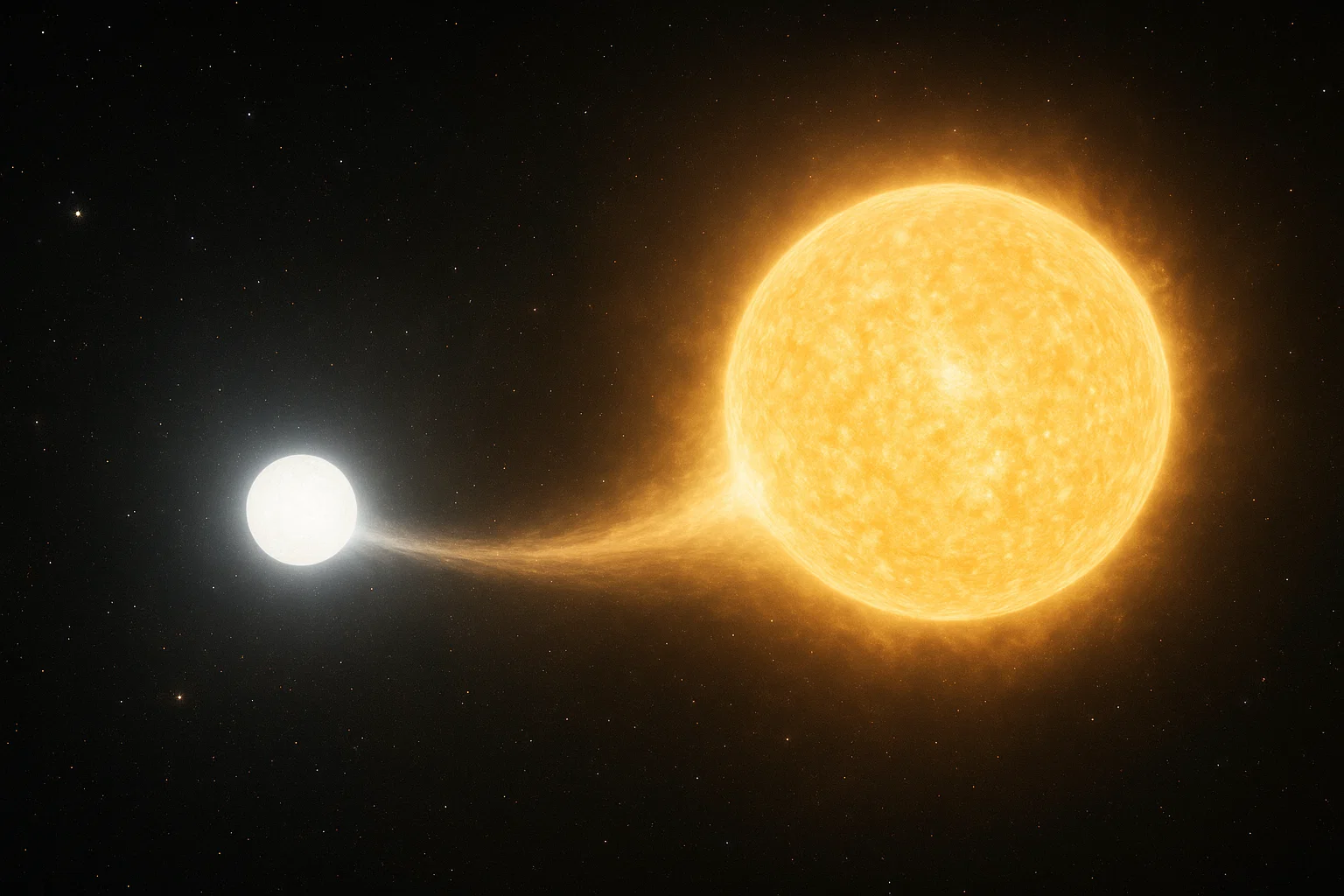
The discovered star is a thermonuclear explosion on the surface of a white dwarf (the remnant of a Sun-like star that has exhausted its nuclear fuel in a binary system), which is in a binary system with a star that has not yet burned out. Hydrogen from the companion star accumulates on the dwarf, triggering an explosion that sharply increases the brightness of the system. V691 Serpentis, with its red color due to interstellar dust, is now available for observation through small telescopes.
The discovery is the second for the MSU team in 2025 after V7993 Sagittarii. About ten new stars are found in the Galaxy every year, and each discovery helps to study the evolution of stars.
Thousands of astrophysical bursts of various natures are discovered every year, but many interesting objects, unfortunately, remain unexplored. The sooner we understand the nature of the burst object, the more complete information about it we can obtain in the future.
The results arepublished in the Central Bureau for Astronomical Telegrams.
Read more materials on the topic:
Roscosmos presented a plan for deorbiting the ISS: the process will take 2.5 years
Roscosmos plans to double its orbital satellite constellation in two years
By analogy with SpaceX: Roscosmos is developing a reusable first stage of a rocket
Never miss our newsAdd this site to your preferred sources to see us more oftenAdd on Google

















