Translated with AI from the Russian original.
Novosibirsk State University (NSU) has developed materials to solve the problem of icing of spacecraft in space. This was reported by the university's press service.
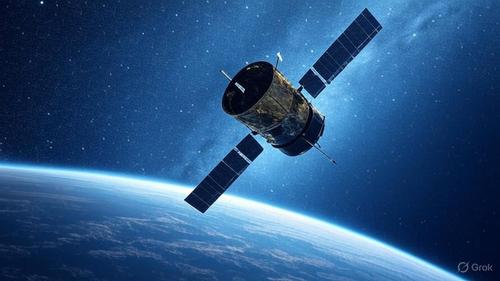
The use of such materials in airless space will solve a number of problems with icing, protection from condensation and corrosion of various space and suborbital vehicles.
The main feature of these materials is their ability to repel liquid. This leads to the formation of almost spherical droplets that do not spread, but roll off the surface.
This property was achieved thanks to laser-created structures on the surface. It is additionally coated with a coating containing fluorine polymers.
Scientists conducted experiments to find out whether the water-repellent property is preserved under vacuum conditions. For this purpose, liquid with glycerin was applied to samples with the material under study and the speed of movement of the droplets was measured.
We conducted our experiments in a wide temperature range - from room temperature to 300°C.
The results showed that the speed of movement of droplets on materials in vacuum decreases slightly. This indicates that the minimum contact of the liquid with the surface is maintained.
Earlierwww1.ru reported that unique carbon fiber for space technologies waspresented at Rosatom.
Read materials on the topic:
Rosatom helped create the world's largest and most powerful pulsed magnetic system for ITER
Active implementation of additive technologies has begun at Rosatom
Engine for long-range space flights developed at Rosatom
Never miss our newsAdd this site to your preferred sources to see us more oftenAdd on Google

















