The Russian government has approved the national project "Space" with a total funding of over 7 trillion rubles until 2036. Of these, 2.2 trillion are planned for 2026–2030, and the remaining funds are allocated for the subsequent period. The project includes eight areas: from satellite communications to the development of space science and nuclear energy.
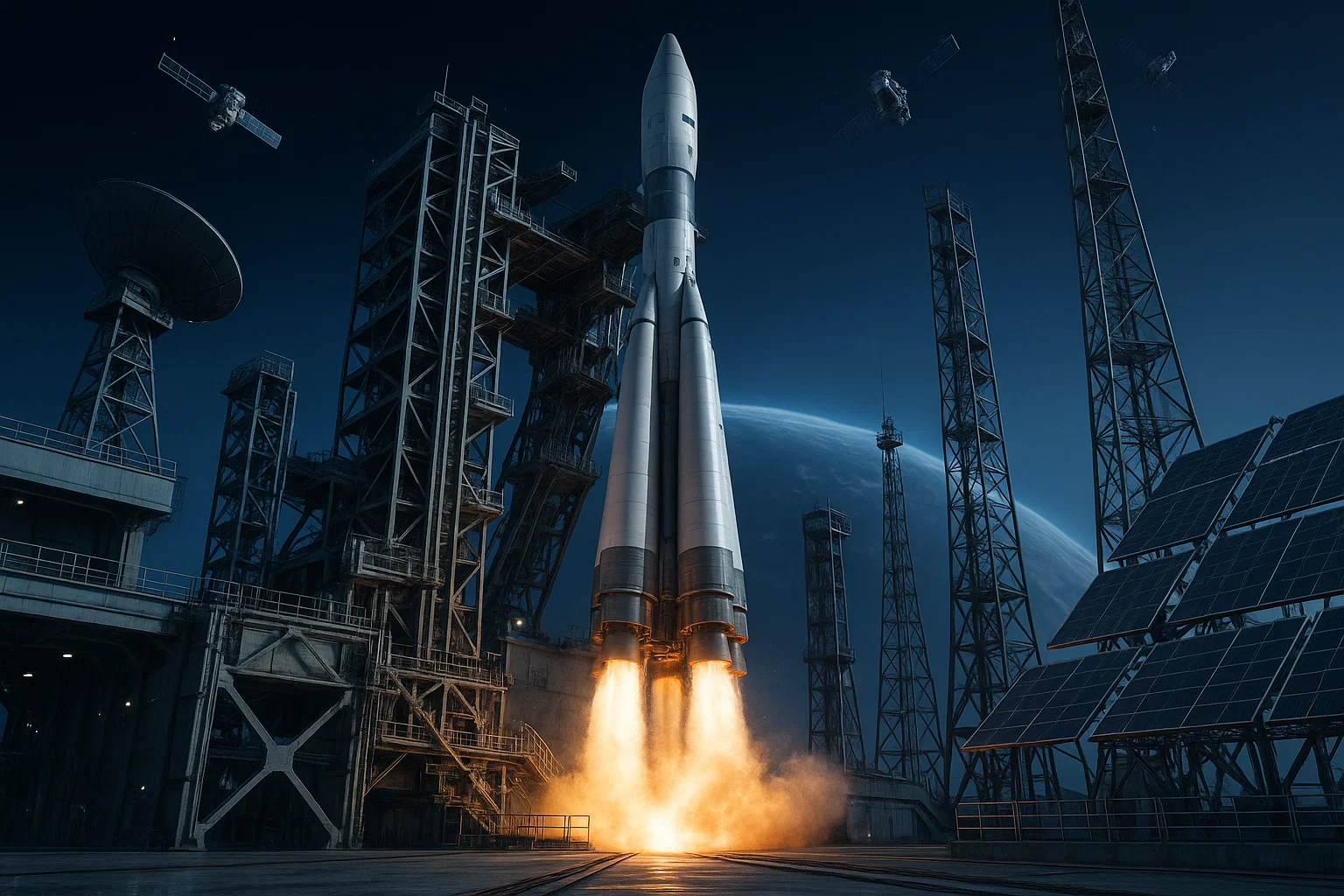
Roscosmos State Corporation plans to increase the share of private capital in the industry from 5% in 2024 to 35% by 2036. One of the key mechanisms will be the transfer of shares in space industry enterprises to private investors for trust management. In addition, the state corporation intends to reduce the cost of launching cargo into orbit by 2.5 times — from 500 thousand rubles/kg in 2023 to 200 thousand rubles/kg by 2036. This should help Russia occupy 28% of the global launch services market.
The national project includes eight federal projects that are planned to be financed:
- «Satellite Communications and Earth Observation» — 301.9 billion rubles until 2030 and 1.031 trillion rubles until 2036;
- «Navigation and Time» — 139.1 billion rubles until 2030 and 381 billion rubles until 2036;
- «Manned Spaceflight» — 584.6 billion rubles until 2030 and 998.2 billion rubles until 2036;
- «Sovereign Competitive Access to Space» — 280.3 billion rubles until 2030 and 810.1 billion rubles until 2036;
- «Space Science» — 228.7 billion rubles until 2030 and 669.7 billion rubles until 2036.
As part of three federal projects — "Development of Space Nuclear Energy in Russia", "Production and Technological System" and "Personnel for Space" — it is planned to allocate 201.7 billion rubles by 2030 and 499.3 billion rubles by 2036.
It is planned to launch 1118 spacecraft, including communication satellites, Earth remote sensing (ERS) satellites, and navigation systems. Some of them — for example, 365 «Rassvet» devices (project "Bureau 1440") — will be deployed to provide broadband access throughout Russia. Also in the plans is the creation of the «Amur LNG» launch vehicle with a reusable first stage.
The main investors in the digital economy in space can be digital ecosystems and platforms, which will act as qualified customers for space communication and remote sensing systems.
Nikolai Pozhidaev, head of Sputniks Group, adds that «the Earth remote sensing data market is still in the formation stage».
Andrey Ionin also draws attention to the fact that the demand for space services in Russia currently remains at a low level. However, there are prospects for its growth, associated with the implementation of projects in the Arctic and Siberia. In addition, an important factor may be increasing the legal significance of Earth remote sensing data, so that companies can fully use and develop them as a digital asset.
Read more materials on the topic:
Space ambitions: Roscosmos plans to carry out 113 space launches per year
Russian enterprises will receive state support to create competitive products
Roscosmos and Almaz-Antey are creating equipment for oil production
Never miss our newsAdd this site to your preferred sources to see us more oftenAdd on Google

















