Astronomers continue to monitor high-energy activity on the Sun. Currently, the main factor in space weather remains a large coronal hole covering the southern hemisphere of the Sun and partially capturing the equatorial regions.
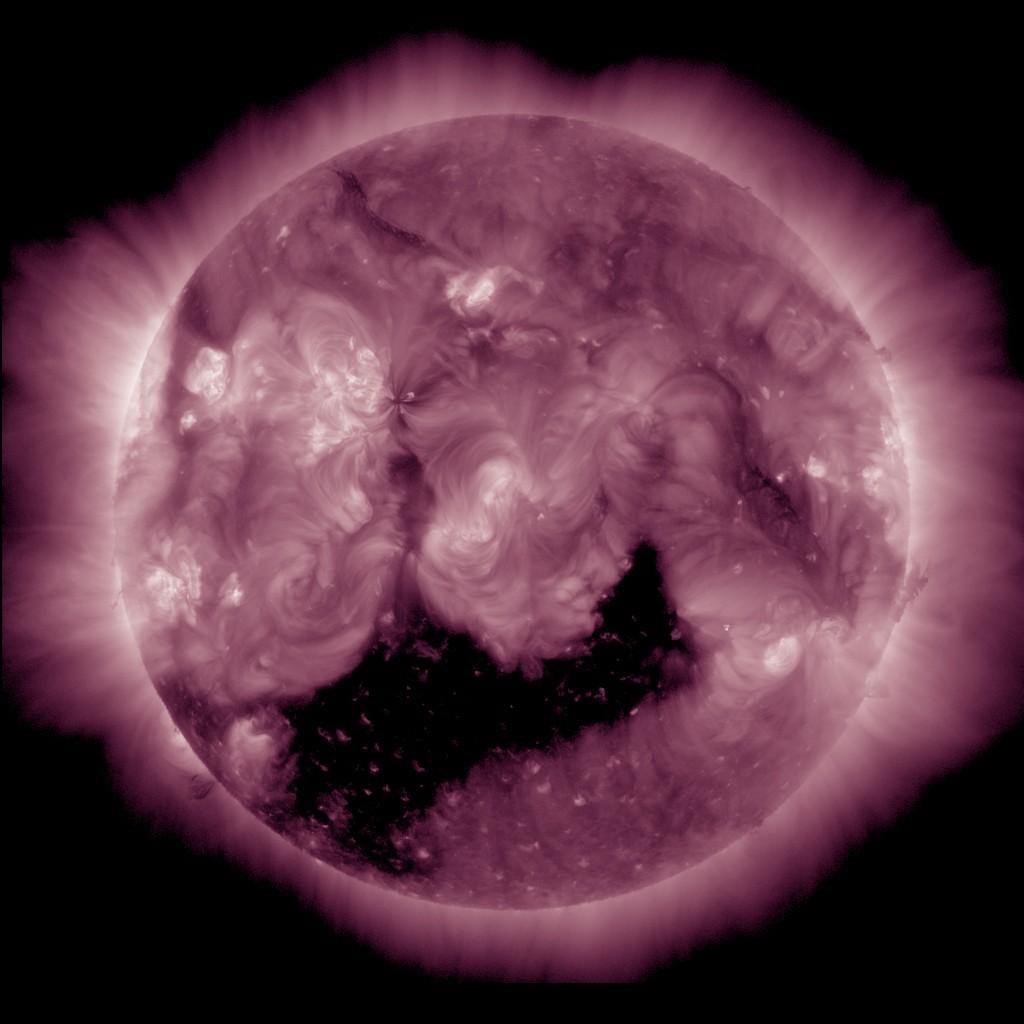
The Earth has already plunged into a stream of high-speed solar wind emanating from this hole. According to experts, since morning the speed of the solar wind near the planet reaches 700-800 km/s, which is twice the normal values. The plasma temperature has risen to 600-800 thousand degrees, showing an increase of 2.5-5 times in recent hours. However, despite the extreme parameters, the Earth's magnetic field remains stable: geomagnetic indices are still within the "yellow" and "green" zones.
According to researchers, small fluctuations in the flow structure - for example, an increase in density - can trigger a sharp increase in geomagnetic activity. The probability of magnetic storms remains high, and new bursts are possible in the coming days. According to preliminary calculations, the increased solar wind speed will continue until May 19-20, after which it will decline.
Flare activity on the Sun remains extremely low. Nevertheless, there remains a high probability of observing auroras - especially in the northern latitudes. The day before, the probability of their appearance reached 20%, but the polar oval soon dissipated. A repeat attempt is possible today.
In recent images of the Sun, researchers noticed a contour resembling the silhouette of a kitten. According to estimates, the "solar kitten" reaches approximately one million kilometers in length.
Read materials on the topic:
Magnetic storms are expected on the weekend due to the active coronal hole on the Sun
Five powerful flares occurred on the Sun over the past day: four class M and one class X
The coronal hole on the Sun is growing rapidly: a magnetic storm hit the Earth on May 17
Never miss our newsAdd this site to your preferred sources to see us more oftenAdd on Google

















