The First Sechenov Moscow State Medical University has created a “smart” orthosis that can adapt to the degree of patient injury. The development is already ready for practical use and can be manufactured within three days after receiving the order.
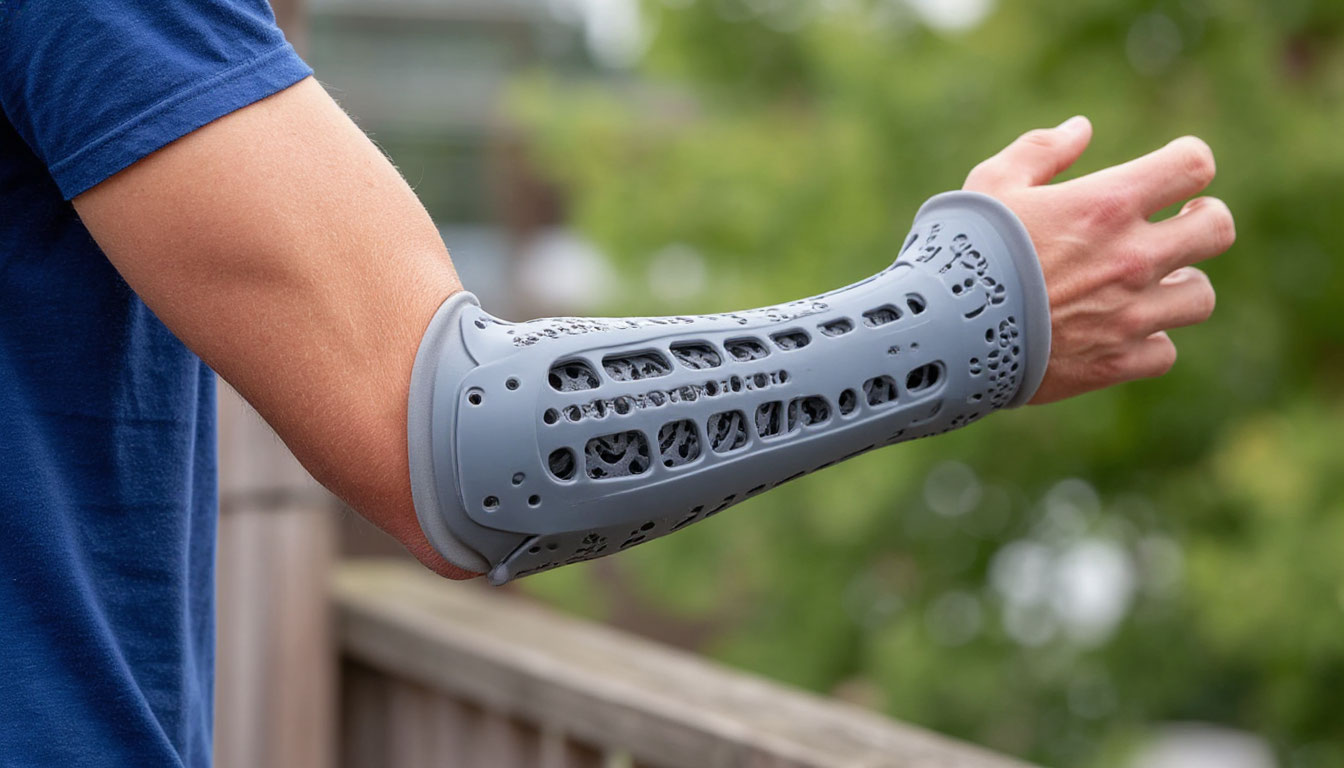
The device is designed to fix the wrist and ankle joints. The principle of operation is based on the use of modern materials with variable rigidity. For minor injuries, the orthosis becomes flexible, making it easy to remove. In the case of serious injuries, such as fractures, the fixation becomes as rigid as possible.
The creation process begins with 3D scanning of the damaged area of the patient's body. Then, using 3D printing, an individual model is made that accurately repeats the anatomical features of the person. This significantly increases the effectiveness of treatment compared to conventional plaster casts or fabric fixators.
The product is X-ray transparent, allows the skin to breathe and is not afraid of water - unlike fabric orthoses, you can take a shower with it.
Also, the material of the orthosis transmits X-rays, which allows you to take pictures without removing the fixator. At the same time, the production cost is lower than traditional analogues.
The innovative orthosis opens up new opportunities in the treatment of injuries to the musculoskeletal system, making the rehabilitation process more comfortable and effective for patients.
Read more materials on the topic:
Innovative cooling technology: the new CNIAG device changes the approach to postoperative care
Russian researchers have synthesized an antibiotic against resistant Staphylococcus
Never miss our newsAdd this site to your preferred sources to see us more oftenAdd on Google

















