The Soviet spacecraft Cosmos-482, launched on March 31, 1972, towards Venus, will soon enter the Earth's atmosphere.
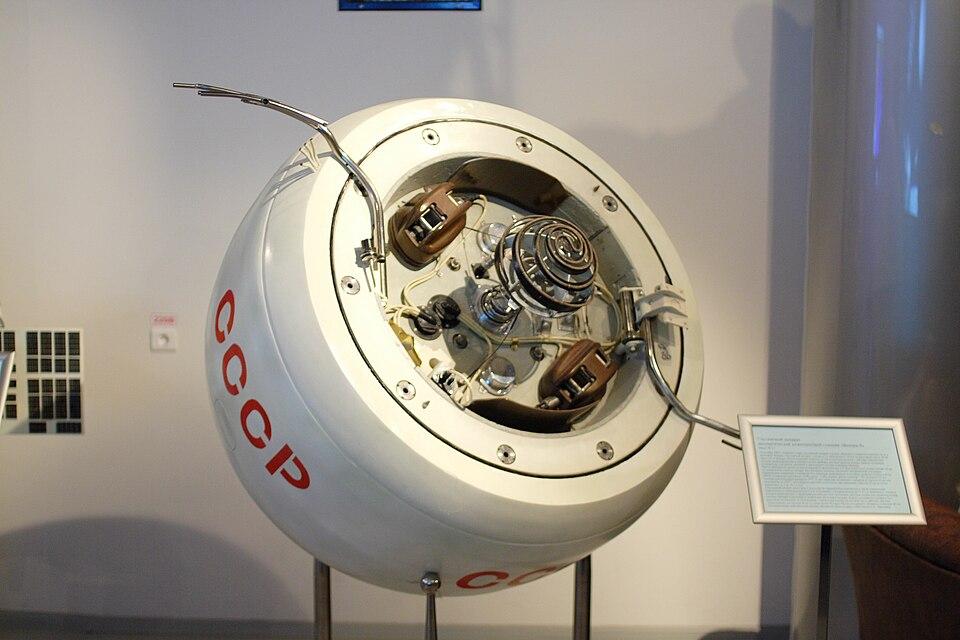
After successful deployment into a temporary near-Earth orbit, the spacecraft experienced a timer malfunction. This led to a premature engine shutdown. Cosmos-482 was unable to leave Earth's orbit and continued to orbit for 53 years. Entry into the Earth's atmosphere is expected between May 8 and May 11, 2025.
As the specified date approaches and the orbit's altitude continues to be monitored, it will be possible to more accurately determine the time of atmospheric entry. The date may change depending on solar activity, as its increase leads to heating and expansion of the upper atmosphere, increasing drag for objects in low orbits.
Determining the exact location of the spacecraft's fall is difficult. It is assumed that the fall area will be in the latitude range from 52 degrees north to 52 degrees south. Since most of the Earth's surface is covered by ocean, the probability of falling into water is significantly higher. Despite the low probability of falling on land, there is a risk associated with the return of Cosmos-482.
The spacecraft is a probe, similar to the landing modules of the Venera mission, and can withstand enormous overloads and extreme conditions. The landing module weighs 495 kilograms and has a diameter of about one meter. According to satellite expert Marco Langbroek, the impact speed after atmospheric braking can reach 242 kilometers per hour.
Observing Cosmos-482 during its final orbits around the Earth will be possible at dusk and dawn from some regions. The object will look like a bright and slow meteor.
Earlier,www1.ru reported that a probe for descending to the hottest planet in the Solar System wasdeveloped in Russia.
Read related materials:
Kalashnikov is ready to develop optoelectronic systems for the space industry
Who's there?: Roscosmos explained how to distinguish Soyuz from Progress
Progress MS-26 and Soyuz MS-25 spacecrafts have been deconserved at Baikonur
Never miss our newsAdd this site to your preferred sources to see us more oftenAdd on Google

















