Soyuz and Progress spacecraft look similar, but they can be distinguished even without visible portholes. The key detail is the convex structure on the habitation module, known as the blister. This element appeared on the Soyuz-TM modification and has since become an integral part of manned spacecraft.
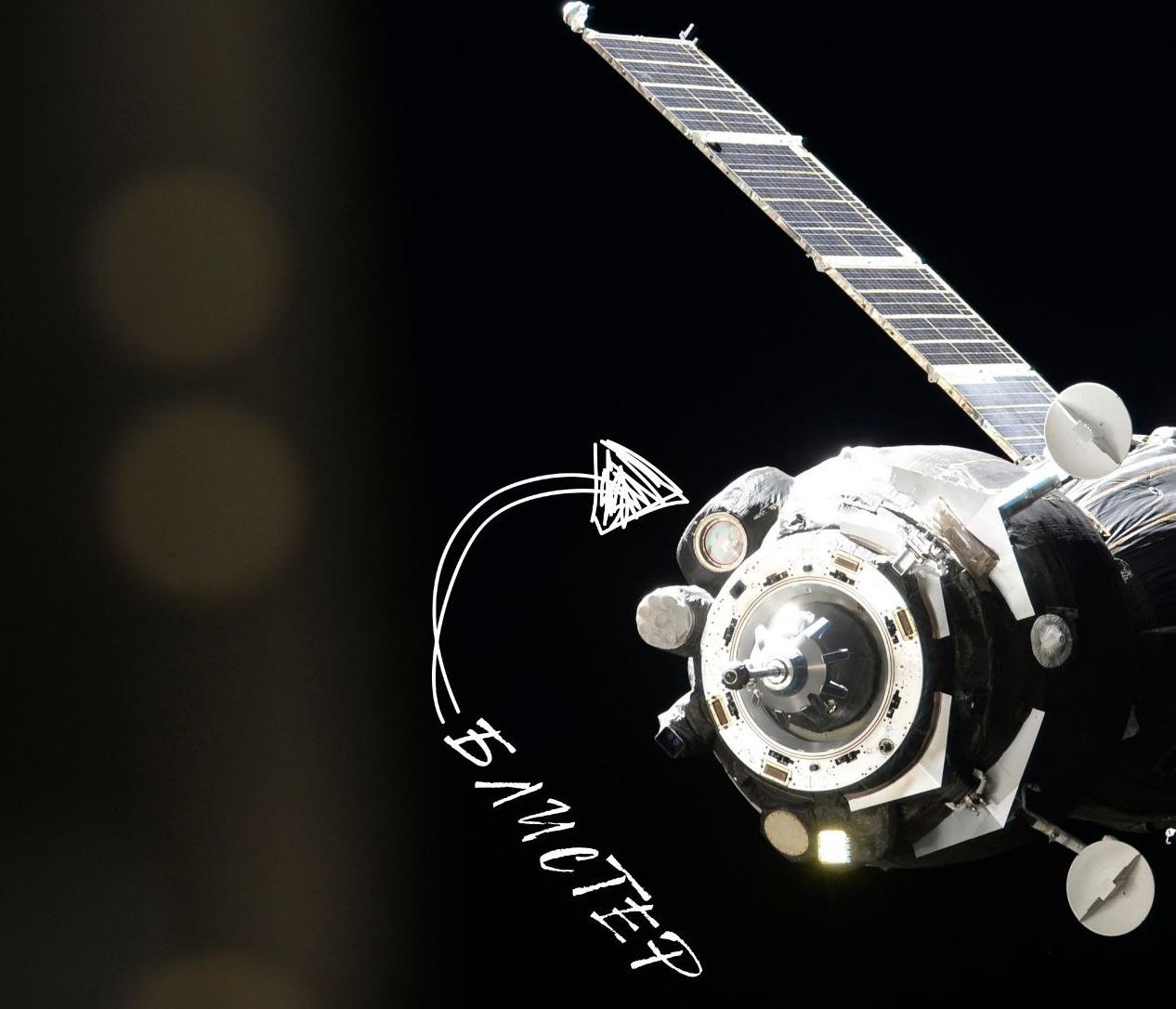
The blister is a porthole that faces directly forward. It is used in critical situations, such as when the automation fails during docking. In such cases, the flight engineer installs a laser rangefinder and visually monitors the approach to the ISS through the blister, reporting speed and distance data to the commander. The Progress cargo ship does not have such a structure - its docking is always fully automated, and there is no need for manual control and visual monitoring.

The presence of a blister is not just a technical feature, but a safety element. Manned missions require redundant systems in case of unforeseen situations. Progress freighters do not have this need, so their design is simpler. By remembering this detail, even a non-specialist can easily determine the type of ship in a photo or video, focusing on the characteristic "protrusion" on the Soyuz hull.
Read more on the topic:
Progress MS-26 and Soyuz MS-25 spacecraft have been deconserved at Baikonur
The launch of Soyuz MS-27 with a crew to the ISS is scheduled for April 8
Successfully arrived at its destination: the Progress MS-30 space freighter docked with the ISS
Never miss our newsAdd this site to your preferred sources to see us more oftenAdd on Google


![Growth Point: After 5G Launch, Mobile Internet in Russia Accelerated by 20%","subtitle":"TelecomDaily recorded an upload speed increase of 19.7%, and download speed of almost 14%","announce":""}[]}],](https://media.ixbt.site/fit-in/320x/ixbt-data/1727896/ai-image-nvgq0a0v5cjnyxwoc8xpelva.webp)