Specialists from Innopolis University, in collaboration with PRIN company and engineers from Mosgorgeotrest, conducted the first test of an industrial unmanned aerial vehicle in the shafts of the Moscow Metro. This innovative drone was created for monitoring complex industrial facilities, including shafts, tunnels, and collectors, where manual work poses a danger to humans.

The drone from Innopolis University is equipped with a shockproof body, a camera with a gyro-stabilized suspension, a lidar for scanning, and intelligent control systems. Its key feature is the ability to operate autonomously in enclosed spaces without GPS navigation. This is achieved using SLAM (Simultaneous Localization and Mapping) technology, which allows the drone to build a map of the surrounding environment in real-time and avoid obstacles.
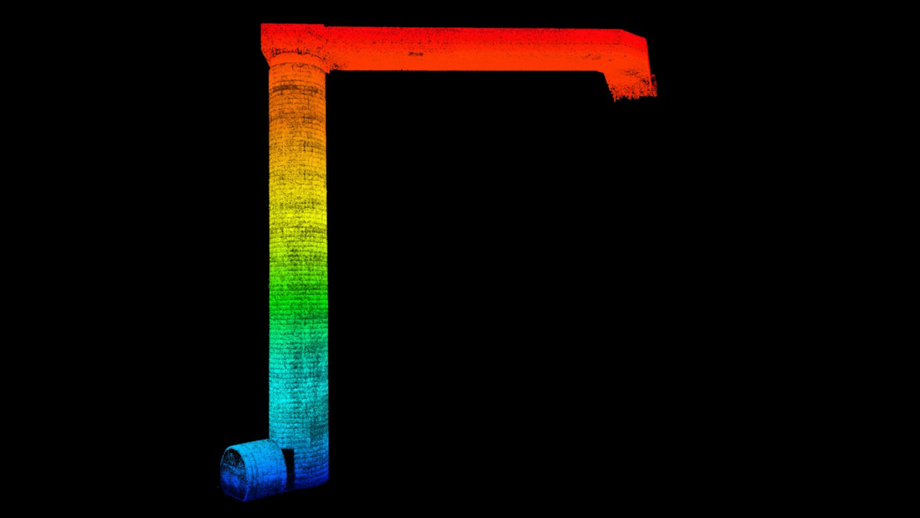
During the tests in the Moscow Metro, the device used lidar to build a three-dimensional model of a ventilation shaft temporarily closed for modernization. The system recorded accurate data necessary for subsequent analysis.
The experiment of our Center for Unmanned Aviation Systems is the first case of using a drone in such a task. Metro ventilation shafts are a rather complex infrastructure object, and currently, employees are involved in their inspection. The use of an industrial drone will speed up and make the inspection safer in hard-to-reach places of shafts and tunnels, collect detailed 3D data for analysis, improving the quality of the inspection. The experiment confirmed that the solution works and has the potential for application in this industry
To assess the accuracy of the drone's operation, specialists used the GNSS-RTK scanner SLAM CHCNAV RS10 from PRIN company. Comparison showed that the autonomous model built by the drone is geometrically correct but has noisy data. The manual scanner provided clearer results, but the process took longer.
We are completely satisfied with the results — we received good indicators, found growth points. The plans include further testing and introduction of the solution into trial operation
Industrial drones like these have great potential in monitoring urban infrastructure objects such as metro tunnels and shafts. They can also be used for inspecting complex objects where high accuracy is required.
The use of such devices will reduce risks for people, simplify work, and speed up data analysis processes.
The conducted tests are another step towards the integration of unmanned systems into Russian industry, especially in the context of the need to ensure technological sovereignty.
Read more materials on the topic:
Flies at a cruising speed of 80 km/h: Innopolis University presented an electric drone
UAV "Alfa-E" from "Kalashnikov" was looking for ore in the Khabarovsk Territory
Now on home
Герой России Гарнаев: никто из профессионалов о возобновлении производства на КАЗ всерьёз не говорит
Система отслеживает спутники на высотах до 50 000 км и ведёт за ними наблюдение
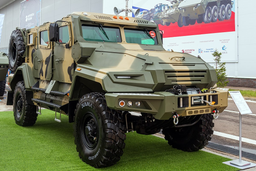
The armored vehicle is equipped with a KamAZ-740.35-400 diesel engine with a power of 400 hp.
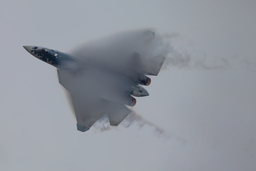
Constant improvements in avionics, weapons and tactical capabilities will make the aircraft a flexible response to future challenges
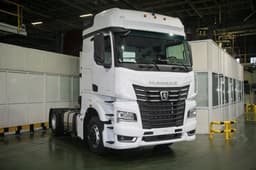
The exterior of the KamAZ-54901 features fairings on the cab and chassis for fuel economy
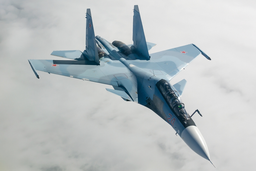
Fighters are in demand both domestically and abroad
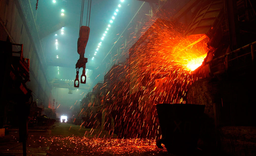
Tyazhpromexport and Venezuela Agree on Plant Revival
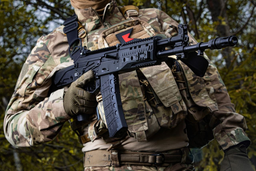
The company not only completed the state order, but also quickly mastered the production of AK-12K for special forces
Experts have developed a photogrammetric complex with a resolution of less than 1 cm