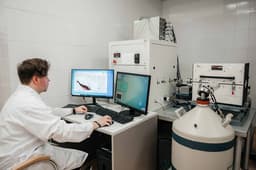
Scientists at the Southern Federal University (SFedU) have synthesized more than a dozen new organic compounds of spiropyrans that change color when the lighting changes. These substances can be used as fluorescent probes and markers for medical purposes, and can also help in the fight against cancer cells and chronic diseases. The research results are published in the journal ChemBioChem.

The scientists created 12 new spiropyrans with photo-controlled fluorescence, which include various substituents and anions.
Artem Pugachev, senior researcher at the SFedU laboratory of special organic synthesis, noted that spiropyrans can dramatically change their fluorescent properties under the influence of ultraviolet or visible light, which makes them promising for use as probes.
The researchers studied how the structure of the compounds affects their properties. They found that toxicity depends on the anion in the molecule, and the spectral characteristics are determined by the structure of the molecular cation. Pugachev explained that the choice of the cation structure makes it possible to obtain a substance with the desired fluorescent characteristics and adjust the toxicity.
The least toxic fluorescent dyes can be used as markers for safe staining of living tissues, while more toxic ones can help in the detection and destruction of cancer cells and pathogenic microorganisms. Scientists have already visualized planktonic bacteria and bacterial biofilms using the least toxic compounds and a fluorescence microscope.
Pugachev also noted that bacteria in biofilms often cause chronic diseases and implant rejection, so their timely detection is very important.
In the near future, SFedU scientists plan to investigate the anti-cancer activity of new compounds and study spiropyrans with other functional substituents. However, as emphasized at SFedU, it is too early to talk about ready-made drugs and their availability in medical institutions. Years of preclinical and clinical trials are needed before new methods can be put into practice.
Read more on the topic:
Nanosensor for recognizing spiral molecules created in St. Petersburg
Artificial intelligence trained to recognize the structure of molecules
Scientists from Tomsk NIMC studied tongue cancer using spatial transcriptomics