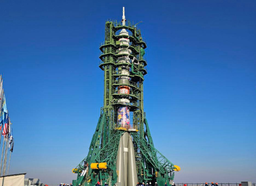
The launch of four space satellites from the Vostochny Cosmodrome has been postponed until the end of next year. The spacecraft are being developed at the Siberian State University of Science and Technology named after Academician M. F. Reshetnev. This was reported in the press service of the university.

In the future, all satellites will be able to "communicate" with each other in orbit and self-organize to perform tasks. Initially, the launch was planned for the end of 2024. The deadlines were shifted due to difficulties in development and the order of launching spacecraft from the cosmodrome.
Scientists at Reshetnev University plan to launch three 1U format satellites and one 3U format satellite. These satellites will be launched simultaneously and will fly, maintaining a distance of about 1-2 thousand kilometers from each other.
The main goal of the space mission is to conduct experiments with inter-satellite Internet technology.
This network will also include ground control stations and user terminals. This technology will allow devices to exchange information with each other to perform tasks of relaying user information, performing synchronous physical measurements, and controlling devices that are not in the visibility zone of the ground control station.
The project also includes experiments with satellite Internet of Things technology and low-power ground terminals for transmitting data from Earth to satellites.
Earlier, www1.ru reported that the launch of the first satellites of the Gryphon global monitoring system was postponed to 2025.
Read materials on the topic:
Chechen satellite "Nokhcho" started working in Earth orbit
Roscosmos takes control of all Russian satellites — what does this mean
More than 160 communication satellites will be launched into orbit by 2030 in Russia
Now on home
Герой России Гарнаев: никто из профессионалов о возобновлении производства на КАЗ всерьёз не говорит
Система отслеживает спутники на высотах до 50 000 км и ведёт за ними наблюдение

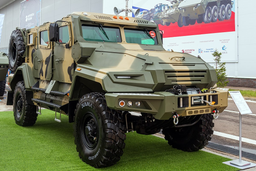
The armored vehicle is equipped with a KamAZ-740.35-400 diesel engine with a power of 400 hp.
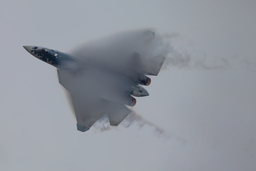
Constant improvements in avionics, weapons and tactical capabilities will make the aircraft a flexible response to future challenges

The exterior of the KamAZ-54901 features fairings on the cab and chassis for fuel economy
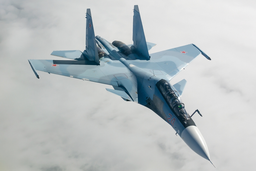
Fighters are in demand both domestically and abroad

Tyazhpromexport and Venezuela Agree on Plant Revival
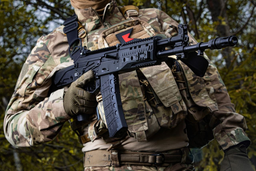
The company not only completed the state order, but also quickly mastered the production of AK-12K for special forces
Experts have developed a photogrammetric complex with a resolution of less than 1 cm