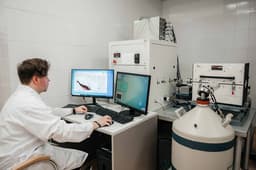
Tomsk Polytechnic University (TPU) has created virtually silent nanosensors to improve the monitoring of the condition of human organs and tissues, the university's press service reported.

Previously, we created electrodes with a noise level of no more than 220 nV in the frequency range from 0 to 10,000 Hz and resistant to electromagnetic interference, which allowed us to register cardiac micropotentials at a level of 300 nV. The new nanosensor manufacturing technology has made it possible to create virtually silent nanosensors capable of registering micropotentials from units and tens of nanovolts.
The new nanosensors will allow the creation of high-resolution electrophysiological equipment that has no analogues in Russia or in the world.
In addition, dry medical electrodes that do not require a conductive gel have been created based on the developed technology. This makes it possible to create highly sensitive equipment that patients can wear constantly and provide doctors with the opportunity to receive information about their health status in real time.
To test the new nanosensors, TPU conducted studies on two groups of volunteers. The first group consisted of 10 people diagnosed with ischemic heart disease, the second group consisted of healthy volunteers. The new electrodes demonstrated the ability to register biopotentials at the level of several nanovolts.
The plans are to increase the sensitivity of the sensors to fractions of a nanovolt in order to register pathological changes at the cellular level. This way, we will be able to, for example, diagnose pathological changes in cells in oncology at the earliest stages.
Scientists have begun work on software that will calculate the energy of micropotentials in the range from 1 nV to 50 nV.
Earlier, www1.ru reported that young scientists created a substance that slows down the corrosion of implants by 90%.
Read related materials:
A new complex for oil spill response is being developed in Russia
A nanosensor for recognizing spiral molecules has been created in St. Petersburg