With the help of UAVs, the Russian agro-industrial complex can not only reduce its carbon footprint, but also increase the efficiency of field treatment with pesticides and save money spent on diesel fuel. This was stated at the IV Congress of Young Scientists in Sirius by Sergey Mitrofanov, Head of the Department of Economics of Innovation in Agriculture at the Higher School of Economics.
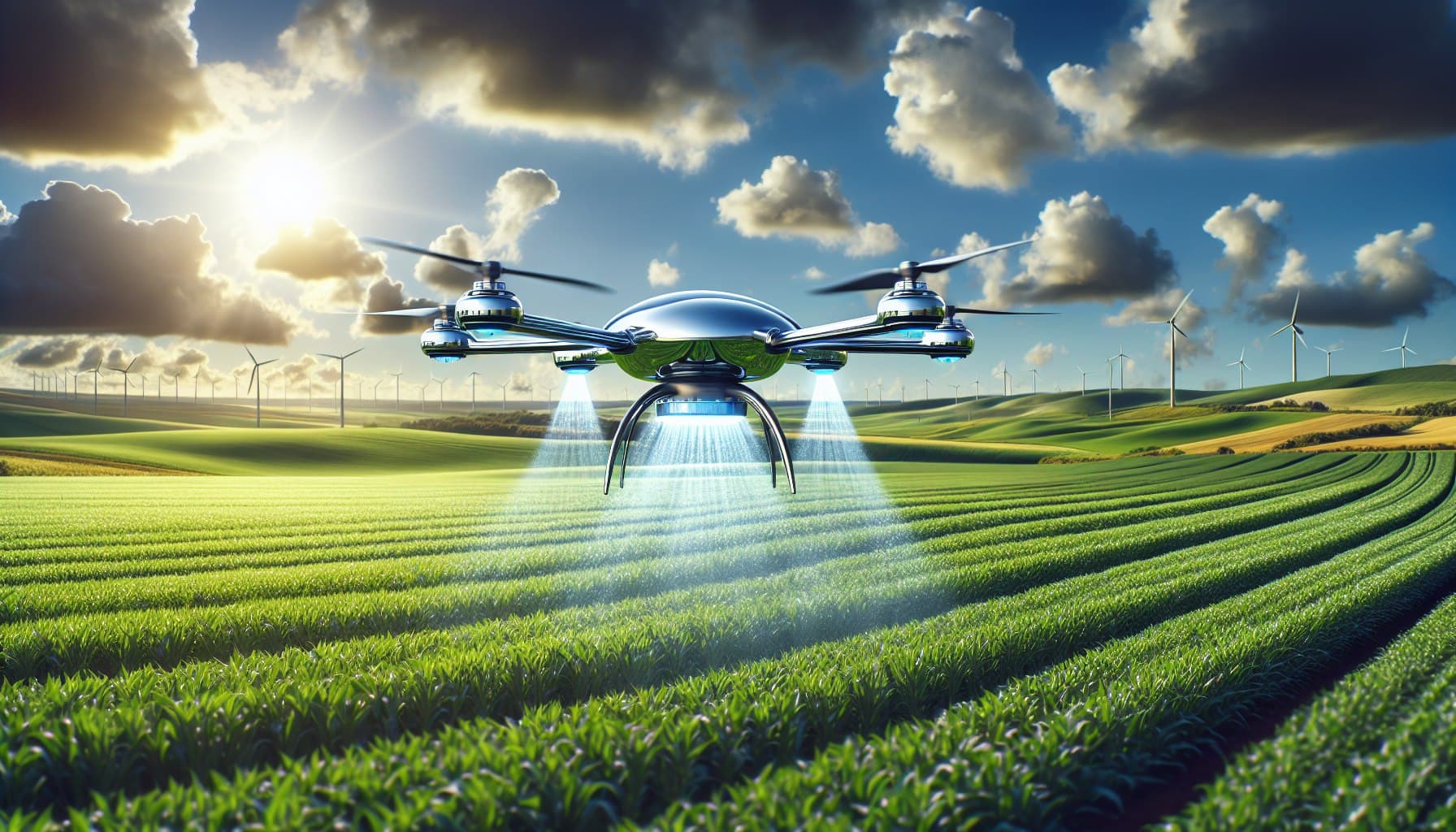
Drones are an extremely promising area for the agro-industrial complex. This is the second most important sector of their application after the military. For example, the introduction of drones can increase the efficiency of field treatment with pesticides by 15-25%. This can be achieved through more accurate spraying compared to traditional technologies using ground equipment.
Mitrofanov mentioned the multifunctionality of drones: in addition to fertilizing crops, they can, for example, use cameras and sensors to identify nutrient deficiencies, detect areas with weeds, and spray insecticides. They can also solve the problem of attracting workers to Russian fields: drones are cheaper and easier to purchase than hiring qualified specialists.
Drones are effective in Russian agriculture not only in the air. Earlier, "The First Technical" wrote about an experiment on the use of domestic "Kirovets" driverless tractors in a number of farms. During the study, they reduced the costs of Russian farmers for fuel and lubricants, plant protection products, fertilizers and planting material by almost 30%.
Read more on the topic:
Pilots for agro-drones will begin to be trained in 2024 at universities in Stavropol
Biysk and Sakhalin intend to establish the production of heavy agricultural drones