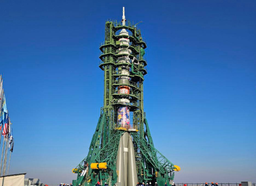
The "Nokhcho" satellite of the Chechen State University named after A. A. Kadyrov has become operational in Earth orbit. It was launched together with 52 other small spacecraft from Vostochny Cosmodrome in early November, and now the Chechen satellite is already transmitting its first data.
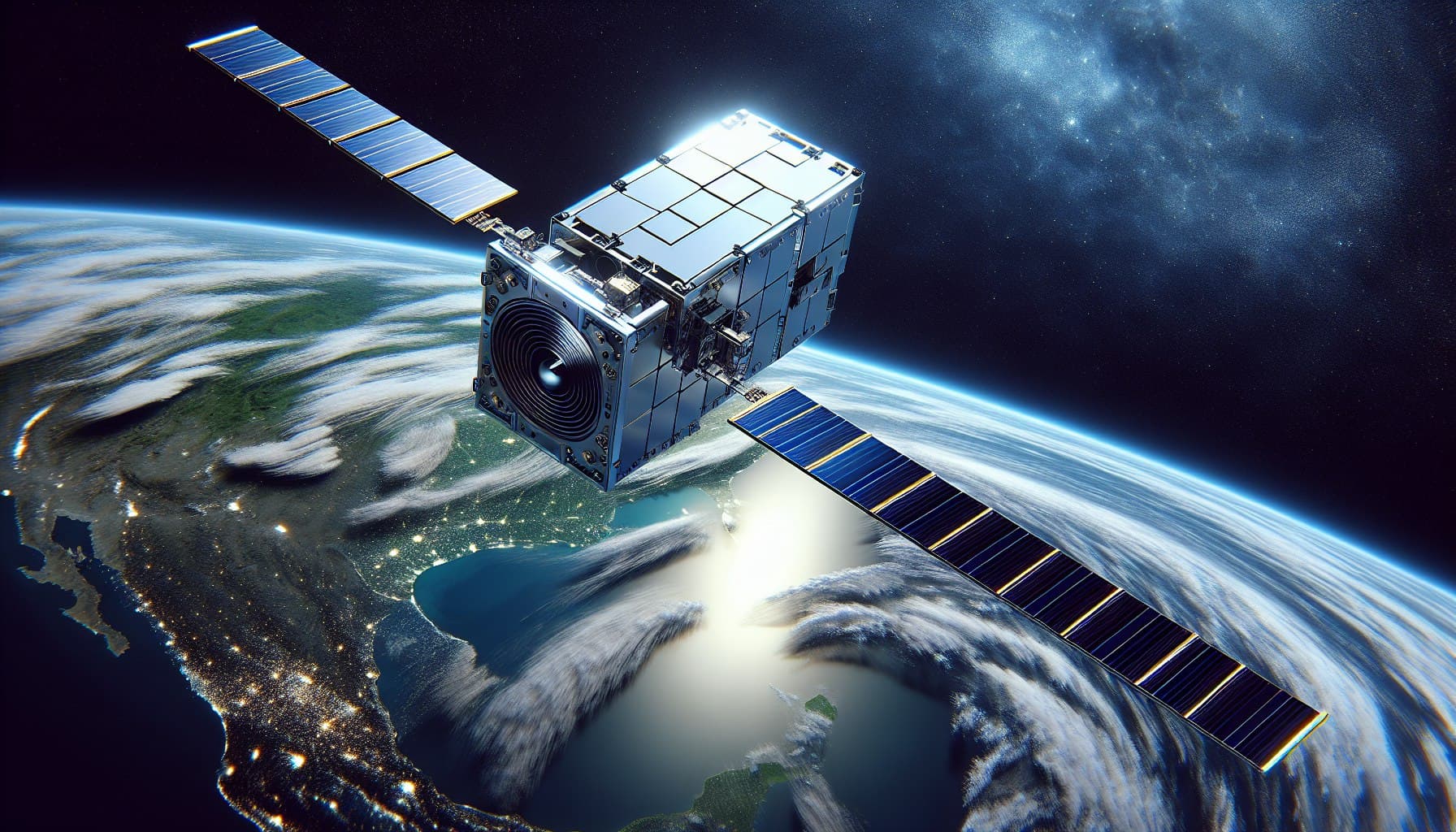
This is the second spacecraft for the Chechen Republic: in the summer of 2023, the "Akhmat-1" satellite was sent into orbit to monitor the movement of aircraft within 1500 km. It was created in collaboration with Chechen and Southwestern State Universities as part of the Space-Pi project, aimed at attracting schoolchildren and students to the study of space and space technologies.
The Nokhcho CubSat has other tasks. According to the ChSU named after A.A. Kadyrov, it studies the Earth's magnetic field.
The Earth's magnetic field measurement module allows collecting information about the intensity of the geomagnetic field and its heterogeneity. The data obtained will allow identifying magnetic anomalies (such as the Brazilian magnetic anomaly or the Kursk magnetic anomaly) and predicting natural disasters caused by tsunamis, earthquakes, volcanic eruptions, and other "cataclysms" around the world.
Also, as a payload, the CubSat carries an ADS-B (automatic dependent surveillance-broadcast) message receiving module, which allows aircraft pilots and air traffic controllers at ground stations to monitor the movement of the aircraft in real time with high accuracy. Communication with the aircraft is possible throughout its route.
The transmission of messages about the location of an aircraft is usually practiced through large communication satellites, but at the same time, they face the high cost of information transmission on Earth. Small modules, such as the ADS-B installed on the CubSat, allow providing a signal reception zone from the aircraft of at least 1500 km, and they are more economical.
Read more on the topic:
For the First Time in History in the Russian Federation: Spacecraft Leasing Has Started
Russian Cargo Ship "Progress MS-28" Saved the ISS from Space Debris
Time to Retire: Eight Russian Satellites in Orbit Need Replacing