Russian high-explosive fragmentation shells are considered the most powerful, capable of inflicting maximum damage on enemy tanks. However, one should not discount HEAT rounds, which operate on a different principle, "but they knock off tank sights literally with a bang!", writes "Military Review."
All HEAT rounds for Russian tanks in 125-mm caliber or for Western 120-mm guns penetrate an average of about 500 mm. This is not enough to reliably hit tanks produced even in the 80s.
As a result, HEAT rounds inflict damage on vulnerable projections of the tank, including the side. But tankers value this type of shell for the ability to knock off the enemy's sight or observation device.
When a projectile hits the target, the fuse sends an electrical discharge to the detonator, the explosive detonates — then the metal liner collapses, and a shaped charge jet rushes towards the armor with a stream of fragments.
A considerable mass of fragments is generated from the tail of the projectile, hitting the tank's sights.
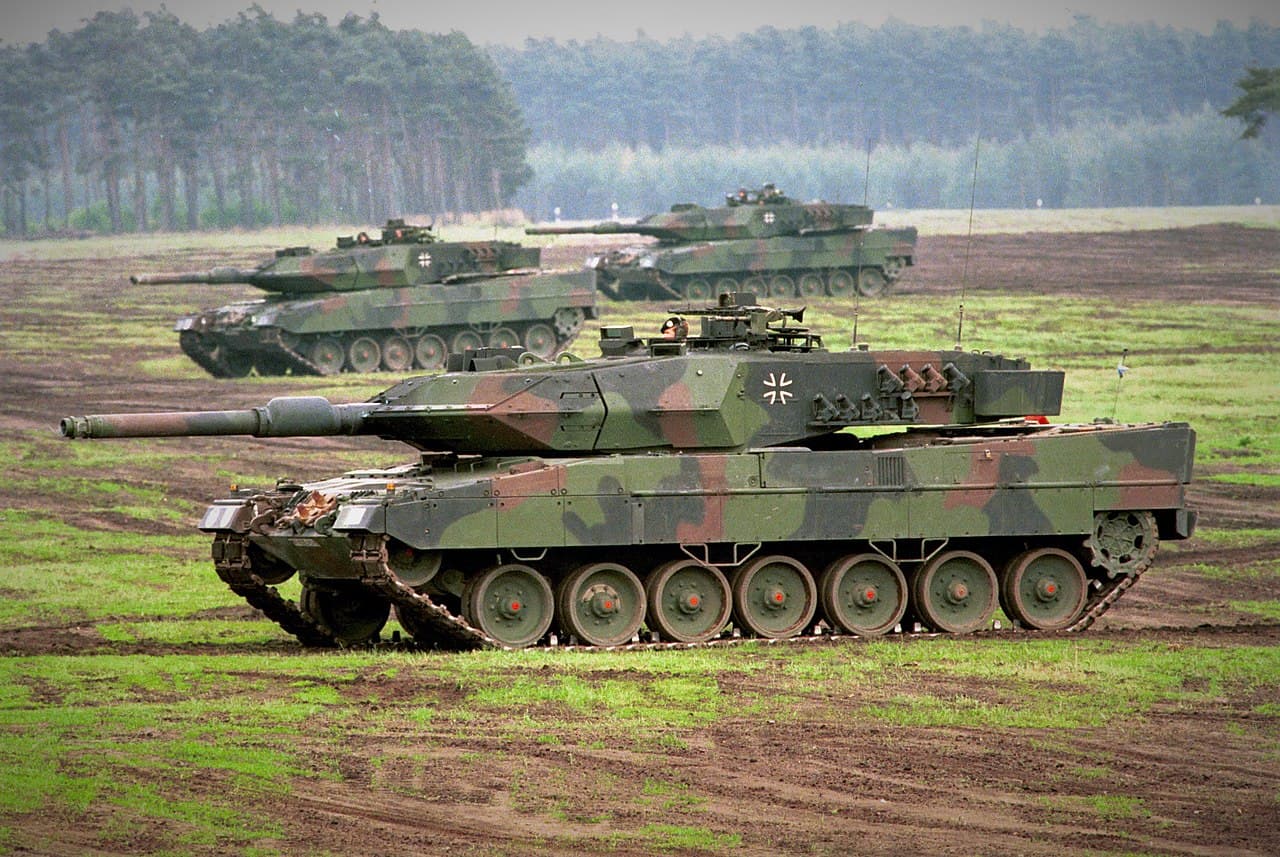
HEAT rounds can knock off the sights of German tanks of the Leopard line and similar Western vehicles. Even if the tank's sight is not located where the Leopard's is, a HEAT round is likely to catch it with a stream of fragments and cause damage.
Read more on the topic:
"Disassembled to the last nut": India put into service the first modernized T-90 tank
"Shturm" is ready for revival: a new robotic tank for the Russian army
Tank T-90M "Proryv" withstood a direct hit from an anti-tank missile