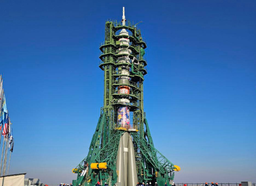
At the V.I. Vernadsky Institute of Geochemistry and Analytical Chemistry of the Russian Academy of Sciences (GEOKHI RAS), an inexpensive analogue of Martian soil has been developed. The resulting material is planned to be used in testing the supporting chassis of landing vehicles and the equipment installed on them. This was reported in the press service of the university.

The developed sample was named VI-M1 (from English Vernadsky Institute). The material simulates the properties of Martian soil (deformation characteristics, strength, adhesion) in the landing zone of the European ExoMars mission.
VI-M1 is most consistent with Martian regolith in the research areas of the Zhurong and Spirit rovers. These regions, like Oxia Planum, are located in the transition zone between the mainland and the lowland.
The material differs from analogues in its low production cost. This was achieved through the use of available artificial and natural components that do not require processing.
Earlier www1.ru reported that a space traffic management system may appear in Russia.
Read materials on the topic:
Russian space security system "Milky Way": what is known about it
Non-flying weather at NASA: Russian cosmonaut Alexander Grebenkin remained on the ISS
New Russian satellites "Ionosphere-M" have passed electrical tests
Now on home

Герой России Гарнаев: никто из профессионалов о возобновлении производства на КАЗ всерьёз не говорит
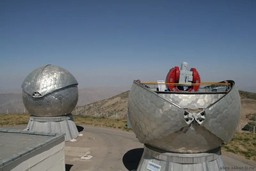
Система отслеживает спутники на высотах до 50 000 км и ведёт за ними наблюдение

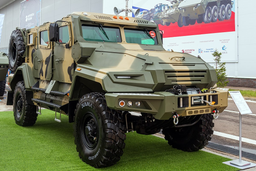
The armored vehicle is equipped with a KamAZ-740.35-400 diesel engine with a power of 400 hp.
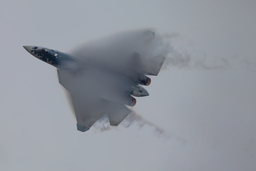
Constant improvements in avionics, weapons and tactical capabilities will make the aircraft a flexible response to future challenges

The exterior of the KamAZ-54901 features fairings on the cab and chassis for fuel economy
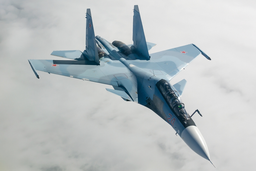
Fighters are in demand both domestically and abroad

Tyazhpromexport and Venezuela Agree on Plant Revival
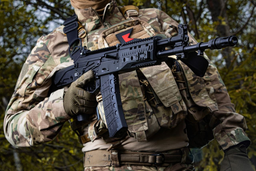
The company not only completed the state order, but also quickly mastered the production of AK-12K for special forces

Experts have developed a photogrammetric complex with a resolution of less than 1 cm