The need for Russia to regulate space constellations, their activities, and waste from them was raised at the international conference SATCOMRUS 2024 by Yuri Urlichich, advisor to the General Director of FSUE "Kosmicheskaya Svyaz" (GP KS), chairman of the board of the Association of Satellite Communications Market Participants.
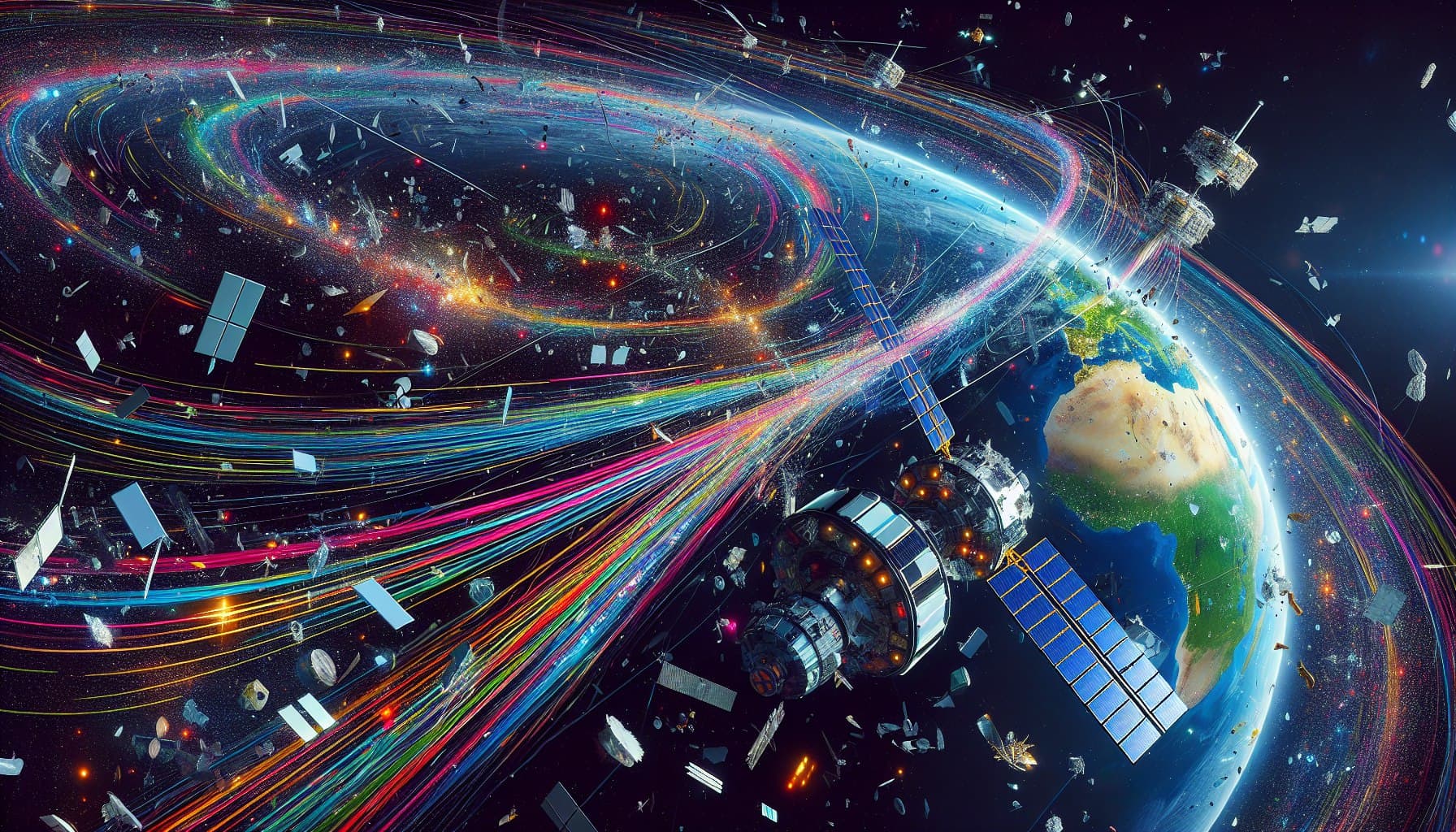
According to Urlichich, there are currently about 35 thousand objects larger than 10 cm, about 1 million fragments from 1 cm to 10 cm, and approximately 128 million pieces of debris from 1 mm to 1 cm in near-Earth space. And this is not counting the space satellites of different countries of the world.
Today, the number of functioning spacecraft is about 10 thousand. According to forecasts, by 2030 there will be more than 80 thousand. In 2023, the first fine in history was issued for the fact that the spacecraft was not deorbited in a timely manner. Therefore, now we need to seriously engage in space traffic management. Including, we in Russia need to develop our "Milky Way" monitoring system jointly with "Sphere" so as not to be among the laggards in this area.
"Pervyi Technicheskiy" previously reported on the Russian project of the space activity safety system in near-Earth space "Milky Way". An open information platform for the International Space Activity Safety System will be launched before the end of 2024.
It is worth noting that recently there was an incident with the Russian remote sensing satellite "Resurs-P", which was not removed from near-Earth space in a timely manner. The satellite was decommissioned at the end of 2021, but it remained in space for several years, and for unknown reasons suddenly broke up into more than 100 fragments at the end of June 2024. Its remains made the ISS crew worry. The astronauts from Earth were even given the command to prepare for a possible emergency evacuation from the station in case the debris harmed it, but everything worked out.
Read more on the topic:
Russian space security system "Milky Way": what is known about it
Non-flying weather at NASA: Russian cosmonaut Alexander Grebenkin remained on the ISS
New Russian satellites "Ionosphere-M" passed electrical tests
A system for wireless power transmission from space has been developed in Russia