Translated with AI from the Russian original.
AvtoVAZ is going to launch the production of the Russian electric car e-Largus at the end of September. The five-seater station wagon has a range of 400 kilometers. In addition, it is adapted to operation in Russia, so weather conditions will not become an obstacle for it.
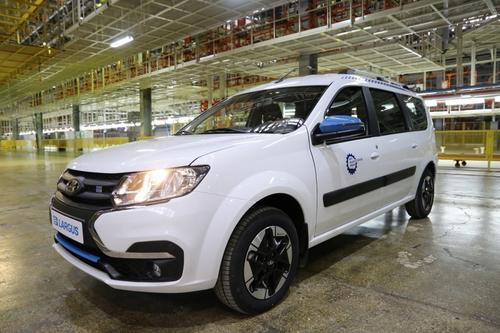
Production will be launched at the plant in Izhevsk, said Sergey Gromak, Vice President of the company for External Relations and Interaction with Shareholders. Official data on the start of sales and the price of the car in the basic version have not yet been announced.
In April of this year, the manufacturing company stated that in the electric version of Largus, the share of parts of domestic production at the initial stage of production will be more than 50%.
Lada e-Largus is the first Russian electric car with a domestic deep localization battery. The company plans to introduce passenger and commercial station wagons, which will receive modifications with different batteries and load capacities.
Let us remind you that thefirst Russian traction battery for electric transport, which will be installed on Evolute i-Joy and Lada e-Largus, was presented by the company "Autonomous Energy Systems". It is noteworthy that it integrates a control system with a remote monitoring function and you can monitor the condition of the battery.
Earlierwww1.ru reported that a new version ofLada Largus with air suspension has appeared in Russia. The car received a 1.6-liter gasoline engine with a capacity of 90 horsepower, which works in tandem with a five-speed manual gearbox.
Read more on the topic:
Lada Largus arrival to dealers: prices and features of the latest batch revealed
Izhevsk plant produced a platinum anniversary LADA Largus
One day before the premiere: it became known what the battery of the electric Largus looks like
Never miss our newsAdd this site to your preferred sources to see us more oftenAdd on Google

















