In September, an examination of the Project 645 ZhMT K-27 submarine, which poses a radiation hazard, will begin in the Kara Sea. The operation will take place as part of an expedition of the research vessel "Akademik Mstislav Keldysh".
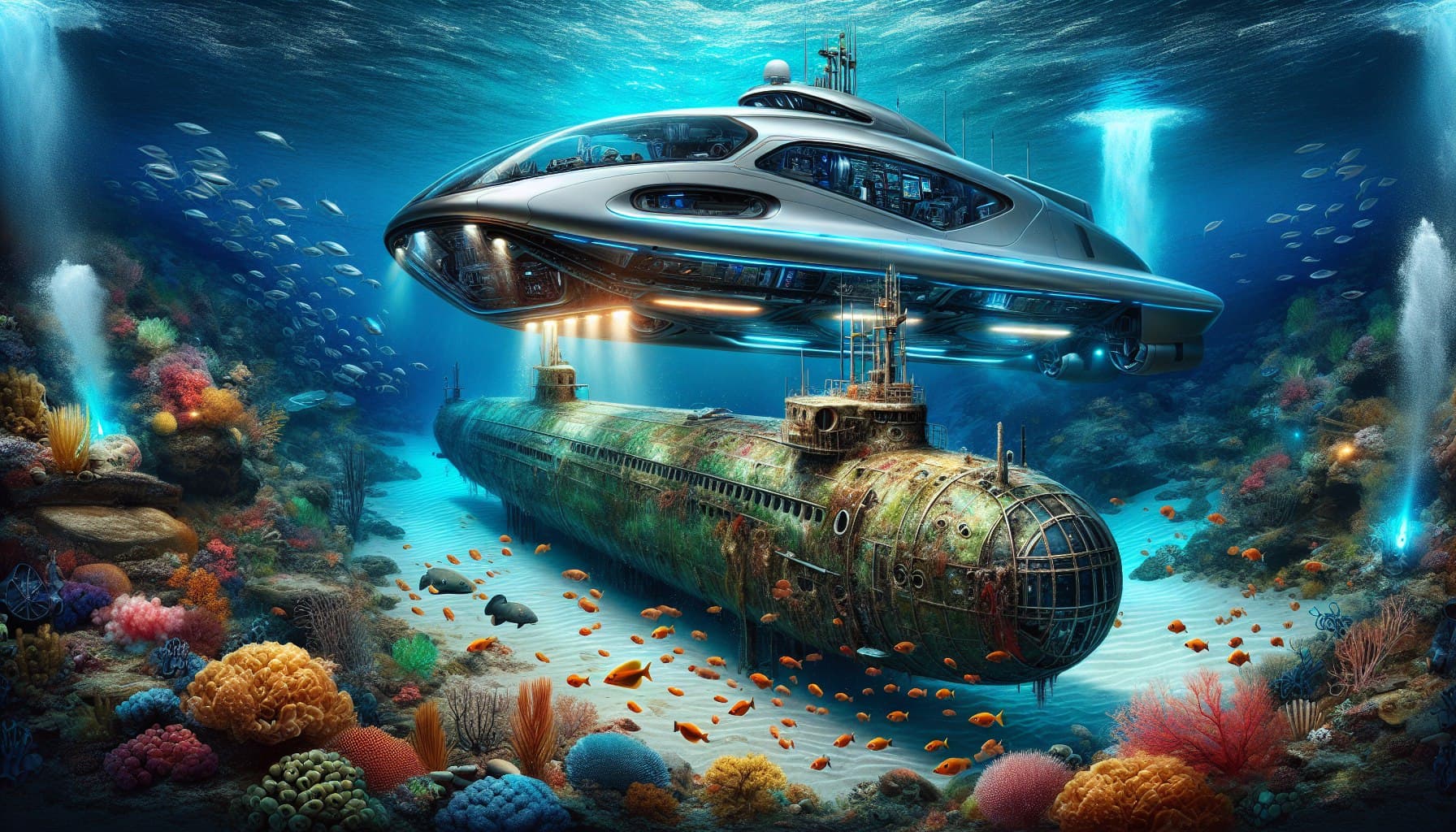
The K-27 submarine has been resting on the bottom of Stepovoy Bay at a depth of 31 meters for over 40 years. It is not specified why it was necessary to disturb the most radioactive object in the Arctic.
For diving operations, specialists will use Falcon and Rovbuilder-600 underwater drones. The latter is equipped with a gamma spectrometer belonging to the Kurchatov Institute Research Center, which will allow for a detailed analysis of the radiation situation on site.
The submarine is the most radiation-hazardous object among other flooded objects in the Russian Arctic
K-27 is the only submarine that used liquid metal as a coolant in the RM-1 reactor. On May 24, 1968, a radiation accident occurred on the submarine, as a result of which the ship was irradiated, and the entire crew (105 people) suffered from acute radiation sickness, nine people died. On September 10, 1981, K-27 was flooded off the coast of Novaya Zemlya.
By analogy with the K-19 submarine, nicknamed "Hiroshima", K-27 received the nickname "Nagasaki" in literature.
Earlier www1.ru reported that the emergency vessel "Akademik Nikolai Strakhov" is being towed to Murmansk after an engine breakdown in the Kara Sea.
Read materials on the topic:
The "Caliber" and "Uran" carrier missile ship "Tatarstan" arrived in Kazakhstan