Roscosmos specialists deployed sections of photovoltaic cells and irradiated them with powerful lamps to control the efficiency of converting light energy into electrical energy. The Soyuz solar panels are tested on a special stand, where more than 100 powerful lamps simulate sunlight. In response, the batteries begin to generate electric current, as they will later do in Earth orbit.
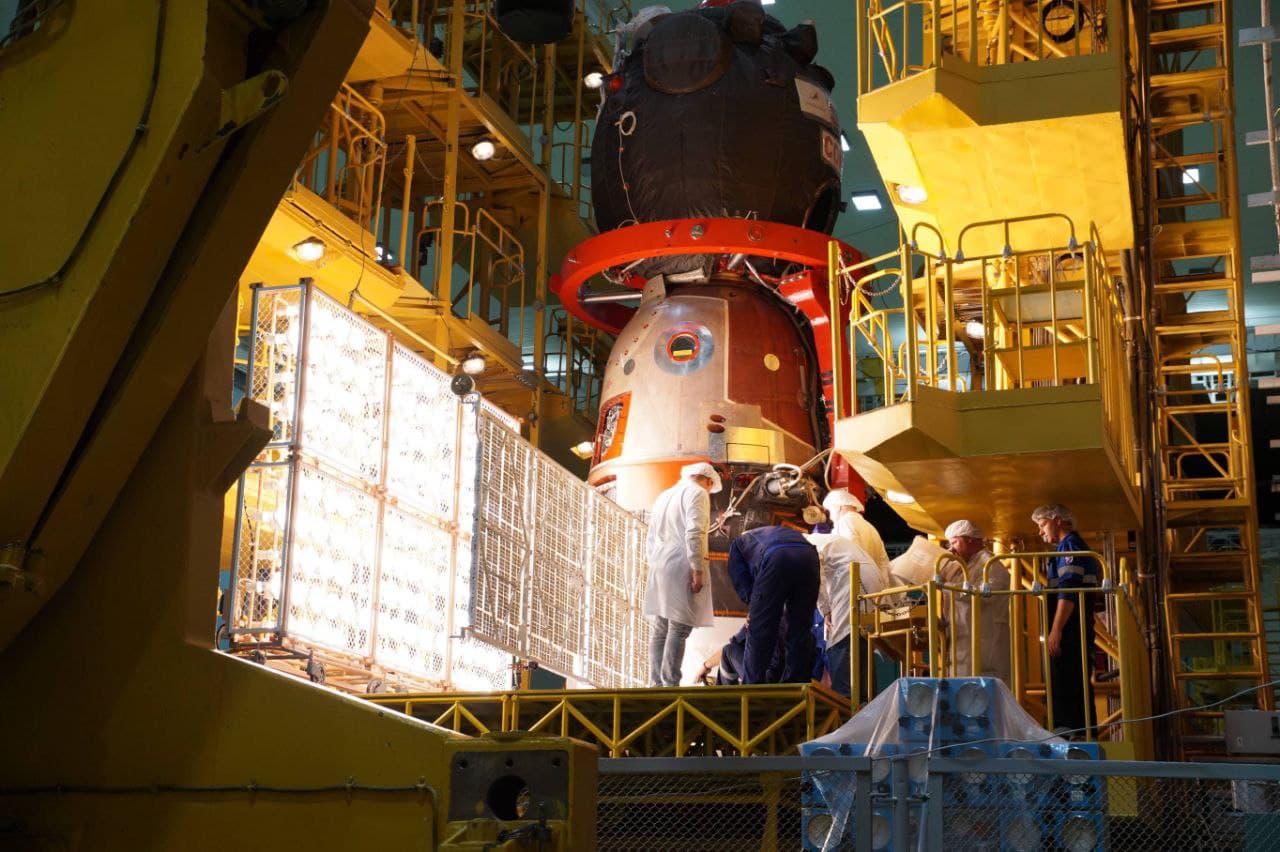
In fast flight schemes (several hours), the battery power is generally sufficient, so the batteries work as much as necessary. But in the case of a longer journey to the ISS, more energy is needed. While the ship is orbiting, its position relative to the sun changes. In order for the rays to hit the batteries, a separate "twisting" maneuver of the Soyuz is carried out. This is a difficult moment for the astronauts, who by this time manage to feel all the pros and cons of weightlessness.
In addition, other pre-launch activities are being completed. Special equipment and gear are being installed in the descent vehicle and the habitation compartment.
There is very little time left before the launch. The start of the expedition to the ISS is September 11.
Read materials on the topic:
Angara-NZ rocket sent to warehouse at Vostochny
Roscosmos revealed which of the Russian cosmonauts will be the last to visit the ISS